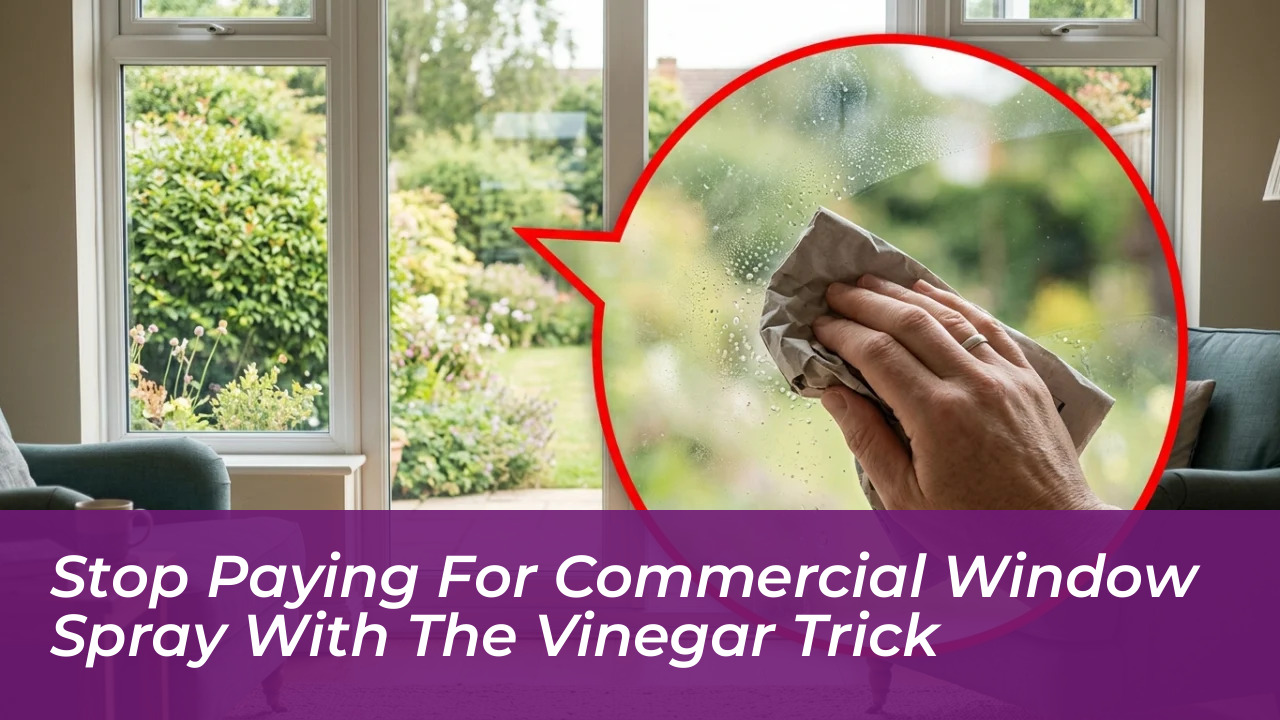

A simple blend of tap water and a single tablespoon of vinegar or lemon juice wipes away grime from household windows without leaving streaks. This mixture eliminates the need to buy specialized spray bottles. According to official guidelines from the United States Environmental Protection Agency (EPA), this low-cost mixture paired with ordinary newspaper offers an effective, non-toxic substitute for conventional glass sprays that routinely add unnecessary costs to grocery runs. Commercial glass sprays often promise flawless clarity. However, standard pantry staples achieve the same transparency at a fraction of the expense. The secret lies in mild acidity that dissolves everyday film without leaving behind soapy residues that attract dust.
The EPA Formula: Cutting Waste and Household Costs
Specialty cleaners sit in cabinets across the country, but leftover household chemicals pose documented challenges. In its consumer guidance on managing household hazardous waste, the EPA highlights that common commercial formulas frequently feature corrosive, flammable, or toxic compounds that require careful handling and disposal. The EPA recommends considering alternative methods for common cleaning needs to reduce the use of products that contain toxic, corrosive, or flammable ingredients.
Replacing branded sprays with a homemade glass cleaner removes hazardous chemicals from the living space while protecting your household budget. Because the formula relies on basic acids diluted in water, you only prepare what you need. This approach sidesteps the markup on bottled water and synthetic dyes found in store-bought products. Water and citrus ingredients can serve as low-cost household cleaners.
Why Vinegar and Newspaper Outperform Costly Sprays
A common misconception persists that spotless glass demands harsh industrial solvents or ammonia-based formulas. In reality, heavy chemical agents often deposit thin coatings that cause streaks or collect indoor dust particles shortly after wiping. Both vinegar and lemon juice contain mild acids capable of breaking down surface residue, light grease, and airborne debris.
When applied through a fine mist, the acidic solution lifts dirt without foaming. Drying the pane with ordinary newsprint rather than cloth towels prevents lint transfer and buffs the glass surface dry without smearing.
Step-by-Step: Mixing Your Own Glass Cleaner
Preparing the solution requires minimal effort and takes less than a minute. You do not need to combine both acidic components. The EPA advises choosing either vinegar or lemon juice depending on what you have in the kitchen.
- Measure out one liter of clean tap water into a mixing vessel.
- Add exactly one tablespoon of white vinegar or, alternatively, one tablespoon of strained lemon juice.
- Stir the liquid thoroughly until the mixture distributes evenly throughout the water.
- Pour the liquid into a clean, reusable spray bottle suitable for liquids.
- Mist a moderate amount across the glass or window surface.
- Wipe and dry the area firmly with crumpled newspaper until completely clear.
By switching to this simple combination, keeping your home’s windows spotless no longer requires regular spending down the cleaning aisle. Have you tested newspaper against microfiber cloths for cleaning glass? Share your favorite low-cost cleaning habits with us in the comments below.