
The zero-cost secret to stopping runaway winter heating bills is not enduring a freezing house, but creating immediate secondary barriers using standard bubble wrap. You can also adjust the hidden winter compression cams built into modern uPVC window frames. Household glass loses heat at an alarming rate. This forces boilers to burn through expensive energy merely to replace the warmth escaping out of draughty seals. By tackling thermal loss at the glass surface and frame edge, households can dramatically reduce the demand placed on their central heating system. With domestic energy price caps remaining a persistent strain on family finances, simple physics offers a high-impact workaround that costs almost nothing to implement.
The Bubble Wrap Barrier: Turning Glass into a Thermal Trap
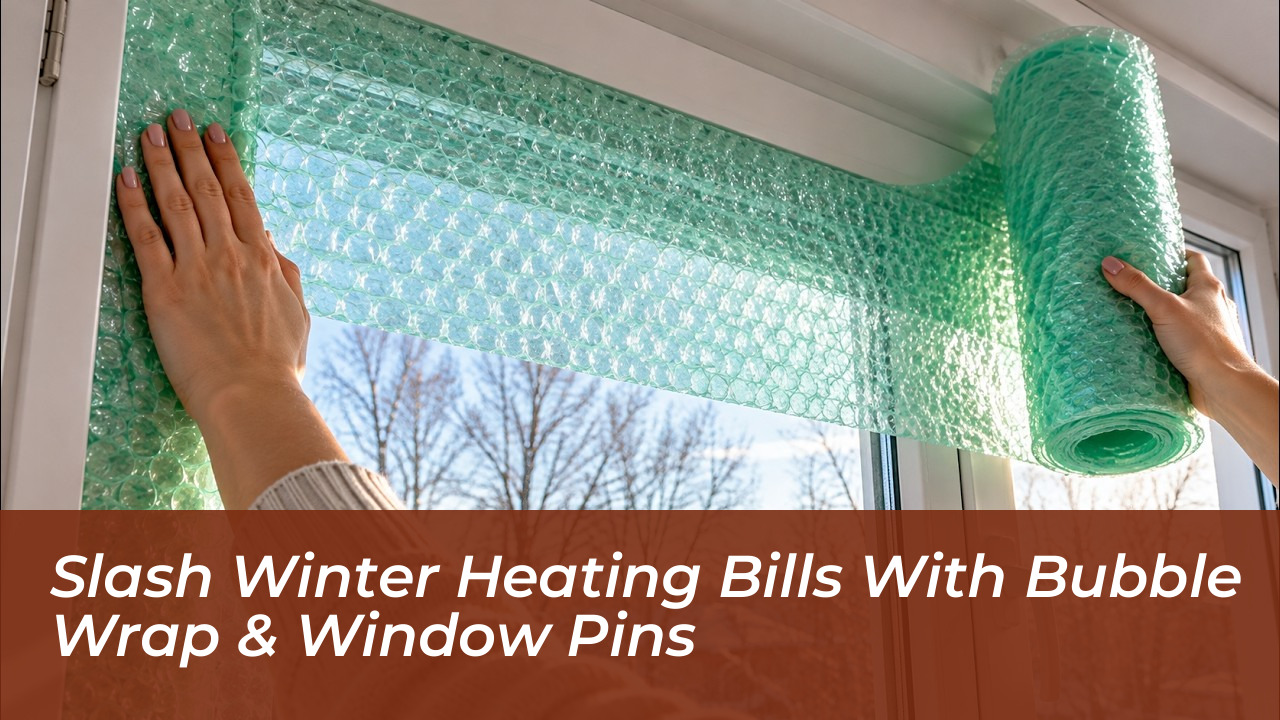
Glass is notoriously poor at retaining thermal energy. Even modern double glazing conducts cold straight into the room when outdoor temperatures plunge towards zero. Ordinary packing bubble wrap functions as an instant secondary glazing layer. The regular pattern of sealed air bubbles mirrors the exact mechanism behind industrial insulation. It traps static air pockets that dramatically slow down conductive heat transfer.
Applying this DIY shield requires no specialist tools or adhesives:
- Lightly mist the pane: Spray a thin layer of clean tap water directly across the inside surface of your window glass.
- Position the wrap: Press the bubble side of standard polythene bubble wrap directly against the wet glass. Surface tension holds it firmly in place without leaving residue.
- Secure the perimeter: For draughty sash windows or older timber frames, reinforce the outer edges using removable double-sided tape to prevent edge leaks.
The wrap still admits natural daylight while acting as a shock absorber against exterior frost. When spring arrives, it simply peels away in seconds without damaging the pane or the surrounding finish.
The Hidden Window Pin: Switching uPVC Frames into Winter Mode
Millions of residents battle freezing draughts without realising that their modern double-glazed windows feature an internal seasonal adjustment mechanism. Most modern uPVC casement windows contain adjustable locking cams, often called mushrooms. Installers routinely initialise these cams to a neutral summer mode. This maintains light pressure on the rubber weather-stripping to allow slight ventilation and reduce wear.
Over time, that slack pressure allows icy winter air to whistle straight through the frame. By inserting an Allen key, screwdriver, or pliers into the eccentric cam and rotating it, you shift the locking pin closer to the rubber seal. This increases the compression against the frame when the handle clicks shut, sealing off invisible airflow completely.
The Banknote Test: Diagnosing a Broken Seal in Seconds
Before adjusting your window hardware, you need to identify precisely where the seal has failed. Open the window, place a standard paper or polymer banknote flat across the rubber gasket, and close the window fully so the latch engages. Now attempt to pull the note free.
- If the note slides out effortlessly, the seal lacks sufficient clamping pressure. This signals that the cam requires an adjustment to increase contact.
- If the note tears or refuses to budge, the seal is airtight and effectively locked against draughts.
Low-Cost Thermal Shields and Radiator Reflection
Halting draughts at the window frame represents only half the battle. Maximising the efficiency of your internal heat sources prevents warmth from being absorbed into external walls. Placing reflective foil behind radiators fitted to uninsulated exterior brickwork directs radiant energy straight back into the living area rather than allowing it to vanish into the masonry outside. Standard household kitchen foil wrapped around sturdy cardboard provides a functional barrier, while purpose-made radiator foil delivers maximum reflective durability.
- Block floor gaps: Roll up heavy fabric scraps or discarded towels into weighted draught excluders along the base of cold exterior doors.
- Isolate disused rooms: Keep doors closed to unheated utility rooms or guest bedrooms to create natural thermal air locks.
- Close thermal curtains at dusk: Draw heavy, floor-length curtains the moment the sun drops to trap daytime residual heat before frost sets in.
Taking control of household heat loss does not require expensive contractor renovations or major structural overhauls. Small, intentional adjustments to window compression and basic surface insulation compound into substantial savings across the coldest months of the year.
Have you tested your own uPVC window pins or tried bubble wrap insulation this winter? Share your results and favourite household money-saving tricks in the comments below.
Frequently Asked Questions
Does bubble wrap really reduce heat loss on windows?
Yes. Studies and practical tests demonstrate that standard bubble wrap can reduce heat loss through single-pane glass by up to 50% by creating an insulating layer of trapped static air. The effect is smaller on double-glazed units, at around 20% to 25%, but it is still noticeable.
Which side of the bubble wrap should face the glass?
The bubble side must face directly against the wet glass. This configuration ensures that both the air inside the bubbles and the extra pockets around them create a uniform thermal barrier.
How do I adjust my uPVC windows for winter?
Locate the eccentric locking cams along the opening edge of your uPVC window frame. Using an Allen key, screwdriver, or pliers, rotate the pin so it moves closer to the internal rubber seal, increasing the compression when the window is shut.
Will putting bubble wrap on windows block natural light?
No. Standard clear bubble wrap lets in roughly 50% to 70% of natural daylight while scattering it into a soft, frosted glow. This keeps your rooms bright without requiring extra electric lighting.
Does the water mist method leave a sticky residue?
Not at all. Plain water uses surface tension to hold the polythene wrap securely to the glass. When spring arrives, you can simply peel it away in seconds without needing chemical cleaners or scraping off glue.