
When sudden freezing temperatures cause a complete boiler breakdown, a handful of low-cost items from high street discount shops can preserve vital indoor warmth and stop pipes from bursting before an emergency heating engineer arrives. Modern properties often lose heat rapidly during system failures, turning living spaces into dangerously cold environments that pose serious health risks, particularly for the vulnerable.
Creating an Airtight Thermal Shelter
The primary tactical goal during a heating outage is reducing the volume of space you need to keep warm. By abandoning secondary rooms and sealing a single central area, you create a micro-climate that prevents rapid heat loss.
- Clear bubble wrap: Spray a light mist of water onto window glass and press bubble wrap against the pane to create a trapped air barrier.
- Heavy-duty masking or duct tape: Seal around drafty window frames, keyholes, and letterbox brushes to stop cold air currents.
- PEVA shower curtains: Tack these over interior doorways to isolate draft corridors and keep your living area insulated from unheated hallways.
- Fleece throws and blankets: Hang inexpensive polyester fleece over existing curtains to act as a secondary thermal lining against nocturnal drops.
- Heavy-duty black refuse sacks: Tape these across window glass during daylight hours; the black plastic absorbs solar radiant heat while blocking drafts.
Safe Heat Retention and Radiant Deflection
Generating warmth without mains gas or electricity requires strict attention to safety. The London Fire Brigade cautions that open flames must be handled with extreme care to avoid fire hazards.
Thermal Storage Hacks
- Aluminium foil rolls: Tape reflective foil to cardboard panels behind sofas or along walls to bounce radiant body heat back into the room.
- Foil roasting trays: Place these beneath heat sources to act as fireproof thermal reflectors that project warmth outwards.
- Terracotta plant pots: Inverted over heat-safe tea light trays, clay pots absorb thermal energy and radiate steady, gentle heat.
- Multi-pack tea lights: Provide reliable ambient warmth and emergency illumination.
- Long-reach gas lighters: Ensure you can ignite candles or camping equipment safely without relying on matches.
Guarding Core Body Temperature
The NHS emphasizes that maintaining your physical core temperature is more critical than heating the entire house. When ambient temperatures drop below 10 degrees Celsius, external thermal tools become essential.
- Rubber hot water bottles: Tucking these beneath a duvet provides up to six hours of sustained core warmth.
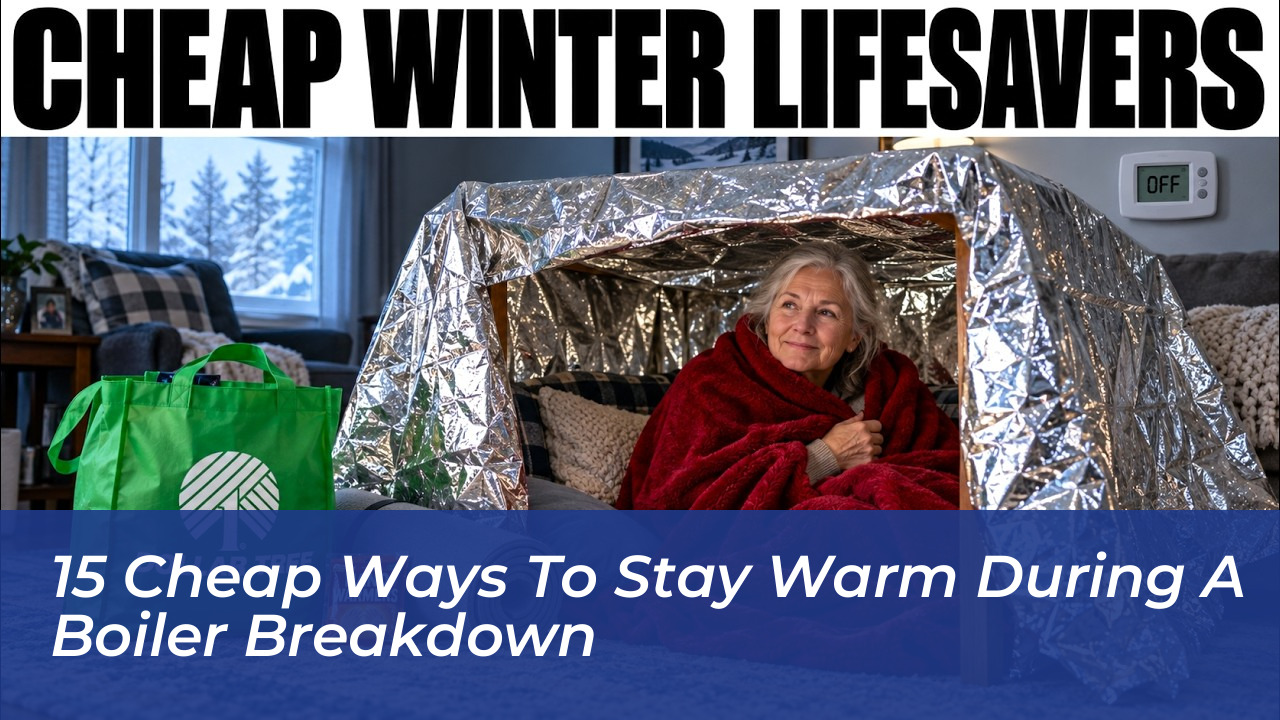
- Emergency foil space blankets: These mylar sheets reflect up to 90 per cent of radiated human body heat.
- Thermal socks and woolly beanies: Since the head and extremities lose warmth faster than the torso, high-quality headwear is vital.
- Vacuum travel flasks: Store boiling water to prevent repeated fuel consumption and ensure hot drinks are available throughout the night.
- Microfibre drying towels: Roll these tightly along the base of closed doors to create highly effective draft excluders.
Safety Note: Never leave open flames unattended. Always keep a window cracked a fraction of a millimetre to maintain essential room ventilation and prevent carbon monoxide buildup.
When to Call a Professional
While these DIY methods can help you weather a crisis, they are temporary measures. If your boiler displays persistent fault codes, continues to lose pressure, or if you smell gas, contact a Gas Safe registered engineer immediately. Preparing an emergency kit before the winter storms arrive is a cost-effective way to ensure your family remains resilient during a heating emergency.