
A sudden boiler breakdown during a British cold snap transforms an ordinary home into a cold space within hours. Survival comes down to thermal containment rather than expensive machinery. When sub-zero temperatures arrive and emergency heating engineers face multi-day backlogs, ordinary household items sourced from local high street discounters and hardware shops can preserve vital body heat and stop structural damage.
Freezing indoor temperatures pose an immediate health threat. The UK Health Security Agency consistently warns that living room temperatures dropping below 16 degrees Celsius significantly elevate cardiovascular strain and respiratory risks, particularly for vulnerable occupants. When radiators go cold, your objective shifts from attempting to warm an entire house to engineering a fortified, highly insulated micro-climate inside a single room.
Engineering the Warm Room: Radical Draught Isolation
Trying to maintain warmth across an entire house without central heating is an unwinnable battle. You must select one small, interior room-ideally south-facing or sheltered from prevailing winds-and isolate it ruthlessly using basic physical barriers.
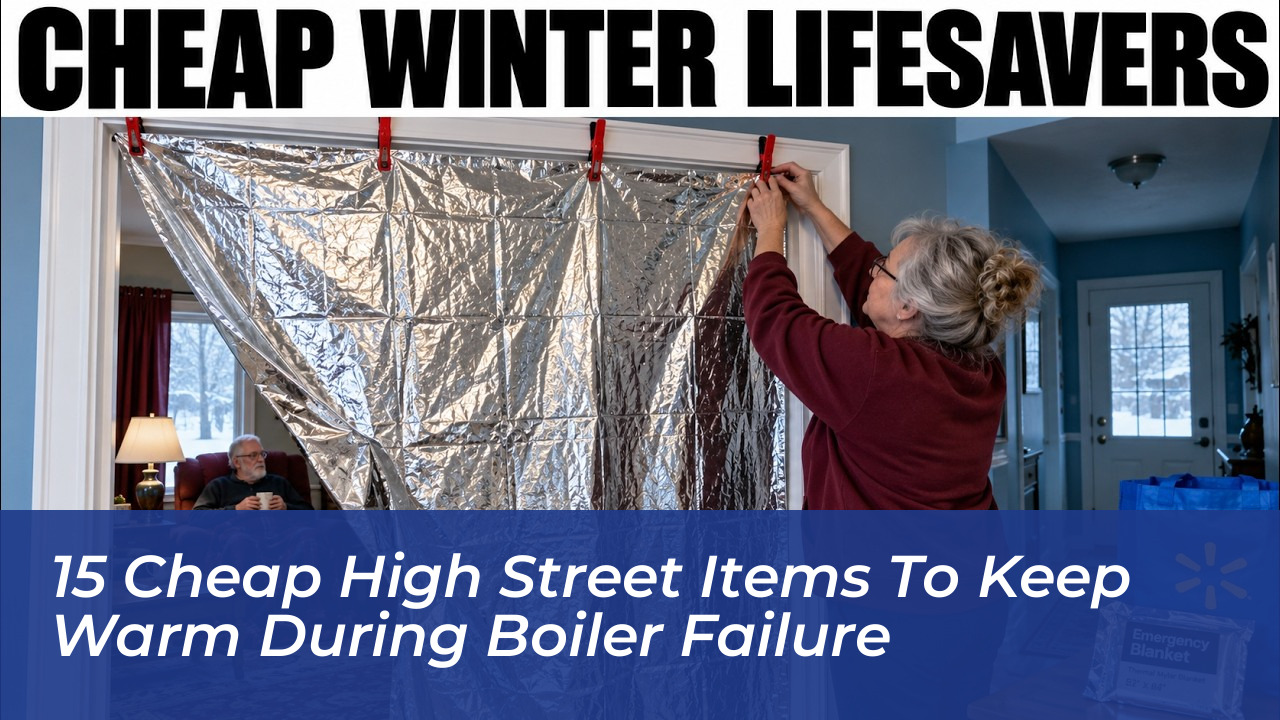
- Clear polythene dust sheets: Hanging heavy plastic decorating sheets over doorway frames creates instant airlocks that trap warm air inside your designated living zone.
- Standard bubble wrap: Misting window panes with water and pressing bubble wrap against the glass creates an immediate thermal air pocket, cutting conductive heat loss through older glazing.
- Heavy-duty gaffer tape: Expanding cold air finds every gap around window sashes, baseboards, and keyholes. Sealing these perimeter cracks halts draughts instantly.
- Foam pipe insulation lagging: Slit foam tubes pressed along the bottom of internal doors function as durable draught excluders that prevent icy floor-drafts from stripping heat.
- Tension shower rods and fleece blankets: Wedging a tension rod across hallway openings allows you to hang heavy fleece throws, creating a thermal curtain that seals off unheated stairwells.
Convection currents will strip away ambient warmth far faster than conductive loss through solid walls. By compartmentalising your living space, you concentrate whatever residual warmth you generate through body heat, cooking appliances, and targeted heating into a manageable volume.
Radiant Heat Barriers and Personal Thermal Mass
Once convective air transfer is blocked, the next battle is conductive and radiant heat loss. The cold floor beneath you and cold exterior walls act as thermal sinks, draining warmth directly from your body.
Defeating the Floor-Level Cold Sink
Uninsulated floorboards and cold tiles draw heat out of human feet. Placing thick foam camping mats or corrugated cardboard beneath your seating area creates a non-conductive barrier. Combining this ground insulation with reflective materials changes the thermal dynamic of the room entirely.
- Aluminium kitchen foil: Taping heavy-duty foil behind seats or against exterior walls reflects radiant body warmth straight back towards the centre of the room.
- Mylar emergency space blankets: Placing a reflective foil sheet between your mattress and your bottom bedsheet redirects escaping body heat back upward during freezing nights.
- Traditional rubber hot water bottles: Water holds heat well. A pair of properly sealed hot water bottles tucked under woollen blankets will release sustained conductive heat for six to eight hours.
- Insulated thermal flasks: Boiling an electric kettle once and decanting the water into heavy stainless steel flasks provides instant access to hot drinks without constantly using electricity.
- Instant chemical hand warmers: Inexpensive iron-powder heat packs slipped inside socks or mitten pockets stave off peripheral numbness when ambient room temperatures hit single digits.
Body heat management must take priority over attempting to heat ambient air. Layering loose-fitting woollen and synthetic fleece garments traps dead air, which acts as the body’s natural insulation barrier.
Essential Structural and Safety Safeguards
During prolonged heating failures, secondary hazards often develop faster than primary cold exposure. Structural pipe freezes and dangerous air quality from improvised heating methods require cheap, preventative measures installed before night falls.
- Battery-powered carbon monoxide alarms: If you use gas hobs or emergency camping stoves to boil water, a standalone digital CO monitor is necessary to prevent lethal gas accumulation.
- Dense woollen beanies and balaclavas: Significant heat escapes through an exposed scalp. Sleeping in a snug knit cap dramatically reduces nighttime shivering.
- Terracotta plant pots and safety tealights: Small candles must never be left unattended, but placing an inverted terracotta pot over a secure tealight on a heat-proof tray creates a small convection radiator that warms hands safely.
- Plastic washing-up bowls: Placing deep plastic basins under slowly dripping taps prevents frozen standing waste-pipes while collecting clean water for domestic use.
- External tap insulating jackets: Inexpensive insulated neoprene jackets strapped to outdoor bib-taps prevent frost from tracking back through copper pipework into internal kitchen cavities.
Taking defensive action within the first two hours of a boiler breakdown prevents small problems from cascading into major pipe bursts or severe hypothermia. Preparing these inexpensive items before severe cold weather arrives ensures your household remains safe and self-sufficient until professional heating technicians can arrive.
Have you ever had to navigate a freezing household during an unexpected winter boiler failure? Which low-cost adjustments or traditional thermal tricks made the biggest difference in keeping your family warm? Share your firsthand experiences and practical tips below.