
Generating localised warmth without firing up a central heating boiler or running an electric fan heater relies on a fundamental law of physics: passive thermal mass capture. By trapping rising heat and redistributing it across dense ceramic or conductive metal surfaces, practical off-grid setups can produce sustained radiant warmth entirely independent of the national grid. With unpredictable British winter spells and households seeking respite from volatile energy tariffs, non-traditional warming solutions have sparked intense interest.
The embedded online tutorial demonstrates this mechanical principle in practice, showing how basic materials can redirect heat without a single wire or utility valve. Yet between genuine thermodynamics and hazardous home experiments lies a thin line that every householder must understand before attempting DIY thermal setups indoors.
The Science of Mains-Free Thermal Traps
Standard electric convection heaters quickly lose their warmth the second power cuts out because air carries very little thermal mass. When air warms, it rises immediately to the ceiling, leaving the lower living zone cold and drafty. Alternative free heating concepts turn this dynamic upside down by deploying dense, non-combustible barriers to absorb rising energy before it dissipates.
Instead of warming an entire room’s air volume, these setups concentrate on radiant heat transfer, warming people and nearby surfaces directly. This identical mechanism has underpinned traditional masonry heaters and ceramic stoves across continental Europe for generations, proving that the basic physics behind modern DIY hacks is remarkably sound.
Why Ceramic and Dense Stone Excel as Heat Sinks
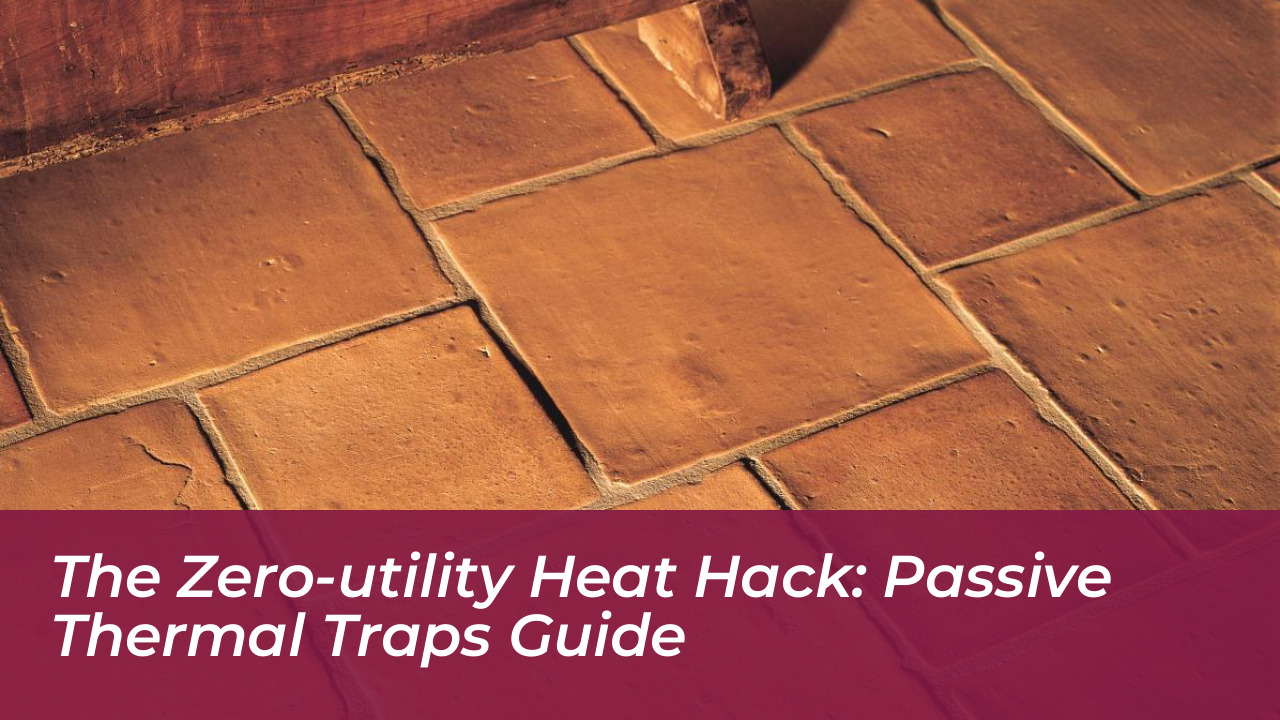
Unglazed terracotta and heavy stone possess high specific heat capacity and low thermal conductivity, making them exceptional thermal sponges. When exposed to an ignition source or concentrated ambient warmth, ceramic absorbs energy slowly and discharges it steadily as long-wave infrared radiation. This prolonged radiation curves the temperature drop-off, keeping a compact perimeter warm long after the primary source has dwindled.
- Convection Disruption: Inverting a dense dome over a heat source captures thermal plumes that would otherwise escape straight to the ceiling.
- Infrared Radiance: Heat conducts through the outer walls of the material, projecting horizontal warmth across a seated area.
- Thermal Storage: Heavy clay retains core warmth for extended periods, moderating temperature spikes and dips.
Passive Zero-Fuel Solutions That Actually Work
True zero-cost heating relies entirely on harvesting ambient energy that is already available within your property. The most potent source remains passive solar gain, which requires zero mechanical intervention when managed properly. South-facing windows across the UK capture significant solar radiation even during crisp winter afternoons. By opening curtains wide during peak daylight and sealing them with thick thermal backings the moment dusk falls, rooms can retain several degrees of natural solar gain without turning on radiators.
Another popular emergency approach involves passive solar air collectors. These wall- or window-mounted boxes use dark aluminium tubes to draw cold indoor air from floor level, heat it under glass using direct daylight, and vent warm air back into the room through natural thermal siphoning.
Critical Hazards: UK Fire Safety and Ventilation Realities
While the prospect of off-grid warmth sounds appealing, improvising heat sources inside modern, sealed homes introduces severe structural and respiratory risks. British fire authorities, including the London Fire Brigade, routinely issue strict warnings regarding makeshift heating rigs that rely on open flames, candles, or burning fuels indoors.
Concentrating multiple open flames under unglazed plant pots or metal tins creates intense localised hot spots. In enclosed spaces, this can lead to wax vaporisation, sudden flashover fires, or violent cracking of brittle ceramic components. Burning any fuel indoors without dedicated flue ventilation generates dangerous by-products, notably carbon monoxide. The NHS stresses that this odourless, colourless gas can prove lethal within minutes in unventilated living quarters.
If you choose to experiment with alternative or off-grid heating principles, keep these non-negotiable safety standards in place:
- Fit Certified Alarms: Ensure functional smoke alarms and audible carbon monoxide detectors compliant with British Standards are fitted in the room.
- Maintain Air Exchange: Never compromise vital air bricks, window trickle vents, or extraction pathways in an attempt to block draughts.
- Use Fireproof Surfacing: Any thermal mass experiment must sit on heavy stone, slate, or heat-resistant trays well clear of furnishings and curtains.
Smart energy management is rarely about finding a single silver bullet; it stems from understanding heat retention, passive solar gain, and targeted thermal zoning. Prioritising heavy curtains, sealing floorboard gaps, and dressing in thermal base layers remain the safest, most reliable methods to stay comfortable without driving up utility consumption.
Frequently Asked Questions
What is the core physics principle behind a passive thermal trap?
Passive thermal traps rely on thermal mass capture. Dense materials like ceramic or stone absorb rising heat and store it, later discharging it slowly as steady long-wave infrared radiation rather than letting hot air pool uselessly at the ceiling.
Are clay flower pot heaters safe to use indoors?
Improvising heaters using candles under unglazed plant pots creates significant safety hazards. They pose severe fire and burn risks, can cause ceramic components to crack violently from sudden thermal shock, and fail to generate enough heat to warm a standard room.
How does passive solar gain help reduce utility reliance?
Passive solar gain utilizes natural sunlight entering south-facing windows during the day to warm living spaces. Sealing these windows with heavy thermal curtains at dusk traps that accumulated warmth indoors, cutting down on gas and electric heating needs.
What are the primary dangers of unvented indoor heating hacks?
The greatest dangers include the buildup of lethal carbon monoxide gas from incomplete combustion, severe indoor air pollution, wax vaporisation flashovers, and accidental structural fires caused by open flames near furnishings.
What are the safest ways to stay warm during winter without turning up the heat?
The safest and most reliable methods include sealing floorboard and window drafts, layering clothing with moisture-wicking thermal base layers, using heavy thermal curtains, and insulating your immediate living zone.