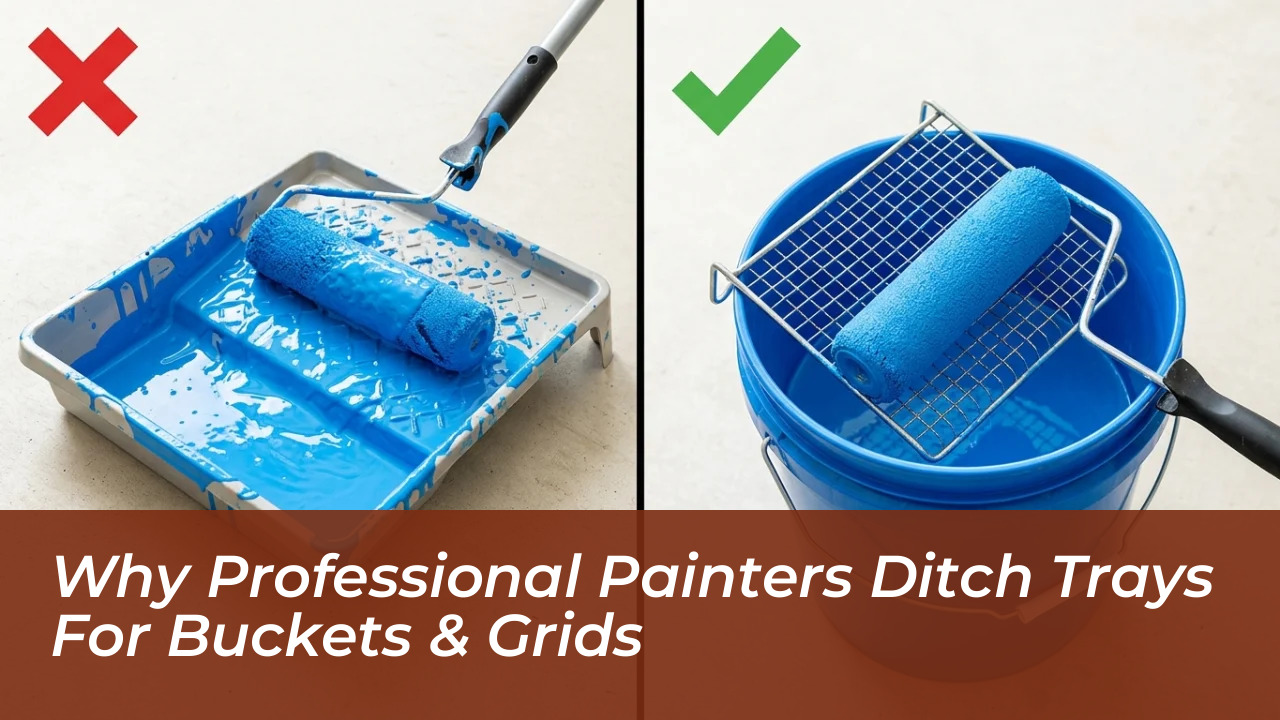

Professional painters routinely swap traditional plastic trays for a heavy-duty bucket and a metal roller grid. This setup cuts application time, prevents wall drips, and eliminates spill risks. Standard trays remain popular for beginner DIY kits, but experienced professionals rely on deep buckets and suspended wire mesh to rapidly load the ideal amount of paint onto the sleeve without splashing. The mechanics come down to fluid control. Rolling across a standard textured tray slope often leaves excess liquid pooled unevenly on the nap, resulting in heavy ridges on fresh drywall. Suspended inside a sturdy pail, a rigid metal grid strips away excess paint and drops it straight back into the reservoir below.
The Mechanical Superiority of a Roller Grid Setup
A standard roller grid setup consists of three core components: the roller assembly, a dedicated bucket, and a rigid metal screen typically crafted from galvanized steel. This mesh insert features an outer frame with two bent hooks at the top that latch firmly over the bucket rim. This design allows the textured screen to hang securely down into the container. Using the tool is straightforward and faster than refilling a shallow floor tray:
- Dip the roller sleeve directly into the paint reservoir inside the bucket.
- Lift the sleeve against the submerged or semi-submerged screen.
- Roll upward across the grid two to three times in the same direction to distribute the liquid evenly throughout the fibers while pressing out excess volume.
Moving a loaded roller across a dry tray surface removes some paint, but trays are far more likely to leave the nap overloaded compared to mesh grids. Because open mesh allows paint to pass freely back down into the pail rather than pooling along a ramp, the nap receives consistent saturation from edge to edge. This direct drainage drastically reduces waste and eliminates thick edge buildup that causes uneven lines on ceilings and walls.
Choosing the Right Screen for Your Bucket Size
A loose or improperly sized insert will slip while rolling, making proper sizing critical before starting a job. Hardware stores and online retailers offer distinct widths designed to match standard paint containers:
- 1-Gallon Bucket: Best paired with a 4-inch frame grid.
- 2-Gallon Bucket: Best paired with a 6-inch frame grid.
- 5-Gallon Bucket: Best paired with a 9-inch frame grid for standard large-format wall rolling.
Retailers offer options ranging from a 3-pack by CraftyDream for around $22 to single heavy-duty 5-gallon units from Rocky Mountain Goods for roughly $10. Matching the exact bucket diameter ensures the hooks remain firmly seated under downward rolling pressure.
When a Traditional Paint Tray Still Makes Sense
Despite the efficiency gains of a bucket setup, traditional paint trays still hold practical value for specific tasks. When cutting in small trim, painting window casings, or tackling compact door frames with a mini-roller, balancing a full pail can be awkward. A handheld mini-tray allows you to work mobile with one hand while maneuvering the roller with the other.
Trays also remain necessary when using oversized production tools. Professional wide-format rollers measuring 12 to 18 inches across cannot fit into a standard round 5-gallon bucket without specialized wide troughs. Matching wide-format trays are the only practical option unless custom containers are on hand.
Cleanup requirements also dictate equipment choice. Disposable plastic tray liners inside a reusable metal tray can be thrown away once dry, eliminating washing time. On the other hand, the tight galvanized mesh of a roller grid requires thorough washing, as dried paint easily clogs the narrow holes between uses. Yet for standard room repaints using standard roller covers, the tipping hazard of shallow floor trays remains a constant risk. A deep bucket provides a lower center of gravity, preventing spills from accidental kicks while keeping workflow moving fast.
Frequently Asked Questions
Can I use a roller grid with any bucket size?
Technically yes, but standard grids are engineered for 5-gallon buckets. Shoving a standard grid into a tiny 1-gallon pail leaves almost no room for the roller sleeve to dip properly. Always match your grid width to your container size.
Do screens work well with textured rollers?
Yes, screens are superior for textured or high-nap rollers. Thick roller covers tend to drag and overload in shallow trays, whereas a deep bucket and mesh screen allow bulky nap fibers to shed excess paint evenly without dripping.
Are bucket grids dishwasher safe?
No, metal or plastic-coated bucket grids should never go in the dishwasher. High heat can warp or degrade them. Clean them easily using warm soapy water and a stiff brush in a utility sink.
Will a bucket grid fit an 18-inch roller sleeve?
Standard 9-inch grids fit standard 5-gallon buckets and accommodate common 9-inch roller sleeves. For massive 18-inch production rollers, you will need an extra-wide trough system rather than a standard round bucket.
How do I prevent paint from drying out in a bucket overnight?
Keep your paint level below the top of the grid, press a sheet of plastic wrap directly onto the surface of the paint to eliminate air exposure, and snap a secure airtight lid tightly onto the bucket rim.