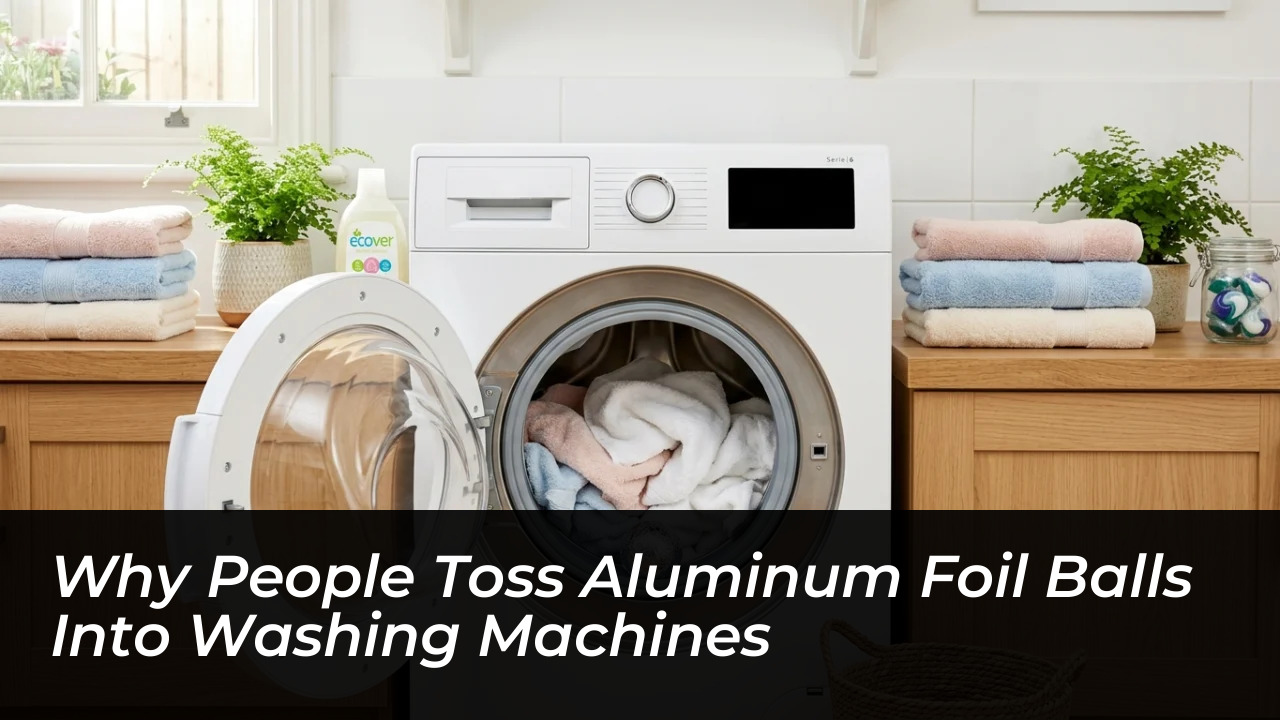

Tossing a tightly scrunched aluminum foil ball into your laundry is hailed across social media as an effortless way to reduce static cling and cut lint. This kitchen staple acts as a simple electrical conductor that helps dissipate charges across synthetic fabrics. However, while this viral home hack promises to soften fabrics and lower your reliance on commercial softeners, it carries appliance risks that could cost you far more than a box of dryer sheets.
The Science of Static: How Metal Works Inside the Drum
Static electricity develops when contrasting fabrics repeatedly rub against one another and exchange positive and negative electric charges. This friction is particularly aggressive among synthetic fibers like polyester, fleece, and nylon. Because aluminum conducts electricity, the ball provides an equalizing path for these charges, neutralizing the imbalance so garments do not stick together.
Users report less cling, minimal lint attraction, and much easier folding. Yet, wet conditions naturally suppress static because water carries charges away on its own. The bulk of friction-induced static actually surges during the high-speed final spin cycle and inside the hot, dry air of a tumble dryer. Consequently, the metal sphere serves as a minor mechanical helper rather than an all-powerful laundry miracle.
Step-by-Step: Preparing and Using Foil Balls Safely
Using this method safely depends on how densely you compress the material. A loose edge can turn a clever laundry trick into a destructive hazard for your clothes. Follow these steps to prepare a safe ball:
- Tear off a sheet of standard kitchen aluminum foil roughly 12 by 12 inches (30 x 30 cm).
- Crumple the sheet firmly into a tight, solid sphere roughly the size of a tennis ball.
- Roll and compress the ball between your palms until the surface is completely smooth and free of sharp edges.
- Place one to three balls into the bottom of the empty machine drum, load your garments loosely on top, and add your regular detergent.
- Inspect the ball upon removal to ensure no edges have unraveled.
Durable items like jeans, heavy bath towels, bedsheets, and athletic gear handle the friction best. Homeowners should strictly avoid using metal balls with delicate silks, lace, or loose knits that snag easily.
Myth vs. Reality: Foil Balls in Everyday Laundry
Social media frequently portrays metal spheres as an all-in-one replacement for detergent, stain removers, and energy bills. The functional reality inside the machine paints a much more nuanced picture:
- Deep cleans stains and brightens fabrics: False. Foil has zero chemical cleaning power; only detergents and water remove stains.
- Eliminates dryer static completely: False. It mildly discharges spin static but cannot stop severe over-drying cling.
- Requires a brand-new ball every wash: False. You can reuse the same ball for weeks or months until it flattens.
- Replaces the need for drum sorting: False. Overfilled drums trap the ball against the door and neutralize results.
Appliance Safety, Filter Risks, and Smarter Alternatives
Appliance specialists warn against adding unapproved hard materials into high-velocity drums. If an aluminum foil ball is poorly pressed, sharp edges can scrape the internal drum lining, puncture rubber door gaskets, or pull threads from clothing. Over extended wash cycles, the metal can break apart. Small metallic flakes can slip through drum perforations, clogging drainage pumps, settling inside the sump, or jamming lint filters.
Most manufacturer manuals caution against placing hard foreign objects into the machine, which could void your warranty if mechanical failure occurs. If you prefer to avoid metal entirely, proven techniques achieve identical results safely. Lowering dryer heat settings, avoiding over-drying, separating synthetics from heavy natural cottons, and tossing in reusable wool dryer balls provide safe static reduction across every wash.