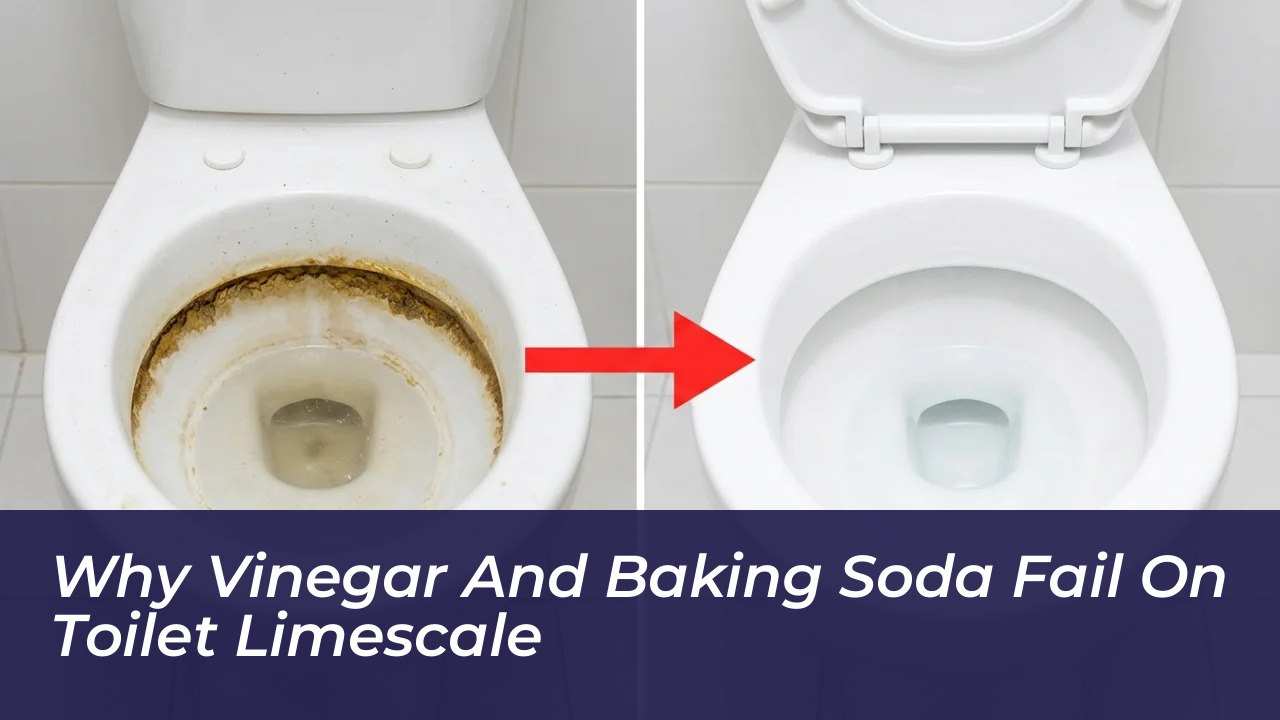

Pouring vinegar and baking soda into a stained toilet bowl causes a dramatic fizz, but it fails to eliminate stubborn mineral crusts because baking soda cannot dissolve calcium carbonate, and vinegar is far too diluted by bowl water to break down months of hardened buildup. The genuine solution to remove toilet limescale is citric , an inexpensive dry compound commonly found in the canning aisle, home improvement centers, and online supply shops that completely dissolves dense mineral scale when left to work overnight.
Every flush in a hard-water home deposits microscopic layers of dissolved calcium and magnesium across the trapway, the rim jets, and along the standing waterline. Over time, these minerals bond into a tough, chalky crust that standard bathroom sprays and viral cleaning hacks simply slide right over.
The Chemistry Behind Stubborn Limescale Deposits
The stubborn gray-brown ring circling the bowl is calcium carbonate. Because baking soda is an alkaline compound, it lacks the chemical ability to dissolve alkaline mineral scales; it merely acts as a mild physical abrasive that requires heavy elbow grease. White household vinegar contains acetic , but its concentration sits at roughly five percent. Once emptied into gallons of standing trap water, the weakens drastically, leaving it practically powerless against dense calcification.
Vinegar is an , but a weak one, and diluted in the bowl water it barely touches a crust that has had months to set. Unlike diluted liquids, dry citric delivers a substantially lower pH profile directly to the affected surfaces without leaving lingering chemical odors. It remains entirely safe for use on vitreous porcelain, ceramic tile, and chrome fixtures, breaking the chemical bonds of the scale without causing abrasive micro-scratches.
How to Clear Heavy Mineral Buildup Step by Step
Tackling dense mineral scale requires contact time rather than aggressive scrubbing. Letting the chemical reaction run uninterrupted is what transforms rock-hard buildup into loose, flushable debris.
- Dissolve two to three tablespoons of citric into a pot of hot water.
- Pour the heated solution directly into the bowl, targeting the waterline ring and splashing beneath the upper rim jets.
- Allow the mixture to sit completely undisturbed overnight.
- Scrub the bowl thoroughly with a standard toilet brush the following morning and flush.
For decades-old accumulation, a second overnight soak might be required. If any softened residue persists after two treatments, gently rub the area with a wet pumice stone to lift the loose scale without scratching the ceramic glaze.
Vinegar vs. Citric Performance
| Cleaning Agent | Action on Mineral Buildup |
|---|---|
| Baking Soda & Vinegar | Alkaline base neutralizes weak ; fizzes cosmetically but fails to dissolve thick calcium carbonate. |
| Concentrated Citric | Strong organic that breaks calcium bonds down at the molecular level, dissolving thick crust overnight. |
Treating Bathroom Faucets and Shower Fixtures
Vertical surfaces such as faucet bases, shower screens, and sink aerators present a different mechanical challenge because liquid runoff happens immediately. A halved fresh lemon offers the exact same active organic in a natural carrier that grips vertical chrome and metal spouts. Rub the cut citrus directly over the crust, let the natural juice rest for 10 to 15 minutes, and rinse thoroughly with hot water.
For thicker layers encrusting faucet bases, saturate a rag in warm water mixed with dissolved citric , wrap the cloth tightly around the fixture base, and leave it in place for an hour before wiping.
Never mix citric , or any , with bleach. The combination releases toxic gas. Rinse the bowl and flush before using any other product.
Preventing Mineral Rings from Returning
Preventative maintenance requires significantly less effort than tackling neglected fixtures. A standard weekly pass with a cleaning brush stops mineral rings before they harden into crust, while adding a small dose of dry powder once a month keeps hard water deposits completely suspended.
Persistent crusting often signals underlying plumbing issues that deserve immediate attention. A running flapper or slow tank leak creates a continuous trickle of fresh mineral-laden water down the bowl, offering a nonstop supply of calcium to feed the ring. Pairing leak repairs with proper bathroom ventilation keeps surfaces dry and stops hard water deposits permanently.
Frequently Asked Questions
Why do baking soda and vinegar fail on toilet limescale?
Baking soda is alkaline and cannot dissolve mineral scales, while household vinegar is heavily diluted by standing bowl water, rendering its mild acetic too weak to penetrate months of hardened calcium carbonate.
Is citric safe for porcelain toilet bowls?
Yes. Pure citric powder is entirely safe for vitreous porcelain, ceramic, and chrome fixtures. It lowers the local pH to dissolve mineral scale without etching or scratching the glaze.
How long should I leave citric in the toilet?
For best results, dissolve two to three tablespoons in hot water, pour it into the bowl, and let it sit completely undisturbed overnight before scrubbing and flushing in the morning.
Can I use a pumice stone on my toilet bowl?
Yes, provided both the stone and the porcelain remain completely wet. Pumice is softer than glazed porcelain and safely abrades softened mineral crusts without scratching the bowl.
Why is my toilet limescale coming back so quickly?
A continuous supply of hard water caused by a running flapper or slow tank leak feeds mineral deposits constantly. Fixing running toilet components stops the problem at the source.