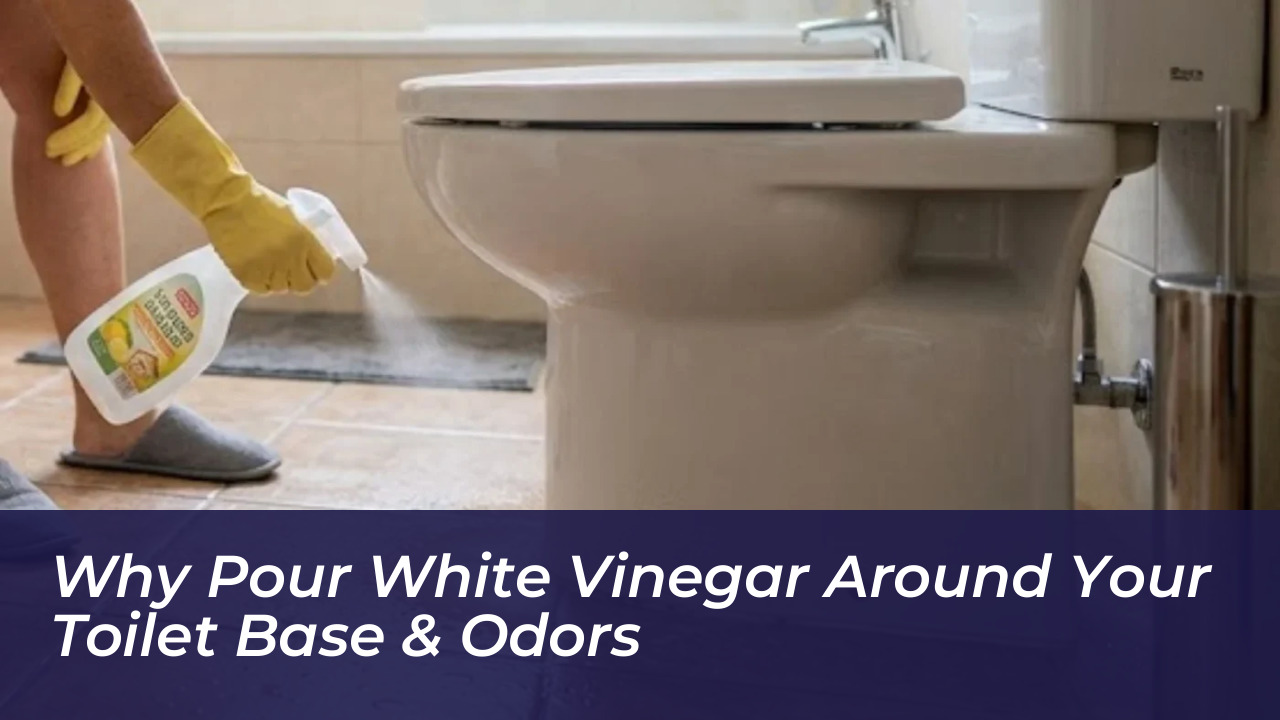

A puddle the size of a coin. A faint yellow edge where the toilet meets the floor. A stale smell that returns just hours after an intensive bathroom scrubbing session. Most people clean the porcelain bowl and consider their work finished, leaving the floor perimeter completely ignored while hidden residue settles deep into the grout lines.
Pouring or spraying ordinary white vinegar around the base of the toilet has rapidly become a favored household maintenance habit, and it accomplishes much more than simply making the fixtures shine. This affordable pantry staple targets stubborn organic residue and moisture stains directly at the floor joint, eliminating the root causes of lingering bathroom odors rather than merely masking them with artificial fragrances.
The Acetic Advantage at the Toilet Base
The secret behind this highly effective household method lies in the chemical composition of distilled white vinegar. Standard white vinegar contains acetic , a natural organic compound capable of loosening dried mineral deposits and lifting deeply embedded dirt that alkaline soaps often slide right over.
Because the junction between the fixture base and the floor collects higher concentrations of debris, humidity, and microscopic splashes, it quickly becomes a hotspot for odor-causing bacterial buildup. Treating the area with mild acidity neutralizes these compounds at the source, preventing recurring dampness stains before they set permanently into porous tile grout.
Routine Maintenance vs. Deep Disinfection
A widespread misconception among homeowners is that kitchen vinegar can fully replace high-strength, medical-grade disinfectants. While it excels at breaking down surface grime and neutralizing foul odors, it serves primarily as an everyday maintenance booster rather than a complete sterilizing agent.
- Primary Active Compound: Acetic for natural breakdown of mineral crusts.
- Primary Function: Loosens dirt, reduces odors, and prevents moisture stains.
- Surface Compatibility: Gentle on porcelain bases and non-reactive flooring.
- Chemical Compatibility: Must never be combined with bleach or chlorine products.
Step-by-Step: How to Clean the Toilet Base Safely
Executing this technique requires no specialized tools or aggressive scrubbing. Applying the liquid properly ensures the has sufficient contact time to dissolve grease and dried residues without running off prematurely.
First, clear away loose surface dust and hair around the bottom edge of the toilet using a dry cloth or a vacuum attachment. Next, dampen the entire baseline thoroughly with distilled white vinegar, focusing closely on the seam where the bowl meets the floor tile.
Allow the liquid to sit undisturbed for 10 to 15 minutes so the mild can penetrate settled grime. Gently work around the perimeter with a soft-bristled brush or a clean microfiber rag to lift softened particles. Finally, wipe the area clean and dry the boundary completely to prevent any residual dampness from attracting fresh dust.
The Critical Safety Mistake to Avoid
While vinegar is an accessible and budget-friendly household cleaner, combining it with other common sanitizers can lead to hazardous domestic accidents. You must never mix white vinegar with chlorine bleach or commercial cleaning solutions containing sodium hypochlorite.
When an meets bleach, a dangerous chemical reaction releases toxic chlorine gas, which can cause severe respiratory distress, eye irritation, and chronic lung injury. Always deploy household cleaners independently, rinse surfaces thoroughly between different products, and keep the bathroom well-ventilated during any active cleaning routine.