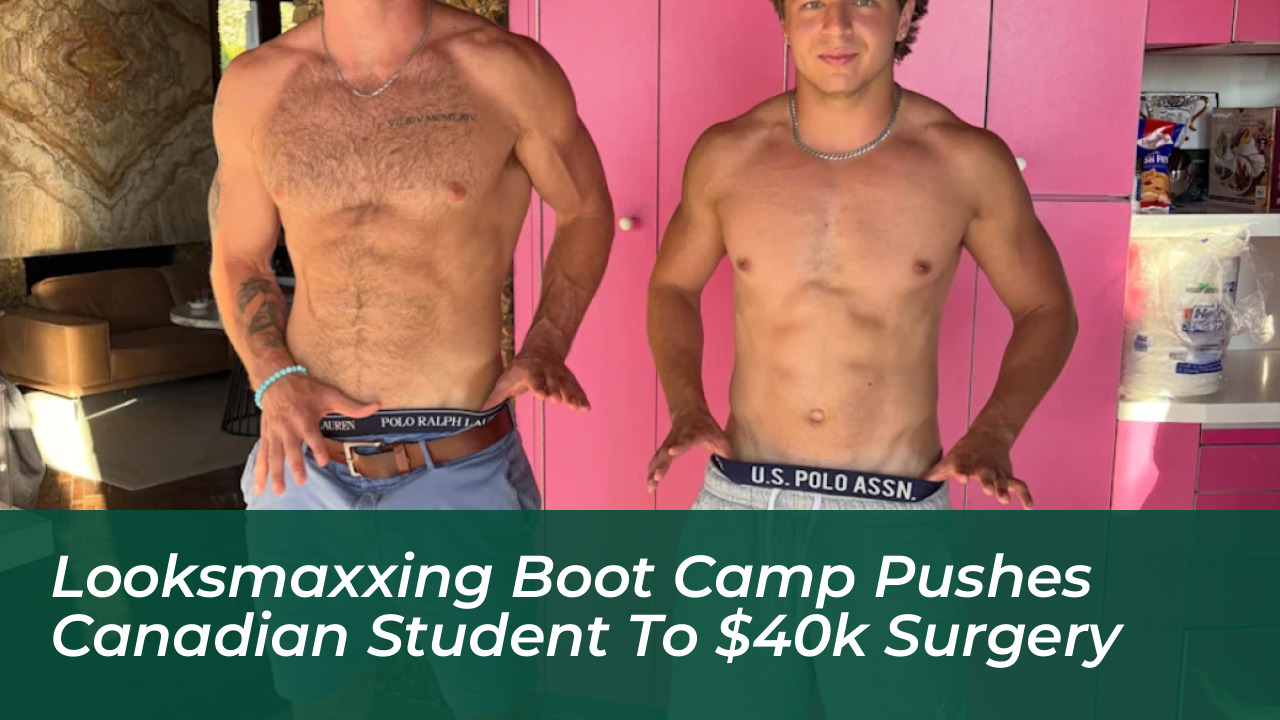

A 19-year-old Canadian university student is considering spending $40,000 on facial surgery after attending a seven-day looksmaxxing boot camp in Los Angeles. The immersive retreat was hosted by controversial online livestreamer Braden Peters, who is better known as Clavicular. The event introduced young men to extreme appearance-enhancement philosophies, styling lessons, and aggressive social interaction strategies.
William Munro, a first-year business and management student at Western University from London, Ontario, spent $5,000 on program enrollment. He also spent an additional $2,000 of his own money on airfare. The residential event began on October 1 and brought together 15 young men inside a Los Angeles mansion. According to promotional materials and reporting by USA TODAY, the event was livestreamed around the clock on Clavicular’s Kick channel.

Inside Camp Looksmax: What Happened Behind Closed Doors
The program combined lifestyle coaching with public performance. According to attendee accounts and livestream recordings, participants engaged in routine statistics sharing on day one. They reported measurements including height, weight, and “bone-pressed penile length,” and they discussed their defining “blackpill moments.” This online subculture term refers to the realization that physical attractiveness dictates social and romantic success.
The curriculum included guided styling challenges, such as a Zara shopping excursion, advice on footwear height “lifts,” and practical field exercises involving “cold approaching” unassuming women on public streets. Organizers framed the retreat as an educational program to build a personal brand and improve social confidence. However, critics have long warned that such creator-led models exploit young men’s insecurities for financial gain.
Samuel Cornell is a research fellow at the University of Queensland who studies the looksmaxxing phenomenon. He noted that internet personalities within this ecosystem function as manipulation specialists. “There are plenty of people out there willing to capitalize on human wish or desire,” Cornell said, pointing out that online subcultures frequently prey upon the vulnerabilities of impressionable young boys.
From Softmaxxing to Extreme Cosmetic Procedures
Looksmaxxing generally spans a wide spectrum of behavior. “Softmaxxing” focuses on traditional self-improvement practices like regular visits to the gym, skincare routines, balanced nutrition, and appropriate grooming. However, extreme iterations are often termed “hardmaxxing.” Popularized by influencers like Clavicular, these methods push participants toward invasive cosmetic alterations and fringe, unproven techniques.
During his time at the boot camp, Munro learned about double jaw surgery, a procedure that shifts upper and lower jaws to correct severe misalignments. While medically necessary for functional bite corrections, opting for the procedure strictly for aesthetic enhancement carries substantial surgical risks. According to health professionals, these risks include jaw fractures and potential hearing changes.
Despite these risks, Munro stated post-camp that he is actively seeking a $40,000 surgical modification to alter his facial structure. While waiting at the Toronto airport, he initially hid his destination from his parents by claiming he had won a YouTuber giveaway. Now, he believes he can eventually persuade them to accept his decision through a formal presentation.
The Broader Cultural Impact on Gen Z Men
The growing popularity of looksmaxxing highlights an ongoing shift among Gen Z men regarding personal presentation and social isolation. Proponents argue that focusing on physical appearance and stepping outside comfort zones to talk to strangers helps combat modern loneliness and builds personal confidence.
Conversely, mental health advocates and researchers caution that centering human value entirely around physical aesthetics creates toxic hierarchies. Observers note that extreme online figures often blend practical self-help advice with misogynistic ideologies, fringe conspiracies, and shock humor. This blurs the lines for young viewers trying to navigate self-improvement. Munro maintains that the primary lesson he took away was simply to talk to people and make connections. However, the lingering pull toward costly and permanent medical alterations demonstrates the powerful influence contemporary digital subcultures hold over developing minds.