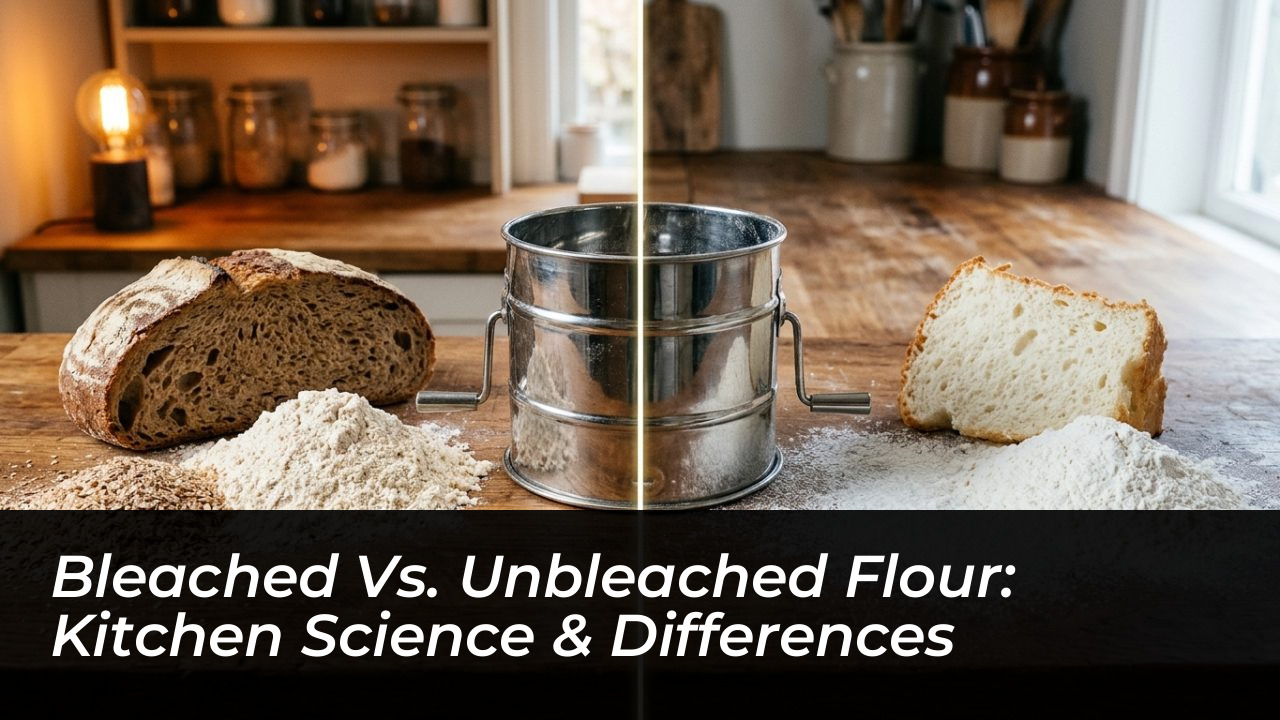

It takes up to 30 days for freshly milled wheat to oxidize and whiten naturally through exposure to air. Commercial chemical treatments can force that identical transformation to happen almost instantly. This simple difference in production speed divides the baking aisle into bleached and unbleached flour, fundamentally shaping how your dough handles moisture and develops structure. While shoppers in the United States routinely see both options lined up on grocery shelves, the chemical agents used to artificially accelerate this aging process remain strictly prohibited across the European Union and the United Kingdom. Knowing how these processing methods alter the finished product determines whether your next cake turns out light and pillowy or dense and chewy.
The Chemistry Behind Artificial Aging vs. Natural Oxidation
Freshly milled wheat is not naturally bright white. Left alone, the grain slowly matures through natural contact with oxygen over several weeks, gradually shedding its pale yellow hue while developing its baking performance. To bypass that month-long storage timeline, commercial millers treat wheat with approved chemical agents such as benzoyl peroxide or chlorine gas. These oxidizing compounds break down the natural pigments in minutes rather than weeks, yielding an ultra-white appearance and slightly degrading the wheat’s native proteins.
“Bleached flour uses chemical treatments, bleaching and oxidizing chemicals, to manually speed up this process.” – Rossi Anastopoulo, King Arthur Flour
A common misconception is that selecting the alternative means purchasing an unrefined whole food. Unbleached varieties undergo the exact same mechanical milling and grain refining steps. They simply bypass the chemical additives at the end of the line.
Safety Regulations and Global Additive Standards
The divergence between international food regulations has placed flour treatments under regular scrutiny. In the U.S. market, certain dough conditioners historically added to refined grains, such as potassium bromate, have faced major consumer pushback after animal research connected the compound to cancer risks. Because these industrial additives remain barred overseas, home bakers increasingly scrutinize ingredient labels to understand what actually enters their mixing bowls.
According to experts at King Arthur Baking Company, additive standards vary significantly by region. Benzoyl peroxide leaves behind benzoic that some sensitive palates can detect as a bitter aftertaste, and chlorine gas actively alters starch absorbency and pH. The most controversial additive, potassium bromate, acts as an oxidizer to increase oven spring, but its potential health risks have prompted strict bans in Canada, the UK, Europe, California, and New York.
Taste, Texture, and the 1-to-1 Substitution Rule
In standard baked goods packed with sugar, butter, and vanilla, blind taste tests rarely reveal whether a batter started with treated or untreated grain. Unbleached varieties retain a subtle, nutty wheat note, while chemically treated flours stay entirely neutral. The measurable variation lies in crumb density and tenderness.
The bleaching process alters starch and protein behavior, creating a softer grain that yields delicate, melt-in-your-mouth textures. In contrast, untreated grain retains its original gluten integrity, delivering a firmer bite that holds up well in rustic loaves.
Bleached vs. Unbleached Performance Overview
- Primary Treatment: Chemical agents (benzoyl peroxide, chlorine gas) vs. natural atmospheric oxidation.
- Visual Shade: Bright, stark white vs. warm, creamy off-white.
- Dough Texture: Delicate, fine crumb vs. chewy, structured gluten network.
- Best Applications: Layer cakes and pastries vs. artisan bread, cookies, and pizza dough.
- Substitution Ratio: Direct 1:1 replacement by weight for everyday recipes.
When measuring ingredients by weight, home cooks can swap these varieties at an exact 1-to-1 ratio without ruining a recipe. If a cookie formula calls for bleached all-purpose grain and you only have an untreated bag in the pantry, the finished batch will still turn out reliably delicious.
Matching Your Flour to the Recipe
Reaching for the right bag comes down to the structural goals of your recipe. Pastry chefs deliberately leverage treated flours when fine texture and pale color matter most.
- Choose bleached flour for: Tender birthday layer cakes, light sheet cakes, and delicate pastries where a velvety, pale crumb is essential.
- Choose unbleached flour for: Chewy chocolate chip cookies, focaccia, yeast sandwich loaves, and pizza crusts that require a resilient gluten network.
- Use either interchangeably for: Weeknight pancakes, morning muffins, quick banana breads, and dense fudge brownies.
“One of my biggest pieces of advice is to look beyond whether a flour is bleached or unbleached. Protein content, wheat variety, and how the flour is milled can all influence your baking results.” – Sarena Shasteen, Bob’s Red Mill
While processing style plays a key role in visual appeal, overall protein content remains the single most important factor controlling structural strength and tenderness in home baking. Choosing between these two pantry staples comes down to matching the crumb texture you want with the recipe in front of you. Next time you bake, test both types side by side in a simple batch of cookies to see the difference in rise and chew.
Frequently Asked Questions About Bleached and Unbleached Flour
Can I substitute bleached flour for unbleached flour in a 1-to-1 ratio?
Yes. For almost all home baking applications, you can substitute bleached and unbleached all-purpose flour interchangeably using an exact 1-to-1 ratio by weight or volume without altering the outcome of the recipe.
Does unbleached flour make baked goods denser?
Unbleached flour retains higher gluten integrity because it has not been treated with degrading chemical oxidizers. This results in slightly more structure and chew, which makes it ideal for breads, whereas bleached flour yields a more tender, delicate crumb.
Why is bleached flour banned in some countries?
Certain chemical additives used in the bleaching and aging process, such as potassium bromate and chlorine gas, are restricted or completely banned in the European Union, the United Kingdom, Canada, and parts of the United States due to potential health concerns and chemical residue risks.
How long does natural flour aging take?
Freshly milled wheat requires approximately two to four weeks (up to 30 days) of natural exposure to atmospheric oxygen to oxidize, whiten, and develop the proper elasticity needed for optimal baking performance.
Does unbleached flour taste different from bleached flour?
Unbleached flour retains a slightly more pronounced, subtle nutty wheat flavor. Heavily bleached flours taste largely neutral, though individuals with sensitive palates may occasionally detect a minor bitter or acidic aftertaste from residual bleaching agents.