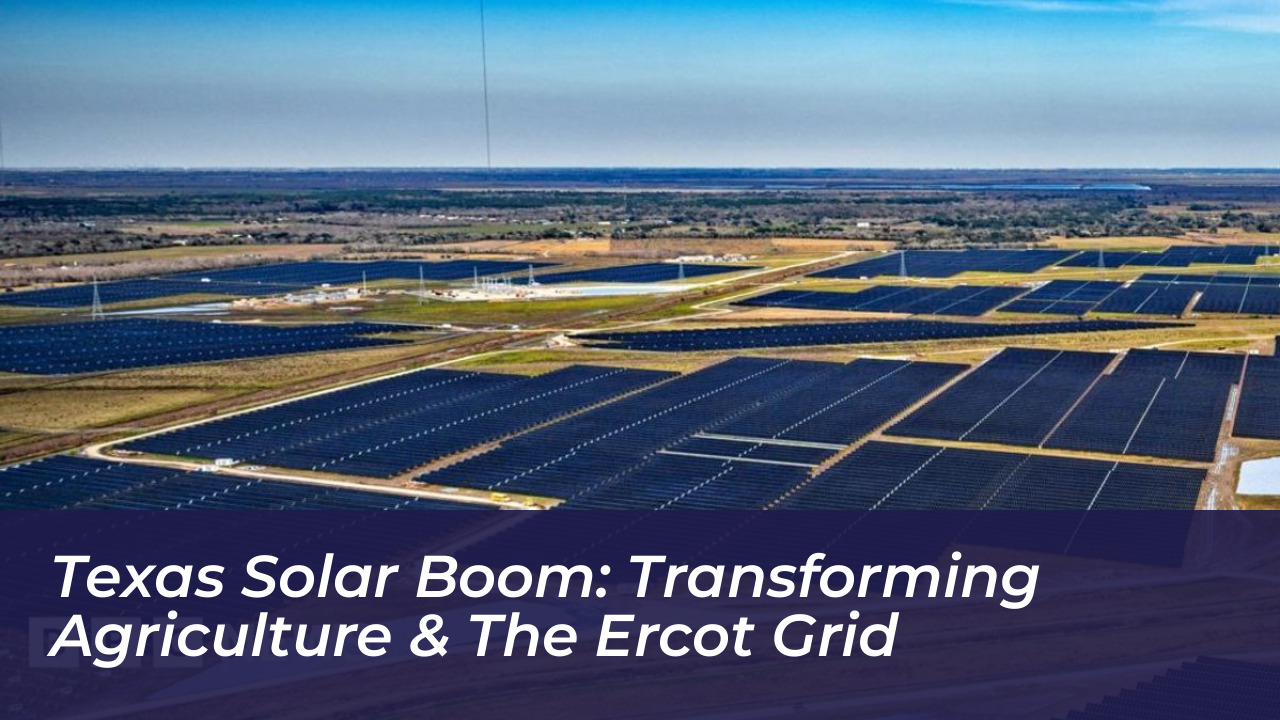
The Lone Star State is undergoing a massive shift in how it generates electricity. It transforms from an undisputed oil and gas stronghold into a top producer of renewable energy. This rapid transformation is rewriting the rules of rural land use, reshaping local economies, and redefining the modern American power grid.
- The Texas Energy Paradox: Oil Heartland Embraces the Sun
- Shifting Landscapes Across Rural Texas
- Grid Reliability During Scorching Summer Afternoons
- From Crop Failures to Solar Leases: The Farmer Perspective
- Financial Survival in Unforgiving Climates
- Securing Multigenerational Estates
- Why Texas? Grid Mechanics and Economic Drivers
- The Independent ERCOT Advantage
- Manufacturing Efficiencies and Corporate Power Purchase Agreements
- The Rise of Agrivoltaics: Merging Flocks and Photovoltaics
- Solving Vegetation Management Operationally
- Dual Revenue Streams for Ranchers
- Rural Resistance, Land-Use Conflicts, and Environmental Concerns
- Preserving Historic Communities and Vistas
- Battery Storage Safety and Decommissioning Liabilities
- Critical Blind Spots: Water Scarcity and Recycling Realities
- Groundwater Drawdown in West Texas
- End-of-Life Recycling Protocols
- Strategic Outlook: The Future of Texan Working Lands
- Frequently Asked Questions
- How do solar leases affect local Texas property taxes?
- Are sheep the only animals used in agrivoltaics projects?
- What happens to solar panels after their operational lease expires?
The Texas Energy Paradox: Oil Heartland Embraces the Sun
Shifting Landscapes Across Rural Texas
Texas holds a legendary status as the undisputed capital of American oil and gas production. Yet, a quiet transformation has swept across the vast expanses of rural land. Renewable energy developments now dominate headlines, with utility-scale solar arrays replacing traditional row crops and sprawling pastures.
Recent data from the U.S. Energy Information Administration confirms that Texas has officially overtaken California as the top solar power generator in the United States. This rapid shift stems from economic survival rather than environmental idealism. Extreme weather events, persistent droughts, and volatile market prices squeeze traditional family farms and ranches.
Grid Reliability During Scorching Summer Afternoons
During scorching summer afternoons when air conditioning demand pushes the power grid to its absolute limits, solar installations regularly supply over a third of the state electricity. This surge in daytime generation prevents rolling blackouts and stabilizes wholesale energy prices when fossil fuel plants face maintenance constraints or extreme heat stress.
For many landowners, leasing acreage to solar developers offers a financial lifeline that keeps multigenerational properties solvent. At the same time, this land-use revolution sparks intense debates over rural identity, environmental oversight, and the long-term preservation of agricultural heritage.
From Crop Failures to Solar Leases: The Farmer Perspective
Financial Survival in Unforgiving Climates
Agricultural operations in regions like Uvalde face punishing climate conditions. Steve Cargil, a Texas farmer whose family worked the land since 1953, experienced the brutal fragility of traditional farming firsthand. In 2018, a single violent hailstorm destroyed months of careful cultivation of cabbage and onions overnight. Financial unpredictability, combined with rising expenses for diesel and fertilizer, left the farm at risk of liquidation.
To stabilize his finances, Cargil signed a lease agreement dedicating six hundred acres, about a quarter of his total land, to OCI Energy for solar infrastructure. The arrangement yields substantial annual revenue, providing a predictable income stream that insulates the operation from commodity market crashes and severe droughts.
Securing Multigenerational Estates
Across the state, thousands of landowners find themselves making similar calculations. United States Department of Agriculture data shows that renewable energy systems on Texas farms increased significantly, driven largely by a thirty percent jump in solar panel adoption over a five-year census period. These long-term leases typically span twenty-five to thirty years, often featuring built-in escalators that increase payments over time.
For aging farmers without traditional pensions, this income guarantees a secure retirement and gives the next generation a fighting chance to keep the family property intact. Instead of selling land to residential developers, families preserve their acreage while generating clean power.
Why Texas? Grid Mechanics and Economic Drivers
The Independent ERCOT Advantage
The explosive growth of solar energy in Texas relies on specific geographic and systemic advantages. Mark Stover, executive director of the Texas Solar and Storage Association, highlights two primary catalysts behind the boom: speed and scale. Texas operates an independent power grid under the Electric Reliability Council of Texas, which bypasses federal interstate regulatory hurdles. This allows new generation projects to connect swiftly.
Simultaneously, a booming population drives unprecedented electricity demand. Between 2015 and 2025, the state population grew by more than fifteen percent, requiring rapid additions to generating capacity to prevent supply deficits.
Manufacturing Efficiencies and Corporate Power Purchase Agreements
James Scott, vice president of project development at OCI Energy, notes that decades of manufacturing efficiency gains have made photovoltaic technology the cheapest method of power generation in the region. Once installed, the primary fuel source, sunlight, is entirely free. This allows developers to lock in wholesale electricity rates for decades.
Large corporate buyers such as Amazon and Apple secure predictable power purchase agreements, creating a steady market for utility-scale solar output. Corporations meet their internal zero-carbon mandates while helping finance the expansion of regional green energy infrastructure.
The Rise of Agrivoltaics: Merging Flocks and Photovoltaics
Solving Vegetation Management Operationally
As solar developments consume hundreds of thousands of acres, critics often point to the loss of working agricultural land. However, an innovative practice called agrivoltaics bridges the gap between energy production and traditional farming. Rather than viewing grazing and solar generation as mutually exclusive, ranchers and energy operators combine them on the same acreage.
Sheep integration has emerged as an industry standard. Goats frequently chew through exposed electrical wiring, while cattle are too heavy and risk damaging panel mounts and ground equipment. Sheep, by contrast, graze calmly between rows of panels without disrupting hardware.
Dual Revenue Streams for Ranchers
This biological vegetation management solves a critical operational problem for solar operators. Tall grass and brush can shade the lower edges of panels, reducing power generation, while dry vegetation creates severe fire hazards during arid Texas summers. Contract grazing replaces loud, fossil-fuel-burning mechanical mowers with quiet, eco-friendly flocks.
For ranchers, this arrangement offers a new professional service model. Rather than losing grazing rights entirely, operators contract herds to manage vegetation, keeping working lands active in agriculture while generating dual revenues for rural households.
Rural Resistance, Land-Use Conflicts, and Environmental Concerns
Preserving Historic Communities and Vistas
Despite the economic advantages, the solar boom triggers fierce pushback from rural residents. In counties across East and Northeast Texas, communities confront the rapid transformation of historic landscapes. BF Hicks, a local lawyer in Franklin County, watched developers clear centuries-old oak trees and install solar arrays directly adjacent to historic family cemeteries dating back to the 1800s.
Critics raise valid concerns regarding regulatory oversight. Under current Texas law, utility-scale solar projects face minimal mandatory environmental reviews prior to land clearing. Residents frequently voice worries about altered water runoff patterns and visual blight that disrupts rural vistas.
Battery Storage Safety and Decommissioning Liabilities
Another major point of contention involves the safety of large-scale lithium-ion battery storage units installed alongside solar farms, which carry rare but severe thermal runaway risks. Communities also question the long-term liability of decommissioning solar arrays and removing millions of pounds of hardware when leases expire after three decades.
These tensions highlight a profound cultural divide. While state legislators and corporate investors view solar infrastructure as an essential upgrade for grid reliability, many long-term residents fear that industrial energy sprawl threatens the rural heritage of Texas.
Critical Blind Spots: Water Scarcity and Recycling Realities
Groundwater Drawdown in West Texas
While mainstream coverage focuses heavily on land leases and agrivoltaics, critical blind spots persist in public discussions. First, the intersection of solar panel deployment and regional water scarcity remains under-analyzed. Solar panels require periodic washing to maintain energy efficiency, particularly in dusty agricultural regions of West Texas.
Understanding the exact groundwater drawdown required to sustain gigawatt-scale solar installations is a vital missing metric. Balancing agricultural irrigation needs with industrial solar maintenance requires strict local water management policies.
End-of-Life Recycling Protocols
Second, little public discourse addresses end-of-life recycling liabilities. The absence of strict state mandates for retiring silicon, cadmium, and heavy metals creates potential future environmental cleanup burdens. Proactive industrial policies must address recycling infrastructure before millions of first-generation panels reach their expiration date.
Establishing mandatory recycling frameworks ensures that the transition to renewable energy does not replace one set of environmental challenges with another.
Strategic Outlook: The Future of Texan Working Lands
The hybrid energy and farming powerhouse model in Texas is no longer a temporary experiment. It is a permanent fixture of the regional economy. The integration of photovoltaic generation into working ranches proves that industrial energy production and rural stewardship can coexist under the right regulatory and economic frameworks.
Balancing grid reliability, corporate zero-carbon mandates, and rural ecosystem preservation requires ongoing dialogue between developers, landowners, and local communities. As Texas continues to grow, the ability to harmonize agriculture with solar innovation will determine the long-term resilience of the state economy and its vital natural resources.
Frequently Asked Questions
How do solar leases affect local Texas property taxes?
Solar leases often shift land from agricultural tax exemptions to commercial assessments, which increases local tax revenues for rural counties and school districts.
Are sheep the only animals used in agrivoltaics projects?
Sheep remain the primary choice for weed control, though some ranches successfully utilize specific breeds of cattle or specialized poultry operations depending on panel clearance heights.
What happens to solar panels after their operational lease expires?
Lease agreements typically require developers to remove all equipment, concrete foundations, and wiring, returning the land to its original state or upgrading the technology.