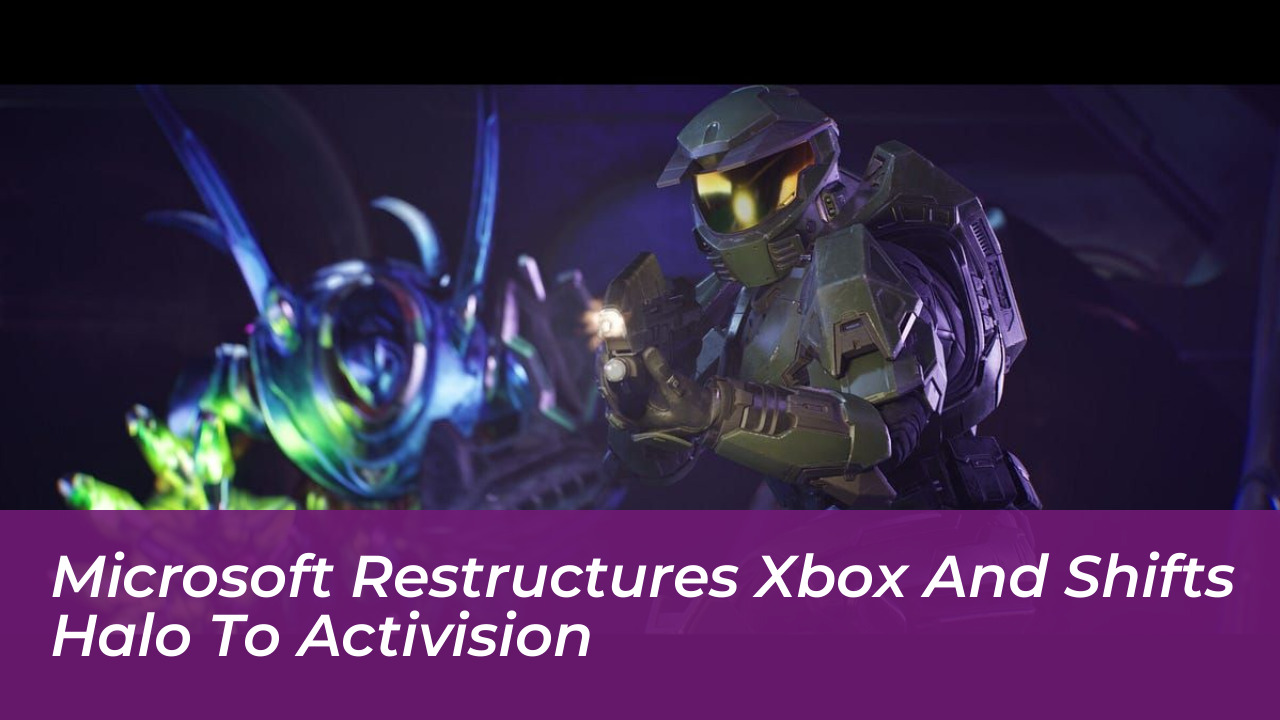

Microsoft confirmed a sweeping reorganization of its Xbox gaming division, implementing major operational shifts across its primary studios. The company cut 268 jobs, primarily affecting Halo Studios and central management personnel at Xbox Game Studios. This contraction moves Microsoft closer to its goal of eliminating roughly 3,200 gaming-related positions during fiscal 2027.
The most consequential outcome of this restructuring is the transfer of stewardship for the flagship Halo franchise from Halo Studios to Activision. Understanding this shift requires examining the new organizational pillars, the technical challenges of moving development pipelines, and the broader economic pressures shaping modern enterprise gaming.
Industry stakeholders view this operational pivot as a definitive response to rising production costs and shifting consumer spending habits. Corporate leadership aims to stabilize long-term revenue streams by consolidating resources around proven commercial assets.

Understanding the Xbox Studio Realignment
The New Organizational Pillars
Xbox Chief Content Officer Matt Booty outlined the structural changes in an internal staff memo titled Continuing Our Reset. The memo details new reporting structures and studio consolidations designed to streamline operations across the entire division.
Activision assumes operational control of the Halo franchise, Rare, and World’s Edge, alongside the establishment of a dedicated team for the next Halo installment. Bethesda Softworks and ZeniMax absorb Obsidian Entertainment, aligning the studio more closely with established role-playing game production pipelines.
Playground Games and Turn 10 merge into a single unified racing studio to consolidate technical expertise for upcoming automotive titles. King takes over management of Microsoft Casual Games to optimize mobile and casual engagement metrics across global markets.
These targeted alignments eliminate redundant administrative overhead while maximizing cross-studio collaboration for major intellectual properties. Senior executives believe this framework provides the agility needed to compete in a rapidly evolving digital marketplace.
Studio Divestitures and Management Buyouts
Microsoft’s divestiture efforts for smaller subsidiaries yielded mixed outcomes during this cycle. Compulsion Games, Double Fine Productions, and Undead Labs completed management buyouts to secure operational independence. Undead Labs continues development on State of Decay 3 under a new external publisher.
Conversely, acquisition talks for Ninja Theory collapsed, resulting in proposed studio closures and ongoing employee consultations. These adjustments reflect a stringent financial discipline aimed at mitigating fixed operational liabilities.
Independent operation allows former subsidiaries to secure alternative funding sources without relying entirely on first-party corporate budgets. This market strategy reduces systemic financial exposure for the parent corporation.

Halo’s Transition to Activision: Strategy and Structure
A New Home for Xbox’s Flagship Mascot
The decision to move Halo to Activision marks a decisive turning point for the historical franchise. Halo served as the defining pillar of the original Xbox console era. Over the past decade, the property struggled with prolonged development cycles, engine transitions, and rocky live-service updates for Halo Infinite.
Shifting the intellectual property to Activision leverages massive shooter infrastructure and scalable management resources. This operational pivot aims to restore consistent quality and output to a brand that previously lost its competitive market momentum.
Corporate leaders expect that leveraging proven production methodologies will significantly shorten delivery schedules for future iterations. This transition represents a major vote of confidence in Activision scaling capabilities.
Dedicated Development Unit and Pipeline Independence
Activision President Rob Kostich confirmed that the publisher assembled a dedicated, purpose-built unit to handle the next mainline Halo title. This team operates separately from the annualized production pipelines of Call of Duty.
This separation ensures the development squad maintains a distinct creative focus tailored to the science-fiction universe. The unit retains independent resources while benefiting from shared administrative infrastructure.
Dedicated pipelines protect the artistic integrity of the brand while preventing resource contention with other blockbuster franchises under the corporate umbrella.
Studio Transition Overview
| Studio or Entity | Previous Role | New Structure and Responsibilities |
|---|---|---|
| Halo Studios (343 Industries) | Lead developer for the Halo franchise | Reduced in size; shifted to community engagement, esports, and support for existing titles. |
| Activision | Standalone publisher (Call of Duty, Warcraft) | Houses a new dedicated unit building the next Halo game; oversees Rare and World’s Edge. |
| Obsidian Entertainment | Xbox Game Studios autonomous developer | Moved under ZeniMax / Bethesda Softworks to align RPG production workflows. |
| Turn 10 & Playground Games | Separate racing and open-world developers | Merged into a single racing studio focusing on shared automotive technology. |
Technical and Economic Realities Underlying the Shift
The Engine Transition Challenge
Transitioning stewardship raises critical technical questions regarding game engines. Whether Activision’s new unit abandons the proprietary Slipspace Engine in favor of internal technology like the IW engine fundamentally alters physics, rendering pipelines, and asset creation workflows.
This technical overhaul explains why development restarts under a fresh unit. Rebuilding foundational tech requires specialized talent and significant time before gameplay elements materialize for public consumption.
Engine standardization ultimately reduces long-term maintenance costs and simplifies cross-platform porting procedures for engineering teams.
The Economics of Studio Divestitures
Independent studios operating outside direct first-party ownership alter the day-one Game Pass content acquisition model. Microsoft is shedding fixed overhead costs for mid-tier studios to offset enterprise artificial intelligence investments and stabilize quarterly hardware and software returns.
Financial analysts note that this reduction in internal studio headcount directly correlates with corporate belt-tightening across the broader technology sector.
Optimizing capital allocation ensures that financial resources flow directly toward high-margin digital storefronts and cloud infrastructure initiatives.
Centralized Industrialization and Post-Acquisition Integration Debt
Trading Studio Autonomy for Predictable Delivery
Microsoft’s pivot mirrors corporate consolidation seen across enterprise software development. Grouping studios into unified macro-units trades quirky studio autonomy for predictable enterprise software delivery models. This guarantees steady quarterly outputs at the expense of creative experimentation.
Creative risks often take a backseat when macro-units prioritize predictable financial returns and streamlined project management frameworks over unorthodox artistic visions.
Standardized milestones reduce project drift and budgetary overruns across large-scale enterprise development environments.
Managing the Integration Debt
The absorption of Activision Blizzard and ZeniMax created overlapping management layers. The layoffs represent the painful second phase of post-merger integration, where administrative redundancy is trimmed.
Moving Halo to Activision maximizes return on investment by assigning premier assets to the company’s most reliable high-volume execution engine.
Streamlining management hierarchies eliminates communication bottlenecks that previously slowed down cross-studio decision-making processes.
Impact on Workforce, Culture, and Community
Human Cost and Institutional Memory Loss
The human cost of the restructuring remains significant. The 268 layoffs at Halo Studios and Xbox Game Studios follow earlier workforce reductions of 1,600 roles. Long-time developers face displacement, raising concerns about institutional memory loss within veteran studios.
As experienced designers and engineers leave the company, incoming teams must relearn historical codebase eccentricities, which can introduce unexpected delays into active production cycles.
Retaining core technical talent remains a primary challenge for human resources teams managing multi-studio corporate transitions.
Player Expectations and the Game Pass Landscape
For everyday players, the immediate consequence is a prolonged holding pattern. With Halo Studios transitioning to support duties and Activision building a development unit from scratch, fans face an extended wait for concrete details regarding the next mainline release.
Subscriber expectations for Game Pass remain steady regarding previously announced titles, but the contraction points toward a narrower focus on mega-franchises.
Community managers must carefully balance transparency with long-term strategic adjustments to maintain consumer trust during corporate restructuring phases.
Frequently Asked Questions
Who is developing the next Halo game?
Activision develops the next mainline Halo game through a newly established, purpose-built team separate from its Call of Duty developers. Halo Studios no longer leads mainline development.
What is the current role of Halo Studios?
Halo Studios, formerly known as 343 Industries, was reduced to an administrative support role. The studio now focuses on community engagement, esports, and live-service maintenance for existing Halo titles.
How many jobs were cut in the Xbox restructuring?
Microsoft eliminated 268 positions during this round, primarily targeting Halo Studios, first-party developers, and Xbox Game Studios management, following earlier cuts of 1,600 roles earlier in the fiscal year.
Which studios were moved under Activision?
Activision assumed oversight of the Halo franchise, Rare, and World’s Edge. Meanwhile, Obsidian Entertainment moved under ZeniMax, and Turn 10 merged with Playground Games.
Why did Microsoft divest smaller gaming studios?
Microsoft divested several mid-tier studios through management buyouts to reduce fixed overhead operational costs. This strategy allows the corporation to concentrate investments on massive intellectual properties and AI integration.