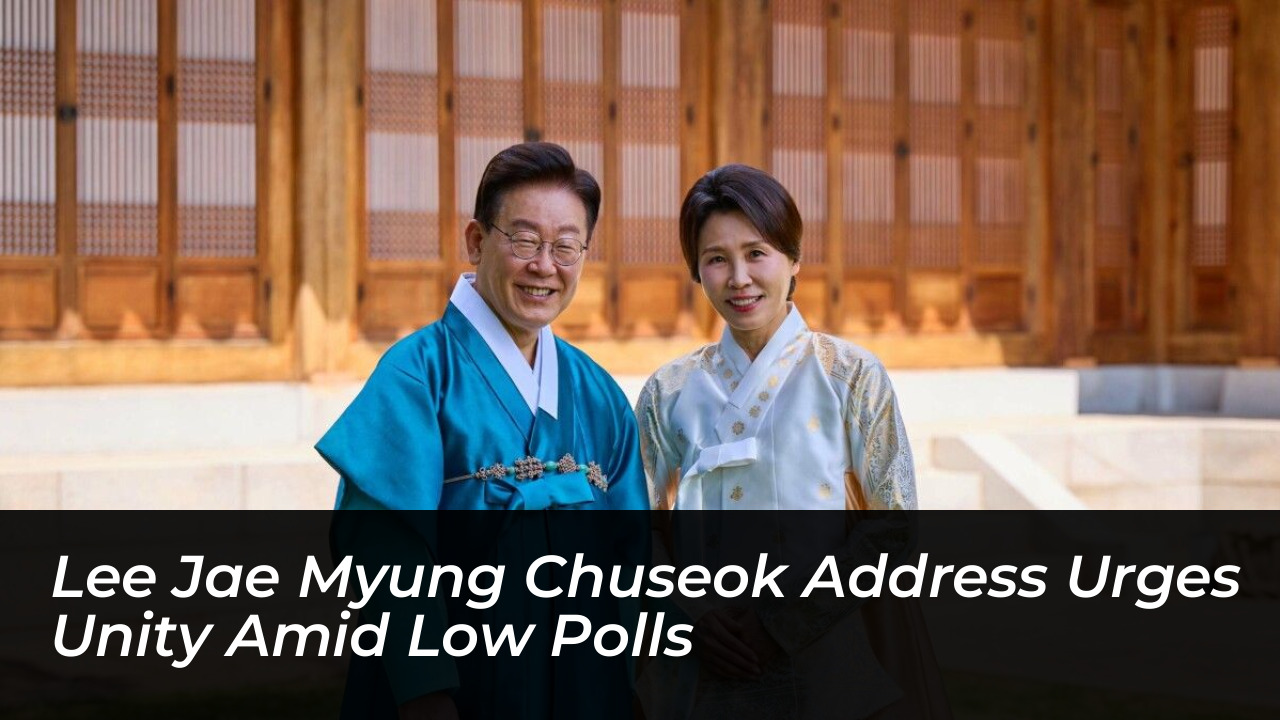
South Korean President Lee Jae Myung delivered a prerecorded Chuseok holiday address on September 25, 2026, centering his message on national cohesion, support for everyday citizens, and gratitude for frontline workers. Appearing in traditional hanbok alongside First Lady Kim Hye Kyung, the president spoke from the Sangchunjae guesthouse inside the Blue House compound while completing a multi-nation diplomatic tour. This broadcast arrives at a pivotal moment, as the administration faces its lowest public approval rating since taking office alongside mounting domestic policy debates.
- Key Themes of the Presidential Chuseok Address
- Pledging Inclusive Governance Across Political Divides
- Honoring Essential Workers and the Diaspora
- Political Context: Approval Ratings and Policy Hurdles
- Gallup Korea Data and Public Sentiment
- Strategic Objectives Behind the Unity Call
- International Schedule: Diplomatic Engagement Abroad
- High-Level Meetings in New York and Mexico City
- Digital Media Communication Strategy
- Reactions and Legislative Horizon
- Party Responses and Public Reception
- The Path Ahead for Policy Implementation
- Frequently Asked Questions
- Why is President Lee Jae Myung’s Chuseok address significant?
- What were the main topics covered in the holiday message?
- How did the president deliver the message while abroad?
Key Themes of the Presidential Chuseok Address
Pledging Inclusive Governance Across Political Divides
President Lee focused heavily on bridging ideological and regional divides during his holiday address. By stressing that governance must extend to all citizens regardless of political leanings, the administration sought to project stability and inclusivity during South Korea’s premier harvest festival, Hangawi. The president stated that he would work without conditions to ensure equitable support for every citizen across the country.
Regardless of differences in thought, the administration will strive to ensure that growth reaches every household. Analysts view this explicit call for unity as a strategic effort to regain governing momentum and mend relations with voters disillusioned by recent economic pressures.
First Lady Kim Hye Kyung also participated in the holiday broadcast, offering warm greetings to families nationwide. She encouraged the public to reach out to loved ones, share meaningful connections, and find comfort in community gatherings during the autumn festival despite ongoing national challenges.
Honoring Essential Workers and the Diaspora
The holiday message included heartfelt expressions of gratitude directed at various segments of the workforce who maintain national infrastructure. The president formally recognized sanitation staff operating before sunrise under extreme seasonal weather conditions, alongside agricultural and fishery workers sustaining national food security despite severe summer heat and environmental challenges.
, the address acknowledged the dedication of first responders, police officers, firefighters, military personnel, and healthcare workers who maintain public safety while others celebrate. A special message was also extended to overseas Koreans and expatriate communities who strengthen South Korea’s international cultural standing globally.
Political Context: Approval Ratings and Policy Hurdles
Gallup Korea Data and Public Sentiment
The timing of the holiday address drew intense scrutiny from domestic political analysts and media outlets due to shifting public opinion metrics. Gallup Korea polling conducted between September 15 and September 17, 2026, placed the administration approval rating at 37 percent. This figure represents a five percentage point drop from August levels, marking a record low support level since the president took office.
Primary drivers of this public dissatisfaction include persistent friction over housing market regulations and contentious personnel appointments within the cabinet. Critics point out that these domestic policy challenges create friction between voters and the ruling party, complicating the administration legislative agenda heading into the autumn session.
Strategic Objectives Behind the Unity Call
The administration utilizes traditional holiday messages to reset the public narrative and rebuild governing momentum during periods of low public support. Addressing voter frustration regarding cost-of-living increases and economic pressures remains a top priority as parliament prepares for upcoming legislative sessions.
Whether presidential calls for unity can translate into tangible bipartisan cooperation in the National Assembly remains a central question for political observers. The success of future economic stimulus measures depends heavily on bridging these legislative gaps.
International Schedule: Diplomatic Engagement Abroad
High-Level Meetings in New York and Mexico City
The release of the Chuseok message occurred while President Lee was abroad on an extensive international tour. The president departed on September 21 for the United Nations General Assembly in New York, where he delivered a key address outlining South Korea’s foreign policy objectives.
Following his UN engagements, he traveled to Mexico City on September 23 for an official state visit. His itinerary in Mexico featured a wreath-laying ceremony at the Monument to the Heroes of the Fatherland, an official welcoming ceremony, and intensive bilateral talks with Mexican leadership.
Digital Media Communication Strategy
Coordinating a domestic holiday broadcast from abroad highlights the administrative reliance on prerecorded digital media to maintain continuous communication with the public during overseas travels. The symbolic setting of the Sangchunjae guesthouse anchored traditional cultural values despite the geographical distance between the president and the domestic audience.
Reactions and Legislative Horizon
Party Responses and Public Reception
Public reaction to the Chuseok message remains divided across party lines. Opposition lawmakers characterize the address as ceremonial rhetoric designed to obscure domestic policy failures and distract from sinking approval ratings. Conversely, ruling party supporters highlight the message as a sincere effort to prioritize public welfare and economic stability during a difficult period.
The Path Ahead for Policy Implementation
As families gather across the country to view the full moon during Chuseok, the political establishment evaluates whether appeals for unity can effectively heal deepening partisan divides. The administration faces a crucial testing ground in the National Assembly as parliament tackles housing reforms, fiscal budget debates, and broader economic recovery plans post-holiday.
Frequently Asked Questions
Why is President Lee Jae Myung’s Chuseok address significant?
The address holds weight because it coincides with a historic dip in public approval ratings, making the call for national unity a vital political reset.
What were the main topics covered in the holiday message?
President Lee focused on bridging political divides, supporting vulnerable populations, and expressing deep gratitude for frontline workers across the nation.
How did the president deliver the message while abroad?
The administration utilized a prerecorded video format filmed at the Blue House before the president departed for international diplomatic engagements.