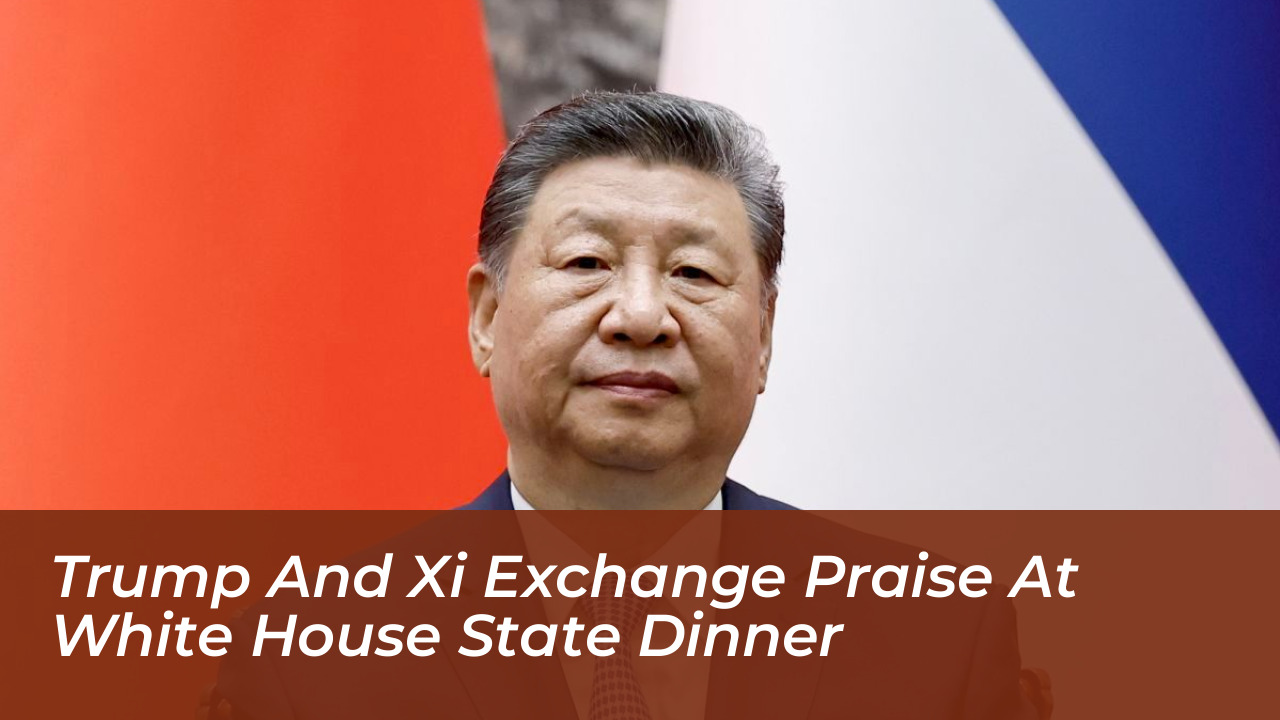
President Donald Trump and Chinese leader Xi Jinping exchanged warm diplomatic rhetoric during a landmark state dinner at the White House, marking a fascinating chapter in bilateral relations. This high-profile gathering on September 24, 2026, served as the second major summit of the year following a high-level dialogue in Beijing during May. The evening brought together American political power, industrial capital, and artificial intelligence leadership to address global security frameworks and trade.
- Historic Arrival and Full Military Honors at Joint Base Andrews
- Tarmac Reception and Protocol Break
- Military Review and Deterrence Display
- The Silicon Valley Guest List at the White House East Room
- American Technology Titans in Attendance
- Strategic Focus on Domestic Representation
- Tackling Artificial Intelligence and Global Tech Dominance
- Super Intelligence and American Priorities
- Risk Mitigation and Communication Mechanisms
- Economic Realities, Tariffs, and Supply Chain Pressures
- Trade Imbalances and Rare Earth Minerals
- Automotive Manufacturing and Global Competition
- Behind Closed Doors: The Geopolitical Standoff Over Taiwan
- Core Territorial Interests and Prudence
- Weapons Packages and Military Readiness
- Cultural Diplomacy: Pandas and Presidential Gifts
- Reviving Panda Diplomacy at Zoo Atlanta
- Custom Artworks and Historic Mementos
- Inside the State Dinner: Aesthetics, Menu, and Unscripted Moments
- White House East Room Design and Tableware
- Musical Performances and Construction Jokes
- Frequently Asked Questions
- When did the Trump and Xi White House dinner take place?
- Which technology leaders attended the White House state dinner?
- What were the main topics discussed during the summit?
- What diplomatic gifts were exchanged?
While the atmosphere inside the White House remained cordial, underlying strategic competition defined the contemporary relationship between Washington and Beijing. Trade tensions, disagreements over Taiwan, and the global race for artificial intelligence supremacy lingered just beneath the polished surface. This summit demonstrated how modern superpowers must balance fierce economic rivalry with necessary diplomatic engagement.
Historic Arrival and Full Military Honors at Joint Base Andrews
Tarmac Reception and Protocol Break
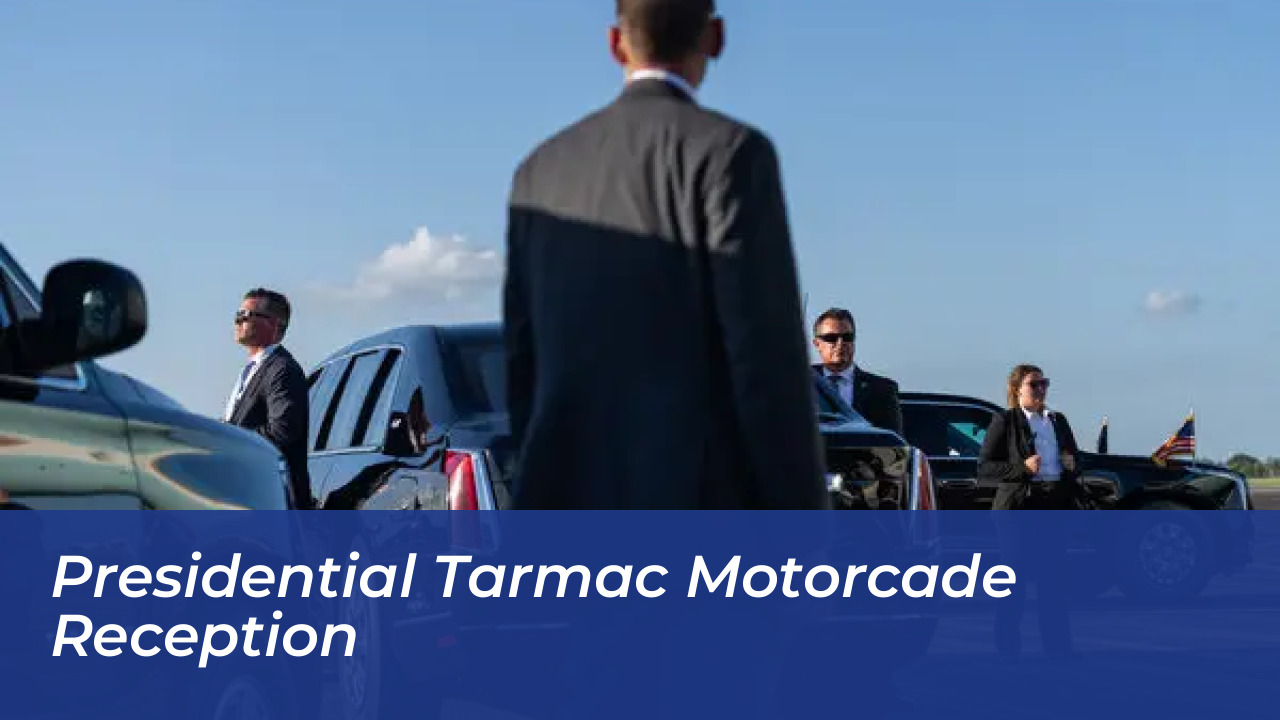
The state visit commenced with a dramatic reception at Joint Base Andrews in Maryland. President Trump broke with traditional protocol to personally greet President Xi Jinping and First Lady Peng Liyuan on the tarmac. This personalized welcome set a cooperative and unexpected tone for the multi-day diplomatic mission before the delegation even reached the nation capital.
Following the tarmac greeting, the visiting leaders traveled directly to the White House for formal bilateral discussions in the Oval Office. Both administrations aimed to project an image of mutual respect while acknowledging the deep policy chasms that separate their respective governments on trade and regional security.
Military Review and Deterrence Display
A full military review followed the initial arrival, featuring 479 military personnel, a 21-gun salute, and a screaming flyover by United States fighter jets. This impressive display of military hardware underscored the underlying deterrence strategy that parallels diplomatic engagements between the two nuclear-armed superpowers.
Ceremonial military reviews during state visits serve a dual purpose. They honor visiting heads of state while subtly projecting national strength and defense readiness. The carefully choreographed military display at Joint Base Andrews sent a clear message regarding American military capabilities.
The Silicon Valley Guest List at the White House East Room
American Technology Titans in Attendance
The guest list for the state dinner read like a roll call of global corporate dominance. Prominent American technology executives secured coveted seats alongside members of President Trump cabinet and foreign dignitaries. Nvidia Chief Executive Officer Jensen Huang, Tesla and xAI Chief Executive Officer Elon Musk, Advanced Micro Devices Chief Executive Officer Lisa Su, and Apple Chief Executive Officer Tim Cook attended the banquet.
Other notable figures included OpenAI Chief Executive Officer Sam Altman, Alphabet and Google Chief Executive Officer Sundar Pichai, Amazon founder Jeff Bezos, and Meta Chief Executive Officer Mark Zuckerberg. Their presence highlighted the inextricable link between modern geopolitical strategy and corporate technology development.
Strategic Focus on Domestic Representation
Notably, Chinese business leaders were absent from the visiting delegation, focusing the corporate representation entirely on American executives. These leaders navigate the complex regulatory frameworks and supply chain intersections of the world two largest economies daily. Their inclusion at the dinner table ensured that private sector interests directly informed the broader discussions.
Political figures in attendance included Secretary of State Marco Rubio, Defense Secretary Pete Hegseth, and Chief of Staff Monica Crowley. Supreme Court Justices John Roberts, Amy Coney Barrett, and Brett Kavanaugh also participated in the black-tie evening, representing a true cross-section of American governance and industry.
Tackling Artificial Intelligence and Global Tech Dominance
Super Intelligence and American Priorities
Artificial intelligence emerged as a central pillar of the bilateral talks. President Trump frequently refers to advanced artificial intelligence systems using the terminology of super intelligence, emphasizing the necessity of maintaining American technological dominance. The race to command the next generation of computing infrastructure remains a top national security priority.
Conversely, during the joint addresses, President Xi stressed the imperative of international cooperation and safety. Xi emphasized that both nations share a responsibility to ensure that artificial intelligence development remains strictly under human control and serves the collective well-being of global populations rather than triggering autonomous conflicts.
Risk Mitigation and Communication Mechanisms
Treasury Secretary Scott Bessent noted that the two administrations proposed establishing a direct communication mechanism. This hotline aims to alert each other to artificial intelligence-related incidents that could impact national security or destabilize financial markets. Both nations plan to continue these technical discussions during an upcoming Asia-Pacific economic summit in November.
Establishing guardrails for advanced technology requires unprecedented levels of transparency between Washington and Beijing. While both sides remain fiercely competitive, acknowledging the systemic risks of unregulated artificial intelligence created a rare zone of cooperative dialogue during the summit.
Economic Realities, Tariffs, and Supply Chain Pressures
Trade Imbalances and Rare Earth Minerals
Economic discussions during the summit centered on trade imbalances, market access, and industrial supply chains. Washington pursued policy goals aimed at reducing American trade deficits, lowering Chinese tariffs on imported American agricultural goods, and securing reliable access to critical rare earth minerals essential for defense manufacturing and consumer electronics.
In response, Beijing demanded relief from American export controls on advanced semiconductor chips and high-performance computing hardware. These chip restrictions remain a major sticking point in bilateral economic negotiations, as Chinese technology companies struggle to source cutting-edge silicon components domestically.
Automotive Manufacturing and Global Competition
The global electric vehicle market also served as a backdrop for the talks. European industrial challenges, exemplified by sweeping restructurings and plant closures among legacy automakers like Volkswagen amidst competition from Chinese manufacturers such as BYD, informed discussions regarding industrial protectionism and fair market competition.
Both leaders recognized that state subsidies and manufacturing overcapacity threaten traditional trade agreements. Finding a sustainable equilibrium between domestic job creation and open global markets requires continuous negotiation and compromise from both economic powerhouses.
Behind Closed Doors: The Geopolitical Standoff Over Taiwan
Core Territorial Interests and Prudence
Behind closed doors, the status of Taiwan remained one of the most sensitive subjects of the summit. Beijing views Taiwan as a core territorial interest and urged Washington to handle the issue with utmost prudence. Chinese officials cautioned strongly against American arms sales and legislative support for the self-governing democracy.
Managing cross-strait relations demands extreme diplomatic calibration. American administrations must balance statutory commitments under the Taiwan Relations Act with the overarching goal of preventing a direct military confrontation in the Indo-Pacific region.
Weapons Packages and Military Readiness
Evaluations of a stalled fourteen billion dollar weapons package served as a diplomatic negotiating lever during the broader trade talks. Secretary of State Marco Rubio noted that any foreign military sales must be carefully balanced against domestic industrial manufacturing capacity and the operational readiness of United States military stockpiles.
Military readiness remains a core concern for the Pentagon as defense contractors struggle to meet both domestic procurement goals and international delivery timelines. The interplay between foreign arms sales and domestic industrial output highlights the complex logistical reality behind geopolitical posturing.
Cultural Diplomacy: Pandas and Presidential Gifts
Reviving Panda Diplomacy at Zoo Atlanta
Reviving a historical diplomatic tradition initiated during President Richard Nixon visit to China in 1972, President Xi announced a major gesture of goodwill. Two giant pandas, named Ping Ping and Fu Shuang, are scheduled to arrive at Zoo Atlanta to join the American public exhibition. This announcement provided an immediate symbolic win for diplomatic relations.
Panda diplomacy has long served as a reliable method for softening the optics of high-level political meetings. The introduction of these pandas to an American audience generated widespread public enthusiasm, momentarily overshadowing deeper policy disagreements.
Custom Artworks and Historic Mementos
During the state dinner itself, President Trump presented Xi with a custom bronze sculpture of a bald eagle, crafted by an American artist with design input from First Lady Melania Trump. Trump remarked that the sculpture embodied the free and soaring spirit of the United States.
Gift exchanges at this level carry profound symbolic weight, reflecting national values and artistic heritage. The bald eagle sculpture offered a distinctively American artistic expression to commemorate a complex and historically significant presidential summit.
Inside the State Dinner: Aesthetics, Menu, and Unscripted Moments
White House East Room Design and Tableware
First Lady Melania Trump oversaw the design and execution of the state dinner in the historic East Room. The room was transformed with crimson table linens, overflowing urns of red dahlias, and the historic Reagan State Service tableware, featuring scarlet red borders with etched gold bands.
The culinary presentation featured a fusion of classic American ingredients and delicate Asian flavor profiles across multiple courses. Every detail of the dining experience was meticulously planned to project elegance, hospitality, and cultural appreciation.
Musical Performances and Construction Jokes
Musical performances by the United States Marine Band, Army Chorus, and tenor Christopher Macchio entertained the gathered dignitaries throughout the evening. The artistic program showcased the best of American musical talent in front of an international audience.
During an unscripted moment in the evening, President Trump invited guests to inspect the uncompleted twenty thousand square foot White House ballroom project. This lighthearted detour added a touch of personal candor to an otherwise heavily choreographed state visit, leaving attendees with a memorable glimpse behind the scenes of the executive mansion.
Frequently Asked Questions
When did the Trump and Xi White House dinner take place?
The landmark state dinner took place at the White House on September 24, 2026, marking President Xi Jinping first official state visit to Washington in over a decade.
Which technology leaders attended the White House state dinner?
Prominent American tech leaders in attendance included Nvidia CEO Jensen Huang, Tesla CEO Elon Musk, Apple CEO Tim Cook, OpenAI CEO Sam Altman, and Google CEO Sundar Pichai.
What were the main topics discussed during the summit?
Discussions centered on artificial intelligence governance, trade imbalances, rare earth minerals, semiconductor export controls, and the geopolitical status of Taiwan.
What diplomatic gifts were exchanged?
President Trump presented President Xi with a custom bronze sculpture of a bald eagle designed by Melania Trump, while President Xi announced the transfer of two giant pandas, Ping Ping and Fu Shuang, to Zoo Atlanta.