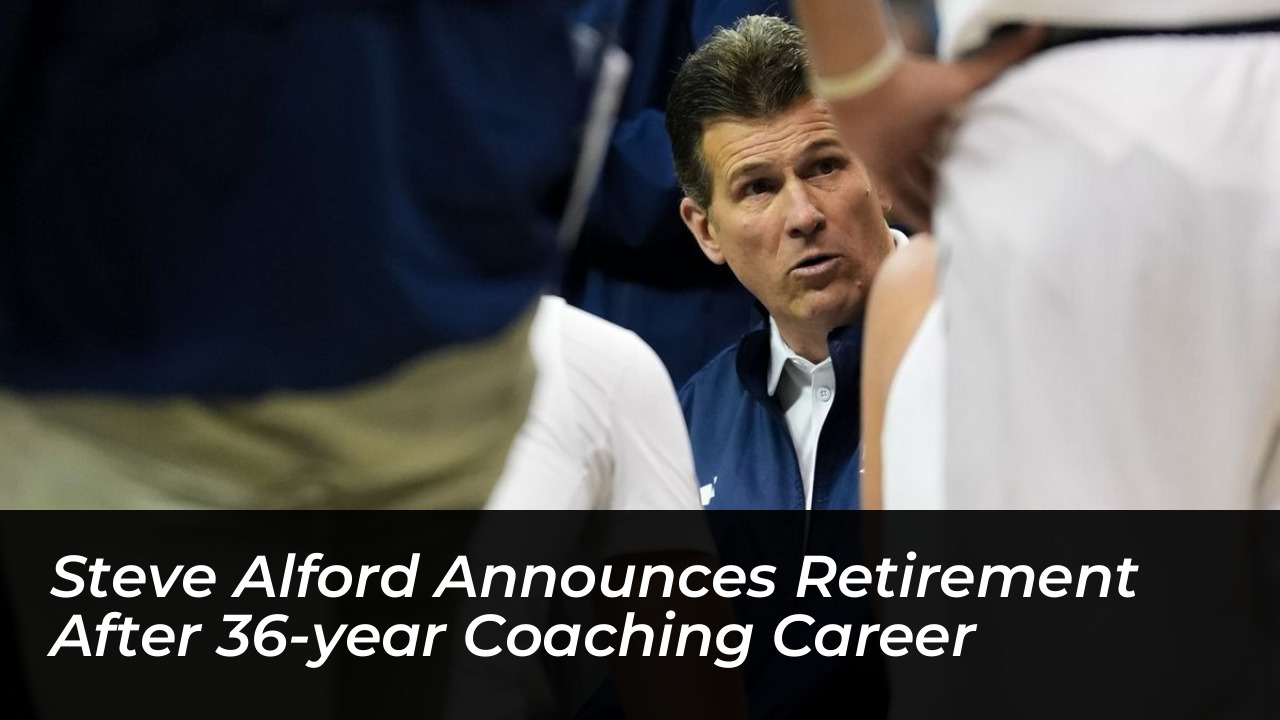
Nevada head coach Steve Alford announced that the upcoming 2026-27 college basketball campaign will mark his final season on the sideline, ending a remarkable 36-year tenure. This retirement decision brings a definitive close to a historic run that spans six distinct NCAA programs across both Division III and Division I levels. Alford enters his eighth year leading the Wolf Pack holding a 137-88 record in Reno and a stellar 724-386 overall career record. His 724 victories place him 10th among all active NCAA Division I head coaches, cementing his status as one of the most enduring figures in the sport. Alongside St. John’s head coach Rick Pitino, Alford shares an exclusive piece of college basketball history as one of only two coaches to guide six different programs to the NCAA Tournament.
- The Blueprint of a 36-Year Coaching Journey
- Nevada Tenure and Building the Wolf Pack Legacy
- By the Numbers: A Statistical Breakdown of Alford’s Career
- From Bob Knight Disciple to Elite Player
- University Leadership Tributes and Reactions
- What Lies Ahead for Nevada Basketball
- Frequently Asked Questions
- When will Steve Alford officially retire from coaching?
- How many career wins does Steve Alford have?
- Which programs did Alford lead to the NCAA Tournament?
- Who did Alford play for in college?
The official retirement announcement from Reno sets the stage for a comprehensive farewell tour with the Nevada Wolf Pack. As fans, players, and administrators prepare to celebrate his extensive contributions to the game, college basketball reflects on a career defined by longevity, program turnarounds, and deep roots in the sport.
The Blueprint of a 36-Year Coaching Journey
Alford’s coaching evolution traces a path from small-college gyms to major conference arenas. He transitioned directly from his professional playing days into coaching in 1991, taking over at Division III Manchester University in Indiana. He quickly transformed the Spartans into an elite program, capped by a brilliant 31-1 season in 1995 that reached the Division III national championship game. That immediate success launched a multi-decade progression through the collegiate ranks.

Moving to the Division I level with Southwest Missouri State, Alford led the Bears to the Sweet 16 in 1999. A successful eight-year stint with the Iowa Hawkeyes followed, where he captured two Big Ten Tournament titles and secured six postseason bids in Iowa City. His greatest mid-major success arrived in Albuquerque, where he transformed the New Mexico Lobos into a Mountain West powerhouse with four regular-season titles and three NCAA Tournament berths.
That sustained success earned Alford the head coaching position at UCLA in 2013. In Westwood, he led the Bruins to three Sweet 16 appearances in his first four seasons and recruited elite NBA talent, including Zach LaVine and Lonzo Ball. Following his tenure at UCLA, Nevada secured his services in April 2019 to maintain the Wolf Pack as a competitive force in the Mountain West.
Nevada Tenure and Building the Wolf Pack Legacy
Stepping into the role in Reno following Eric Musselman’s departure to Arkansas, Alford maintained high standards for the program. Through seven completed seasons, he compiled a strong 137-88 record, secured two NCAA Tournament appearances, and maintained consistent top-tier conference standing in a competitive league.
Alford enters his final campaign with a roster fully equipped to contend in a newly restructured Mountain West Conference. The Wolf Pack return key starters Elijah Price and Vaughn Weems, bolstered by a strong influx of talent from the transfer portal. Nevada aims to capture its first conference title since the 2018-19 season, providing a fitting backdrop for the farewell tour.
Player development remained a core pillar of his philosophy throughout his time in northern Nevada. Numerous student-athletes earned all-conference honors and advanced to professional playing careers overseas. Alford consistently maximized his roster talent by emphasizing disciplined defense and smart half-court execution.
By the Numbers: A Statistical Breakdown of Alford’s Career
Alford leaves behind a comprehensive statistical resume that places him among the winningest coaches of his generation. His achievements reflect consistent success across multiple competitive conferences.
- 724 Career Wins: Ranking 10th among active NCAA Division I head coaches.
- 6 Different NCAA Tournament Programs: Sharing an exclusive historical club alongside Rick Pitino for taking Manchester, Southwest Missouri State, Iowa, New Mexico, UCLA, and Nevada to the big dance.
- 9 Conference Championships: Comprising four regular-season titles and five conference tournament crowns.
- 21 Twenty-Win Seasons: Demonstrating sustained excellence with 16 campaigns reaching the mark at the Division I level.
Reaching these milestones required immense adaptability in an ever-changing collegiate athletic landscape. Alford successfully navigated shifts in recruiting tactics, conference realignments, and the emergence of the transfer portal.
From Bob Knight Disciple to Elite Player
Before patrolling the sidelines, Alford earned national renown as a legendary player under Bob Knight at Indiana University. As a 6-foot-2 point guard, he earned consensus First-Team All-American honors twice and led the Hoosiers to the 1987 NCAA National Championship. He finished his career as Indiana’s all-time leading scorer with 2,438 points before Calbert Cheaney eventually surpassed him.

Alford also tasted international glory as a 19-year-old sophomore, winning a gold medal with the United States men’s basketball team at the 1984 Los Angeles Olympics. The Dallas Mavericks selected him 26th overall in the 1987 NBA Draft, where he played four seasons with Dallas and the Golden State Warriors before pivoting seamlessly into coaching at age 26.
The lessons learned under legendary mentors shaped his direct, high-accountability coaching style. Those formative playing experiences gave him unique credibility when mentoring young athletes aiming for the professional ranks.
University Leadership Tributes and Reactions
“After 36 years, I feel like this is the right time to step away from the bench,” Alford stated in the official university release. “Tanya and I have loved our time in Reno, and have embraced this amazing community and built lifelong friendships. I want to thank the University of Nevada for the opportunity to lead this program, and I am looking forward to finishing this season the right way.”
University leadership expressed profound gratitude for his contributions. Nevada athletic director Stephanie Rempe praised his consistency, integrity, and commitment to developing student-athletes through a turbulent era of collegiate athletics. University president Brian Sandoval noted that Alford’s tenure represents an era of achievement and growth that the campus will fondly remember.
Fans and local media outlets echoed these sentiments, flooding social media platforms with tributes highlighting his greatest wins in Reno. The outpouring of support underscores his deep connection with the local community.
What Lies Ahead for Nevada Basketball
When Alford steps down at the conclusion of the 2026-27 season, Nevada will face the challenge of replacing the most successful men’s basketball coach of the 21st century in Reno. The program has captured 12 conference titles and nine NCAA Tournament bids since 2000. , the coaching transition aligns with a major infrastructure milestone for the athletic department as the Wolf Pack prepare to move into a new $435 million arena on the Grand Sierra Resort property for the 2028-29 season.
For now, attention remains fixed on the hardwood. Alford has one final opportunity to add to his 724 career wins, guide a veteran-laden Nevada roster through a challenging conference slate, and write the final chapter of a storied 36-year basketball legacy.
The search committee will undoubtedly seek a successor capable of maintaining high standards while utilizing the upcoming state-of-the-art facilities to attract premier recruits. Securing a smooth transition remains paramount for sustaining the competitive momentum built over the past decade.
Frequently Asked Questions
When will Steve Alford officially retire from coaching?
Steve Alford announced that the conclusion of the 2026-27 college basketball season will mark his final year on the sideline.
How many career wins does Steve Alford have?
Alford holds a stellar 724-386 overall career record, placing him 10th among all active NCAA Division I head coaches.
Which programs did Alford lead to the NCAA Tournament?
He guided six different programs to the big dance: Manchester, Southwest Missouri State, Iowa, New Mexico, UCLA, and Nevada.
Who did Alford play for in college?
He starred as an All-American point guard for legendary coach Bob Knight at Indiana University, winning the 1987 national championship.