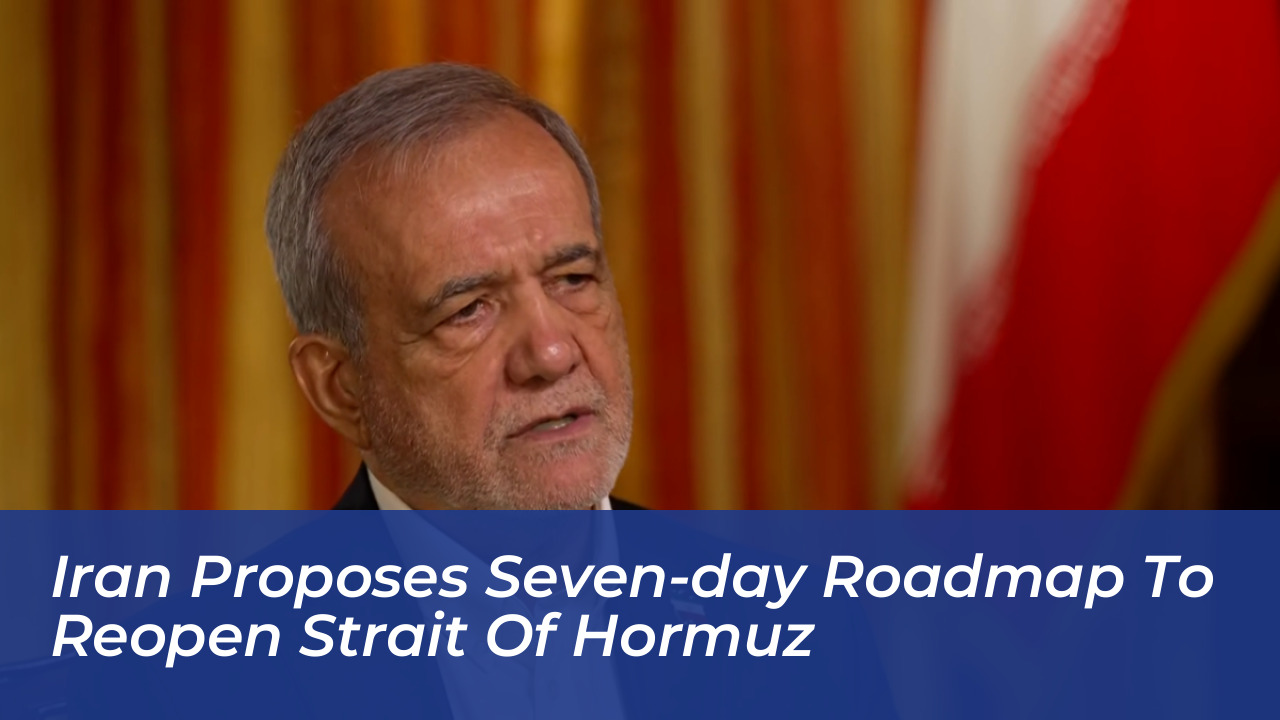
Iranian President Masoud Pezeshkian announced a fast-tracked diplomatic initiative on September 25, 2026, confirming that Iranian president signals readiness for Strait reopening and talks regarding its nuclear program. Speaking on CBS News’s “Face the Nation with Margaret Brennan,” Pezeshkian outlined a phased seven-day diplomatic roadmap designed to ease maritime tension, restore economic access, and allow international inspectors into Iranian sites. Foreign Minister Abbas Araghchi presented this proposal to American counterparts at the United Nations General Assembly in New York. Despite this proposal, deep-seated geopolitical distrust and recent military clashes leave the path to a lasting US-Iran agreement uncertain.
- The Seven-Day Phased Diplomatic Roadmap
- Days 1 to 5: Reciprocal US Actions and Ceasefires
- Day 6: Reopening Commercial Maritime Shipping
- Day 7: Launching Nuclear Negotiations and Verification Protocols
- Addressing Deep Distrust and Broken Agreements
- The Collapse of the June 2026 Memorandum of Understanding
- Evaluating US Military Pressure and Economic Sanctions
- Maritime Logistics and Territorial Routing Controversies
- Bilateral Routing Protocols versus Regional Standards
- Freedom of Navigation and the Maritime Toll Debate
- Nuclear Verification and Enrichment Boundaries
- IAEA Access and Facility Damage Assessments
- The Haram Fatwa and Non-Proliferation Policy
- Leadership Dynamics and Security Governance in Tehran
- Medical Assessment of Supreme Leader Mojtaba Khamenei
- The Six-Member National Security Council Structure
- Washington Counter-Strategy: Sanctions and Economic Pressure
- Treasury Actions Against International Enablers
- Aviation Blockades and Dollar System Restrictions
- Frequently Asked Questions
- What is the core of Iran’s seven-day proposal?
- Why are Gulf countries skeptical of the plan?
- Conclusion
The proposal arrives after months of economic pressure and naval engagements that choked shipping lanes across the Middle East. Tehran presents this rapid blueprint as a clear exit route from regional conflict. However, both sides remain locked in a stand-off that requires immediate, high-stakes concessions before any permanent ceasefires can take hold.
The Seven-Day Phased Diplomatic Roadmap
The core of Tehran’s initiative lies in its compressed timeline. Iranian negotiators want to condense complex diplomatic items that typically take months into a tight seven-day operational sequence. Under this structure, Washington must complete broad economic and military actions before Iran alters its operational posture in the Persian Gulf.
This sequential design reflects Iran’s insistence on immediate tangible benefits before committing to lasting operational changes. Foreign Minister Abbas Araghchi communicated these terms to US envoy Steve Witkoff during high-level meetings in New York City, framing the deal as an all-or-nothing package deal.
Days 1 to 5: Reciprocal US Actions and Ceasefires
The initial five days require the United States to dismantle key economic constraints. Washington must lift its naval blockade against major Iranian crude facilities, including Kharg Island, and restore legal export waivers for global energy buyers. The US Treasury must restore dollar clearing access for commercial transactions involving Iranian petroleum products and release billions in frozen foreign assets.
On the security front, Washington must enforce a comprehensive ceasefire halting Israeli military operations across Lebanon. Tehran considers stopping these strikes a foundational requirement before any maritime choke point can open. Without a clear halt to operations in Lebanon, Iranian officials maintain that local defense networks will remain on maximum alert.
Day 6: Reopening Commercial Maritime Shipping
If Washington satisfies the conditions set in the first five days, Iran will officially open the Strait of Hormuz to commercial transit on Day 6. Commercial traffic will flow through a newly organized shipping channel running through Iranian and Omani waters.
This operational transition requires clearing heavy naval assets from commercial corridors. Iran plans to issue updated navigation notices to international shipping registries, directing tankers into safe passage routes designed to prevent accidental military clashes.
Day 7: Launching Nuclear Negotiations and Verification Protocols
The final step brings both nations back to the negotiating table for bilateral discussions on Iran’s civil nuclear program. On this day, Iranian representatives and international envoys will finalize technical verification protocols for site monitors.
This stage sets up formal monitoring schedules, laying out ground rules for how global inspectors will evaluate atomic facilities and handle enriched uranium stockpiles built up over recent years.
Addressing Deep Distrust and Broken Agreements
During his interview with Margaret Brennan on CBS News, President Pezeshkian spent significant time outlining the severe lack of trust between Washington and Tehran. He pointed out that past negotiations were repeatedly undermined by sudden military actions or tightened economic sanctions, making long-term planning extremely difficult for Iranian officials.
Pezeshkian questioned whether American officials would honor signed documents, citing recent military strikes that hit Iranian infrastructure while diplomatic discussions were actively underway. This pattern of escalation during talks remains a primary obstacle for negotiators on both sides.
The Collapse of the June 2026 Memorandum of Understanding
A primary source of current friction is the complete failure of the June 2026 Memorandum of Understanding (MoU). That 60-day framework was established to lower naval tensions and maintain steady dialogue. However, the agreement disintegrated in July 2026 after brief maritime exchanges in the Persian Gulf escalated into direct missile strikes on energy facilities.
The collapse of that agreement destroyed early confidence measures, prompting Iranian commanders to take direct control over transit corridors through the Strait of Hormuz. Rebuilding that lost agreement requires specific operational guarantees rather than verbal promises.
Evaluating US Military Pressure and Economic Sanctions
Iran continues to face severe economic penalties alongside heavy military deployments across the region. “Every day, they increase the sanctions against us. Every day, they threaten us. Every day, they strike us,” Pezeshkian told CBS News. He noted that direct head-to-head talks with US President Donald Trump remain almost impossible while military pressure continues.
“Developing nuclear weapons is haram. As long as they don’t cease doing what they’re imposing on us every day, it’s difficult to trust them.”
– Masoud Pezeshkian, President of Iran
This constant pressure cycle leaves Iranian leadership skeptical of Western intent. Consequently, Tehran demands immediate sanctions relief during the early days of any deal to prove Washington’s commitment.
Maritime Logistics and Territorial Routing Controversies
The logistics of reopening the Strait of Hormuz present major diplomatic and operational hurdles. Tehran’s proposed shipping framework intentionally alters traditional transit routes, moving maritime traffic deeper into waters controlled directly by Iran and Oman.
This change has triggered debates over international maritime law, freedom of navigation, and economic jurisdiction across the wider Gulf region.
| Issue Area | Iranian Proposal | US and Regional Position |
|---|---|---|
| Shipping Corridors | Routed through Iranian and Omani territorial waters | Standard international transit passages |
| Regulatory Oversight | Requires prior Iranian transit clearance and safety fees | Rejects tolls, insists on open international passage |
| Regional Agreement | Bilateral accord with Oman, shared with China | GCC members insist on full regional consensus |
Bilateral Routing Protocols versus Regional Standards
Iran developed its proposed shipping route in close coordination with Oman, securing bilateral approvals before presenting the framework to Chinese diplomats and American representatives. However, this bilateral approach bypasses established standards supported by the Gulf Cooperation Council (GCC).
GCC member nations, led by Saudi Arabia, strongly object to a framework negotiated outside wider regional consensus. They argue that granting Iran primary regulatory authority over shipping corridors threatens long-term commercial stability across the entire Persian Gulf.
Freedom of Navigation and the Maritime Toll Debate
The United States maintains that international law guarantees unimpeded transit passage through the Strait of Hormuz for all commercial vessels. Washington firmly rejects any attempt by Tehran to levy transit fees, enforce toll systems, or compel ships to enter Iranian-controlled waters.
Iran counters that commercial vessels must obtain explicit clearance and follow specified routes to guarantee safe passage through high-risk operational areas. This basic disagreement over maritime sovereignty remains a potential dealbreaker for Western naval commanders.
Nuclear Verification and Enrichment Boundaries
International concern over Iran’s nuclear capabilities forms a critical core of ongoing diplomatic discussions. Over recent years, Iranian processing facilities accumulated uranium enriched up to 60 percent purity, placing stockpiles within technical proximity of weapons-grade thresholds.
The proposed seven-day roadmap offers a clear framework to address these stockpiles, provided Washington fulfills its early-stage commitments regarding sanctions relief.
IAEA Access and Facility Damage Assessments
When questioned directly during his interview on whether Iran would allow United Nations International Atomic Energy Agency (IAEA) inspectors back into key sites, President Pezeshkian confirmed that Tehran would grant access. “That is absolutely correct,” Pezeshkian stated, outlining Iran’s readiness to permit comprehensive inspections.
These inspections will involve precise monitoring of 60 percent enriched stockpiles and detailed technical damage assessments of facilities hit during recent military strikes. However, these operations remain strictly conditional upon final ground rules established on Day 7.
The Haram Fatwa and Non-Proliferation Policy
Pezeshkian reiterated Iran’s strategic nuclear policy, pointing to standing religious rulings that prohibit non-conventional armament. Citing the long-standing fatwa issued by Iranian supreme leadership, he emphasized that Islamic law bans the development, stockpiling, or use of nuclear warheads.
He argued that religious mandates guide national defense strategy, maintaining that Iranian defense institutions seek technical civil energy capabilities rather than nuclear weapons, even under severe military threat.
Leadership Dynamics and Security Governance in Tehran
Recent leadership changes in Tehran have sparked widespread global analysis regarding who controls Iranian national security policy. Following the loss of former Supreme Leader Ali Khamenei in a major military attack earlier in 2026, questions surfaced regarding the authority and health of his successor.
President Pezeshkian directly addressed these leadership questions during his CBS News interview, providing rare insights into current administrative governance.
Medical Assessment of Supreme Leader Mojtaba Khamenei
Drawing on his professional background as a cardiac surgeon, President Pezeshkian forcefully dismissed foreign media reports claiming Supreme Leader Mojtaba Khamenei suffered incapacitating physical injuries in earlier strikes.
Pezeshkian described a recent strategy session where both leaders sat together continuously for over seven hours to draft national response policies. “From a medical standpoint, he’s completely healthy,” Pezeshkian clarified, stating that all minor injuries sustained in past attacks have fully healed.
The Six-Member National Security Council Structure
Iranian diplomatic and security policy currently routes through a specialized six-member advisory council. This compact executive council coordinates military intelligence, parliamentary views, and presidential policy into unified national decisions.
This governance model allows Tehran to react quickly during fast-moving crisis situations. It ensures that executive proposals, such as the seven-day roadmap, carry full backing from military and political factions in Iran.
Washington Counter-Strategy: Sanctions and Economic Pressure
Despite Tehran’s diplomatic overtures, Washington continues to execute a rigorous economic containment strategy. American policymakers remain cautious, treating the seven-day proposal with deep skepticism while expanding targeted financial pressure.
This strategy focuses on isolating Iranian commercial access, penalizing international trade intermediaries, and cutting off non-dollar financial networks that support Iran’s foreign commerce.
Treasury Actions Against International Enablers
The US Department of the Treasury expanded its enforcement actions against global institutions facilitating Iranian trade. Recent sanctions targeted major foreign banking institutions, including Russia’s VTB Bank, to disrupt alternative financial clearings used for Iranian oil settlement.
By penalizing non-Western institutions handling Iranian financial assets, the United States aims to reduce Tehran’s access to international capital markets, keeping severe pressure on its foreign currency reserves.
Aviation Blockades and Dollar System Restrictions
Beyond naval blockades, Washington enforces aggressive aviation blockades targeting Iranian commercial transport. Federal authorities penalized foreign airports that offer ground services, refueling, or maintenance to commercial aircraft operated by Iranian carriers.
These aviation penalties, paired with strict enforcement of dollar clearing restrictions, severely limit Iran’s operational access to global commerce channels, forming a major component of Washington’s counter-strategy.
Frequently Asked Questions
What is the core of Iran’s seven-day proposal?
Iran proposes a phased schedule to lift sanctions, reopen the Strait of Hormuz, and resume nuclear talks.
Why are Gulf countries skeptical of the plan?
GCC nations object to bilateral routing agreements that bypass regional consensus and safety standards.
Conclusion
The diplomatic proposal advanced by President Pezeshkian highlights a critical juncture in the regional confrontation. By compressing complex terms into a fast-tracked seven-day timeline, Iran offers a direct framework to reopen international waterways and clear the path for IAEA nuclear inspections. However, this plan requires Washington to make major economic concessions early on, creating a difficult sell for American officials pursuing maximum economic pressure.
Whether this seven-day roadmap can lead to actual diplomatic breakthroughs depends heavily on overcoming deep historical distrust. As both nations balance military readiness against economic survival, the coming weeks will determine whether structured dialogue can replace dangerous maritime friction across the Strait of Hormuz.