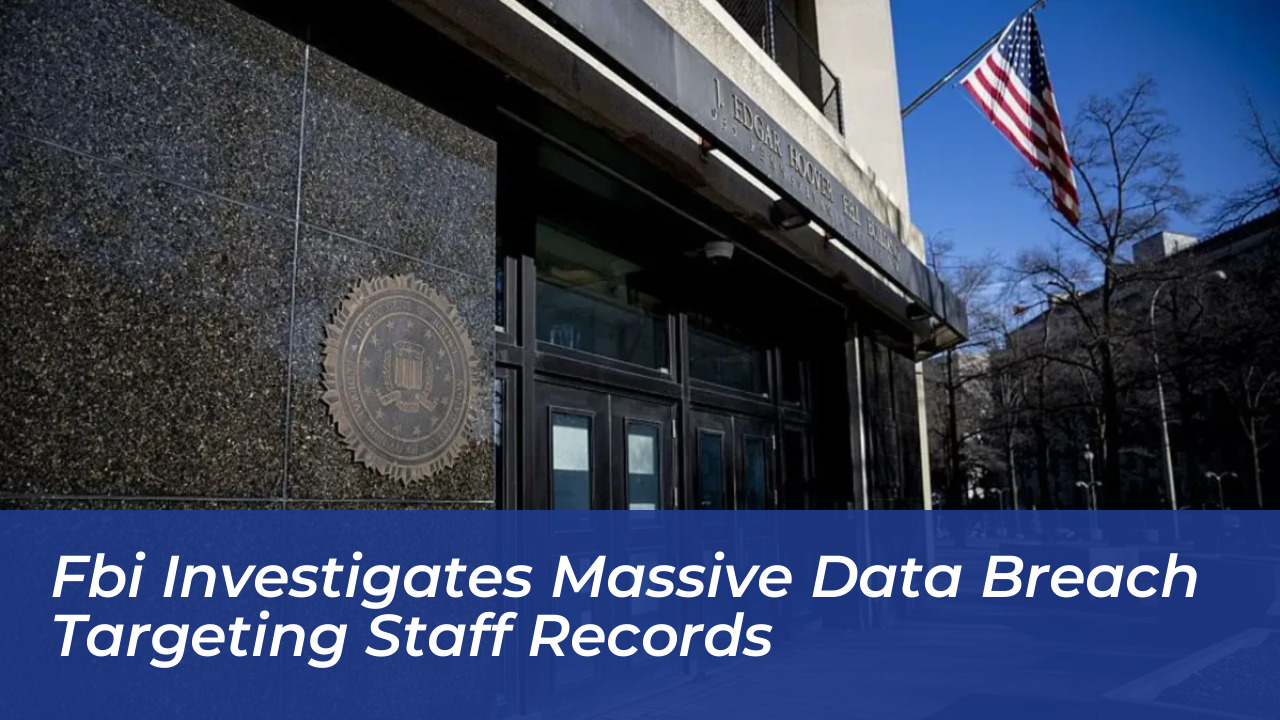
The Federal Bureau of Investigation is actively investigating a severe cybersecurity incident following claims by the notorious extortion syndicate ShinyHunters. The collective asserts that it successfully compromised recruitment infrastructure on FBIJobs.gov. This alleged breach threatens the privacy and physical security of approximately five thousand active and former bureau employees, including high-profile operatives assigned to sensitive national security divisions. Unlike financially motivated ransomware campaigns that target corporate ledgers, this intrusion stems from geopolitical and retaliatory motives. Understanding the scope of the exposed data requires examining how the breach occurred, the specific units affected, and the broader implications for federal law enforcement infrastructure.
- Anatomy of the FBIJobs.gov Security Compromise
- Initial Discovery and Federal Response
- Geopolitical and Retaliatory Motives
- How the ShinyHunters Syndicate Executed the Attack
- Exploiting Web-Facing Application Portals
- Vulnerabilities in Oracle PeopleSoft and Cloud Infrastructure
- Forensic Auditing and Attack Verification
- What the Compromised Personnel Sample Contains
- Validation of Leaked Records
- Exposed Data Fields and Personal Risks
- The Escalation: Exposure of Specialized Operational Units
- Compromising the Remote Operations Unit
- Impact on Counterintelligence and National Security
- Motivations and Extortion Tactics
- Retaliation for Federal Cyber Advisories
- Immediate Mitigations and Long-Term Security Fallout
- Emergency Response and System Lockdown
- Re-Evaluating Federal Human-Resources Security
- Digital Defense Strategies Moving Forward
- Enhancing Identity Verification Protocols
- Securing Cloud Environments Against Lateral Movement
- Frequently Asked Questions
- What is the FBIJobs.gov data breach?
- How many employees are affected by the breach?
- What type of data was stolen in the attack?
- Why did ShinyHunters target the FBI?
- How can affected personnel protect themselves?
Anatomy of the FBIJobs.gov Security Compromise
Initial Discovery and Federal Response
The Federal Bureau of Investigation launched an active investigation into a severe cyber security incident immediately after researchers flagged suspicious activities. Claims quickly emerged from the extortion syndicate ShinyHunters regarding the compromise of primary recruitment infrastructure. This unauthorized access directly threatens the privacy and physical security of active and former bureau employees who trusted the agency with their sensitive background information.
Federal incident response teams mobilized to contain the threat as soon as anomalous traffic patterns appeared on public-facing networks. The speed of the response highlights the gravity of the situation, given the high-level clearances held by many individuals who interacted with the recruitment portal over the years.
Geopolitical and Retaliatory Motives
Unlike financially motivated ransomware campaigns targeting corporate ledgers for quick cryptocurrency payouts, this attack stems from direct retaliation against federal cybersecurity advisories. The perpetrators sought to make a political and reputational statement rather than a monetary gain.
This dynamic shifts the paradigm of modern threat intelligence. It demonstrates that federal law enforcement agencies are prime targets for retaliatory strikes by sophisticated syndicates looking to undermine public confidence in government security measures.
How the ShinyHunters Syndicate Executed the Attack
Exploiting Web-Facing Application Portals
Unauthorized access was achieved via apply.fbijobs.gov recruitment platforms where prospective agents submit extensive personal histories. Visitors to the site encountered visual defacement featuring fraudulent seizure banners and group monikers associated with the ShinyHunters syndicate.
This public-facing defacement served as the initial indicator of an extensive data-exfiltration operation. The attackers leveraged the recruitment portal as a springboard to probe deeper into adjacent federal digital networks.
Vulnerabilities in Oracle PeopleSoft and Cloud Infrastructure
The intrusion vector relied heavily on unauthenticated remote code execution vulnerabilities within Oracle PeopleSoft enterprise software. This human resources management platform acts as the core database for applicant tracking and personnel records.
Once inside the application layer, the threat actors executed lateral movement from human resources management platforms into AWS GovCloud environments. The attackers claim to have exfiltrated between two and three terabytes of sensitive government data, though verification remains ongoing.
Forensic Auditing and Attack Verification
Verifying the claims requires separating frontend web defacement from actual deep lateral movement into secure zones. Forensic auditors are currently parsing cloud audit trails, access logs, and outbound transfer volumes to establish the truth.
Ongoing timeline reconstruction by federal incident response teams will eventually determine whether the attackers truly accessed classified repositories or if the damage remains restricted to the human resources perimeter.
What the Compromised Personnel Sample Contains
Validation of Leaked Records
To prove their access, the hackers distributed a five-thousand-record sample dataset to select journalists and digital security analysts. Investigative outlets performed partial cross-referencing and validation against credit bureaus and public registries.
These checks confirmed the legitimacy of the leaked files, proving they contained real federal employment histories, accurate names, and active contact numbers belonging to real people.
Exposed Data Fields and Personal Risks
The leaked records contain full legal names, dates of birth, and personal Social Security numbers. They expose residential home addresses, personal telephone numbers, and sensitive emergency contact details.
Specific job titles, bureau assignments, historical service dates, confidential medical evaluation records, and psychological clearance notes were also exposed, creating massive personal and professional vulnerabilities for everyone involved.
The Escalation: Exposure of Specialized Operational Units
Compromising the Remote Operations Unit
The breach escalated dramatically with the inclusion of personnel aligned with the internal technical wing responsible for investigative hacking tools. This exposure creates severe risks regarding network investigative techniques and specialized digital surveillance software.
A critical intelligence gap has now emerged regarding the human capital behind offensive cyber capabilities. Adversaries can map the operational network of engineers and technicians who build critical digital tools for the agency.
Impact on Counterintelligence and National Security
The attackers specifically targeted personnel involved in investigations focusing on foreign adversaries such as China, Russia, and Iran. Jeopardizing international operations exposes undercover or sensitive agents to foreign recruitment attempts and targeted digital harassment.
The long-term fallout for sensitive counterintelligence divisions forces the bureau to restructure team assignments and review operational security protocols across multiple field offices.
Motivations and Extortion Tactics
Retaliation for Federal Cyber Advisories
The ShinyHunters syndicate made public statements demanding punishment for official FBI warnings that targeted their operational methods. They demanded formal retractions and public corrections of previous threat advisories issued by the government.
The group issued strict ultimatums and threats to dump full databases on darknet forums if law enforcement agencies refused to bow to their public pressure campaign.
Immediate Mitigations and Long-Term Security Fallout
Emergency Response and System Lockdown
Administrators took compromised recruitment portals offline immediately to halt ongoing unauthorized access and prevent further data loss. Immediate advisories went out to affected personnel regarding high vigilance against follow-up threats.
Affected individuals face acute risks of targeted phishing, fraudulent account recovery, and sophisticated financial impersonation by bad actors leveraging the leaked PII.
Re-Evaluating Federal Human-Resources Security
Comprehensive audits of enterprise software integrations and third-party vendors are now underway across federal agencies. Securing cloud-hosted data repositories against software-layer compromises remains a top priority for government IT leadership.
Long-term operational adjustments are required to protect covert personnel, secure legacy databases, and prevent similar supply-chain compromises from occurring in the future.
Digital Defense Strategies Moving Forward
Enhancing Identity Verification Protocols
Agencies must implement strict multifactor authentication across all administrative portals to block unauthorized entry. Continuous monitoring helps detect anomalous privilege escalations before attackers access core human resource vaults.
Proactive vulnerability patching ensures that known exploits in enterprise software do not remain open to exploitation by sophisticated syndicates.
Securing Cloud Environments Against Lateral Movement
Isolating human resources databases from operational cloud networks prevents attackers from moving laterally into sensitive storage zones. Zero-trust architecture remains essential for safeguarding government infrastructure against advanced persistent threats.
Regular penetration testing simulates real-world attack vectors to identify security gaps before malicious actors discover and weaponize them.
Frequently Asked Questions
What is the FBIJobs.gov data breach?
The FBIJobs.gov data breach is an unauthorized intrusion into the bureau recruitment portal by the ShinyHunters extortion syndicate, resulting in the exposure of personnel records.
How many employees are affected by the breach?
Initial samples and reports indicate that approximately five thousand active and former bureau employees have had their personal and professional records exposed.
What type of data was stolen in the attack?
Stolen data includes full names, Social Security numbers, home addresses, medical evaluations, psychological clearance notes, and specific bureau job assignments.
Why did ShinyHunters target the FBI?
Unlike financially motivated hackers, ShinyHunters attacked the bureau in direct retaliation for official federal cybersecurity advisories published against their syndicate.
How can affected personnel protect themselves?
Impacted individuals should monitor credit reports, enable fraud alerts, and remain vigilant against targeted phishing attempts utilizing leaked personal details.