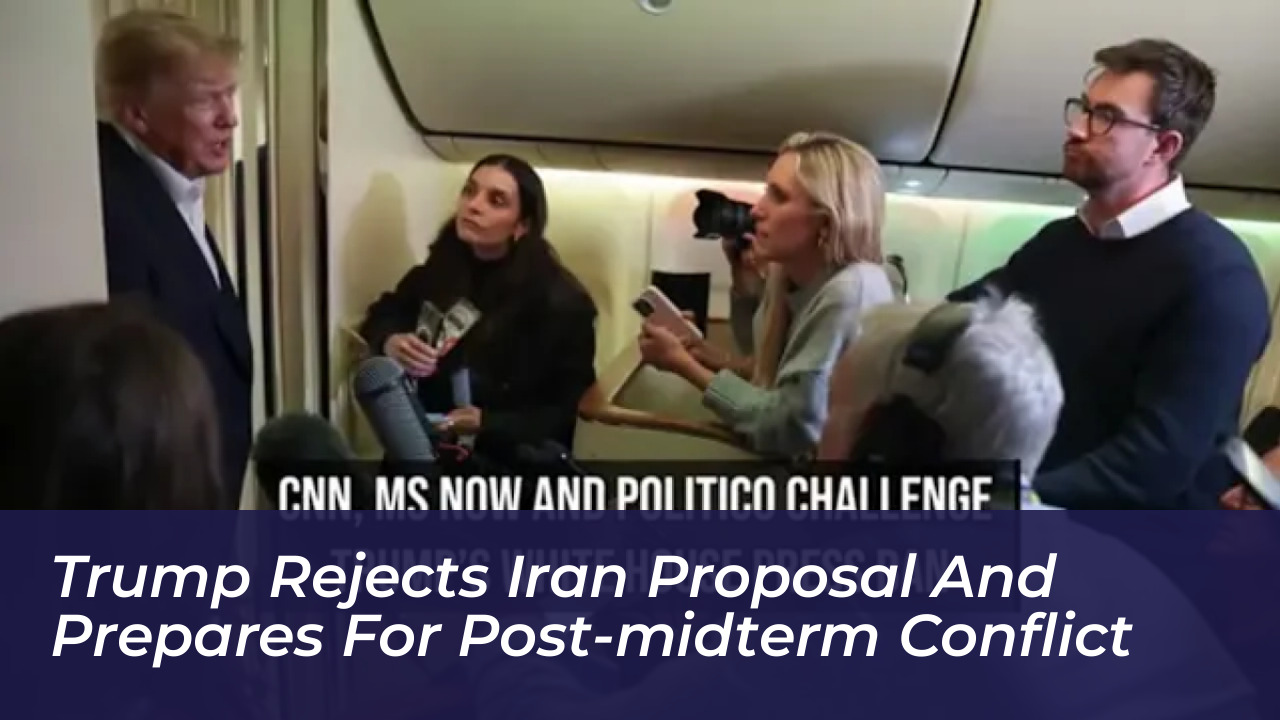
United States President Donald Trump has formally rejected a diplomatic initiative put forward by Tehran at the United Nations General Assembly. Iranian Foreign Minister Abbas Araghchi presented a seven-day cease-fire plan designed to ease regional tensions, reopen the vital Strait of Hormuz, and lift the American naval blockade on Iranian ports. Rejecting the terms, Trump indicated to administration aides that he anticipates military confrontations and airstrikes to resume following the upcoming United States midterm elections. The breakdown in talks highlights deep strategic divisions over nuclear enrichment, maritime security, and economic sanctions.
- The Anatomy of Iran’s Rejected Proposal
- Naval Blockade Termination
- Strait of Hormuz Reopening
- Sanctions Relief and Asset Unfreezing
- Nuclear Program Restructuring
- White House Strategy and the Maximum Pressure Doctrine
- Geopolitical Significance of the Strait of Hormuz
- Diplomatic Channels and Indirect Mediation Efforts
- Post-Midterm Conflict Projections
- Economic Pressures and Sanctions Enforcement
- Conclusion
The Anatomy of Iran’s Rejected Proposal
During high-level diplomatic engagements in New York and indirect sessions mediated by regional partners, Tehran floated a structured framework to de-escalate the ongoing crisis. The plan hinged on mutual concessions aimed at restoring normal shipping lanes and restarting stalled nuclear compliance talks. Iranian leadership presented these terms as a comprehensive solution to regional instability, but Washington officials immediately scrutinized the underlying clauses for potential loopholes.
The diplomatic overture attempted to package several distinct concessions into a single agreement. However, American negotiators found the sequencing of the demands unacceptable, particularly regarding the order of sanctions relief versus nuclear compliance verification.
Naval Blockade Termination
Iran demanded an immediate halt to the US-led naval blockade choking its commercial shipping and energy exports. Tehran argued that the blockade violates international maritime law and inflicts severe humanitarian damage on civilian populations. Washington dismissed this demand, noting that the blockade serves as a vital enforcement mechanism for existing non-proliferation resolutions.
Commercial vessels continue to face extensive vetting procedures when operating near Iranian territorial waters. Coalition naval forces maintain strict oversight to prevent the illicit transport of military hardware and dual-use technological components.
Strait of Hormuz Reopening
Tehran pledged to lift its de facto closure of the critical petroleum transit corridor only after its sovereign conditions were fully met. This transit route carries immense global significance, and its restriction directly impacts international energy markets. Iranian authorities insisted that foreign warships vacate the immediate vicinity before commercial traffic resumes normal operations.
Military planners in Washington view this conditional reopening as an unacceptable restriction on international commerce. The United States Navy maintains that freedom of navigation requires unconditional access for all flags without prior authorization from regional actors.
Sanctions Relief and Asset Unfreezing
The proposal sought the unfreezing of billions of dollars in sovereign Iranian assets held in international financial institutions. Tehran intended to inject these funds into domestic infrastructure projects and healthcare programs heavily impacted by currency devaluation. White House advisors rejected this financial concession, pointing out that released funds could easily find their way to regional proxy militias.
Economic isolation remains the primary tool used by Washington to curb Iranian regional influence. Restoring access to global financial networks without strict structural reforms contradicts the foundational goals of the maximum pressure campaign.
Nuclear Program Restructuring
Iran offered short-term limitations or dilution of its enriched uranium reserves while firmly rejecting demands to dismantle its nuclear infrastructure entirely. This compromise fell far short of the zero-enrichment baseline demanded by United States negotiators. Technical experts analyzed the proposed enrichment caps and concluded they left open pathways for rapid weapons-grade material production.
The refusal to decommission centrifuge manufacturing facilities served as the primary dealbreaker for the White House. National security officials maintain that any permanent settlement must eliminate all indigenous enrichment capabilities.
White House Strategy and the Maximum Pressure Doctrine
White House officials characterized the Iranian initiative as an attempt to stall American momentum while preserving Tehran’s core military capabilities. President Trump dismissed the proposal outright via digital communications, describing terms offered by the regime as unacceptable. According to reports sourced from national security insiders, the administration views the current economic sanctions and naval containment strategy as highly effective.
Rather than engaging in a compromised diplomatic settlement ahead of the legislative elections, the White House prefers maintaining maximum pressure. US officials argue that economic degradation will eventually force structural compliance without requiring American concessions on maritime rights. This hardline stance enjoys broad support among defense hawks who advocate for sustained deterrence.
Geopolitical Significance of the Strait of Hormuz
The Strait of Hormuz remains the central flashpoint in the bilateral standoff. Roughly one-fifth of global petroleum and natural gas supplies pass through the narrow waterway during standard operating conditions. Iranian forces closed access to the channel in response to prior coalition strikes on domestic infrastructure.
Foreign Minister Araghchi maintained a rigid stance during his press briefings at the United Nations, asserting that Iran refuses to surrender sovereign rights under economic and military pressure. Conversely, Washington insists that freedom of navigation through the strait is non-negotiable and must be restored unconditionally before any permanent diplomatic framework takes effect.
Commercial shipping companies navigate the corridor with heightened caution, relying on private security details and coalition escorts. Insurance premiums for tankers transiting the Persian Gulf have surged, reflecting the persistent threat of asymmetric naval attacks and mine deployment.
Diplomatic Channels and Indirect Mediation Efforts
Even as public rhetoric hardens, diplomatic backchannels remain active through international intermediaries. United States officials acknowledged that indirect talks continue regarding nuclear oversight and regional security parameters. Mediators in Qatar and Pakistan facilitate these exchanges, though fundamental disagreements on enrichment thresholds and regional proxy support continue to stall progress.
Independent analysts note that the negotiations suffer from a structural impasse. Washington demands zero uranium enrichment and the handover of all high-grade material, whereas Tehran views such demands as an infringement on national sovereignty. This wide divergence in baseline expectations prevents any meaningful compromise.
Third-party diplomats continue their shuttle diplomacy, attempting to find creative wording that satisfies both capitals. However, neither side shows an inclination to alter its core positions, leaving these indirect talks suspended in perpetual deadlock.
Post-Midterm Conflict Projections
Political analysts and defense experts are closely monitoring the timeline of the confrontation, noting that political considerations in Washington heavily influence current military pacing. With the midterm elections approaching, large-scale offensive operations remain politically sensitive. Military planners suggest that if diplomatic avenues fail completely, the administration may pivot toward targeted kinetic strikes against fast-attack boats, drone launch sites, and coastal missile batteries threatening commercial shipping.
Such actions would aim to secure maritime corridors without entangling the United States in a prolonged ground campaign. Strategic war-gaming models indicate that limited strikes could degrade Iranian offensive capabilities while minimizing American casualties. Command structures in the region remain at a high state of readiness, anticipating potential escalation orders.
Economic Pressures and Sanctions Enforcement
The economic toll on Iran serves as a cornerstone of US strategy. Successive waves of sanctions have severely restricted oil revenues and isolated domestic banking networks. White House advisors argue that maintaining this economic quarantine is preferable to accepting a weak agreement that leaves Tehran’s nuclear infrastructure intact.
Iranian leadership, however, continues to project resilience, insisting that national resistance will outlast foreign pressure. The Ministry of Foreign Affairs maintains that future stability depends entirely on Washington abandoning what it terms unreasonable maximalist demands.
Domestic inflation and currency depreciation continue to strain the Iranian economy, yet the state manages to sustain core functions through non-oil exports and bilateral trade agreements with alternative economic partners. This adaptive capacity blunts the full intended impact of unilateral American financial measures.
Conclusion
The rejection of Iran’s seven-day proposal underscores the fragility of current security dynamics in the Middle East. With Washington anticipating a resumption of hostilities after the midterm elections and Tehran refusing to compromise on core sovereignty issues, the prospect of a lasting diplomatic resolution remains distant.
Both nations remain locked in a high-stakes standoff where economic coercion and military posturing dictate the terms of engagement. As long as the fundamental disagreements over nuclear enrichment and maritime access persist, the region will hover on the edge of renewed conflict.