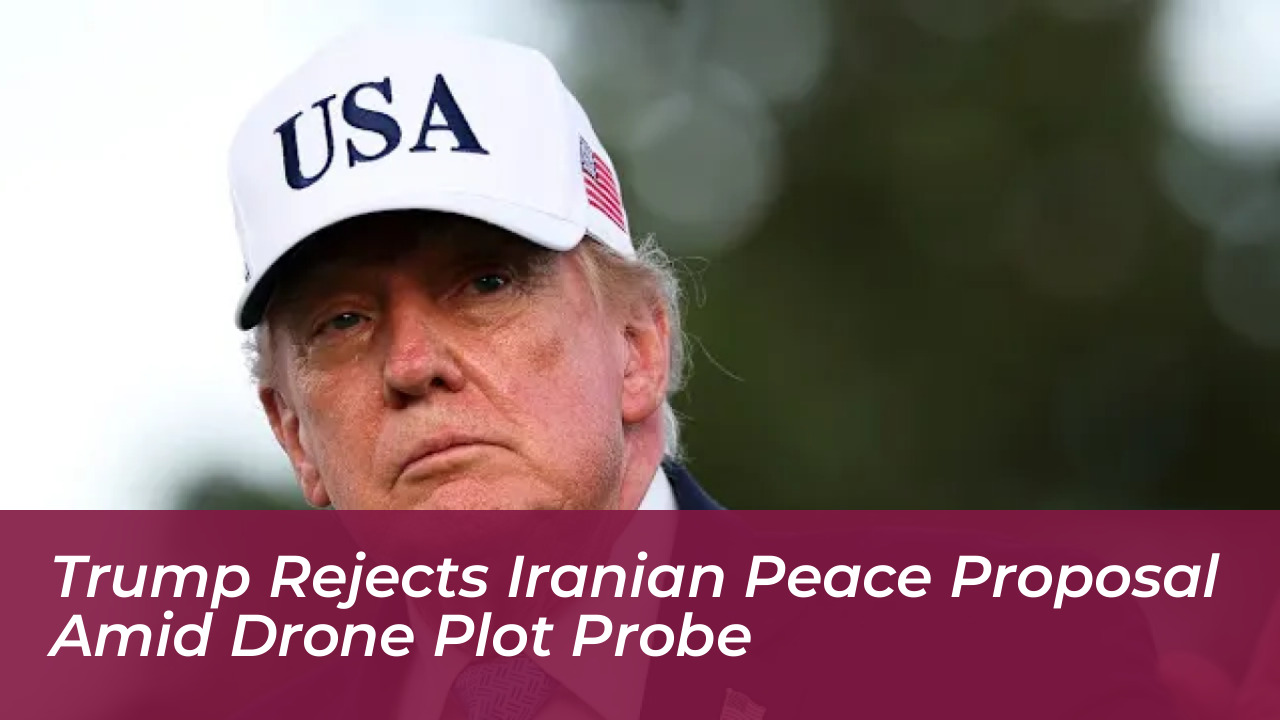
President Donald Trump has officially rejected a peace proposal from Iran. The proposal sought a temporary ceasefire and the lifting of economic sanctions. Indirect diplomatic channels remain active. The rejection arrives concurrently with high-stakes international security operations, including a major counterterrorism probe in the United Kingdom following foiled threats near a critical U.S. airbase.
- Diplomatic Strains and Strategic Calculations
- Security Operations Expand Near Strategic Airbase
- Frequently Asked Questions
- What were the main terms of Iran’s peace proposal?
- Why did President Trump reject the offer?
- What role are regional mediators playing in the conflict?
- How has the conflict impacted global energy markets?
- What security incidents occurred outside the Middle East?
The Iranian peace roadmap, communicated through Qatari mediators at the United Nations, included provisions for reopening the vital Strait of Hormuz, resuming stalled nuclear negotiations, and establishing a seven-day regional ceasefire. In exchange, Tehran demanded that the United States lift its naval blockade, unfreeze billions of dollars in assets, and waive ongoing oil sanctions. President Trump dismissed the terms outright. He told reporters and aides that he views Iran’s overture as a sign of deep vulnerability, asserting that Tehran is losing so badly.
Diplomatic Strains and Strategic Calculations
Iranian Foreign Minister Abbas Araqchi stated on the sidelines of the U.N. General Assembly that Tehran was fully prepared for a peaceful settlement or a prolonged confrontation. However, Washington remains skeptical. U.S. officials indicated that while indirect discussions persist through mediators, the White House believes that maintaining intense economic pressure and a strict naval blockade will extract far more favorable concessions over time.
Analysts note that Trump’s refusal carries political and economic risks. The ongoing disruption of the Strait of Hormuz has kept global crude oil prices elevated, adding inflationary pressures worldwide. Despite these strains, the Trump administration appears committed to leveraging its economic campaign through the upcoming midterm congressional elections. The administration anticipates that cumulative sanctions will eventually force Iran into broader surrender.
Security Operations Expand Near Strategic Airbase
Parallel to the diplomatic stalemate, security forces in Europe have escalated operations to counter regional threats. British counterterrorism officers recently detained five men in Gloucestershire, England, on suspicion of preparing acts of terrorism and offenses under the Explosives Act near RAF Fairford. The military installation serves as a key European hub for U.S. Air Force strategic bombers, intensifying security protocols across allied facilities.
Meanwhile, regional allies continue to grapple with persistent attacks from Iranian-aligned groups. The Saudi-led coalition in Yemen recently intercepted multiple ballistic missiles and explosive-laden drones targeting Riyadh and the Khamis Mushait region. This highlights the ongoing volatility across Middle Eastern shipping lanes and energy infrastructure.
Frequently Asked Questions
What were the main terms of Iran’s peace proposal?
Iran’s proposal offered a seven-day ceasefire, the reopening of the Strait of Hormuz, and the resumption of nuclear talks. In return, Tehran demanded that the U.S. lift its naval blockade, release frozen funds, and waive oil sanctions.
Why did President Trump reject the offer?
President Trump stated that the deal was unacceptable. He argued that Iran was making the proposal from a position of severe weakness due to punishing U.S. economic sanctions and military pressure.
What role are regional mediators playing in the conflict?
Countries like Qatar have acted as key diplomatic intermediaries, facilitating indirect talks between Washington and Tehran on the sidelines of international summits.
How has the conflict impacted global energy markets?
The effective blockade of the Strait of Hormuz has severely disrupted oil and gas shipments from the Gulf. This disruption has driven up international crude prices and fueled global inflation concerns.
What security incidents occurred outside the Middle East?
British counterterrorism authorities detained five men in Gloucestershire, England, near RAF Fairford, which is a strategic hub for U.S. bombers. This arrest occurred amid heightened global security alerts.