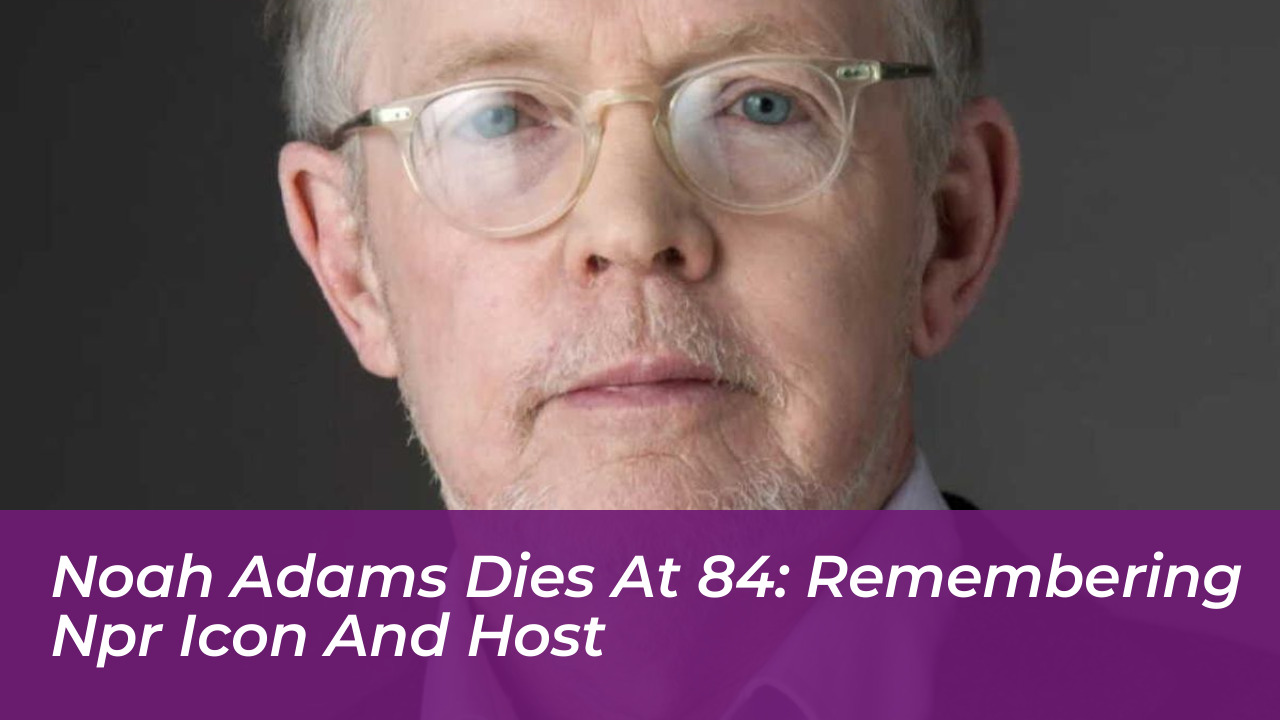

Noah Adams, a foundational public radio journalist, writer, and broadcaster known for his thoughtful reporting and an 18-year tenure hosting NPR’s All Things Considered, has died at the age of 84. Adams passed away Friday at his home in Yellow Springs, Ohio, according to his wife, Neenah Ellis.
During his decades-long career, Adams guided listeners through major national and international developments while building a distinct reputation for feature stories that captured the everyday lives of ordinary Americans. His soft voice and vivid writing style helped define the auditory identity of public radio for a generation of listeners.
Guiding Listeners Through History and Rural America
Adams joined NPR in the mid-1970s when the network was still in its formative years. Over his tenure, he anchored coverage of monumental historical events, including Ronald Reagan’s landslide electoral victories, the fall of the Berlin Wall, and the devastating September 11 attacks.
However, colleagues often noted that Adams’ true journalism shone brightest away from Washington’s political corridors. He frequently traveled by train across the United States, spending days in small towns and rural communities far from the Interstate 95 corridor. Former co-host Robert Siegel recalled that Adams served as a vital voice for people whose experiences rarely received national attention.
"Noah was a voice for our going to rural America, doing stories about what was happening in small towns far from the Interstate 95 corridor," Siegel said. "He admired good writing and good writers. And he tried to be as good as he could be."
A Master of Observation and Empathy
Melissa Block, who produced segments alongside Adams before later hosting All Things Considered herself, remembered his meticulous observational skills. She described how his sparse shorthand notes in a small reporter’s notebook would transform into rich, simple, and vivid accounts of places and people.
Adams’ unique interviewing style-characterized by deep curiosity, genuine empathy, and an ability to put subjects at ease-left a lasting mark on the broadcasting industry. A famous 1987 interview with an 8-year-old girl named Betsy Walter about her parents’ divorce began with a casual chat about dogs. Young producer Ira Glass listened to the tape repeatedly, later citing Adams’ technique and tone as a direct inspiration for the feel of his own groundbreaking program, This American Life.
In 1981, Adams also lent his narrative talents to "Father Cares: The Last of Jonestown," an experimental NPR radio documentary utilizing audio recordings from the Jim Jones cult. In the production, Adams narrated from the perspective of a fictional survivor rather than a traditional journalist, demonstrating his willingness to push the boundaries of radio storytelling.
Literary Pursuits and Life Beyond the Microphone
Outside of daily broadcasting, Adams was a prolific author who published five books. His notable works included the 1996 memoir Piano Lessons, detailing his personal journey learning to play the instrument at age 51; Far Appalachia, Following the New River North (2001); and The Flyers: In Search of Wilbur & Orville Wright (2003).
Though intensely private about his life before radio-having worked odd jobs including construction and car sales before starting at the University of Kentucky’s public radio station in 1972-Adams left an indelible stamp on modern audio journalism. His commitment to observational fieldwork and empathetic interviewing continues to influence reporters and podcasters today.
Frequently Asked Questions About Noah Adams
When and where did Noah Adams pass away?
Noah Adams passed away on Friday at his home in Yellow Springs, Ohio, at the age of 84, as confirmed by his wife, Neenah Ellis.
How long did Noah Adams host NPR’s All Things Considered?
Adams served as a host of NPR’s flagship evening news program, All Things Considered, for 18 years across multiple tenures.
What books did Noah Adams author?
Adams wrote five books, most notably the memoir Piano Lessons (1996), Far Appalachia, Following the New River North (2001), and The Flyers: In Search of Wilbur & Orville Wright (2003).
How did Noah Adams influence modern public radio?
His conversational interview style, focus on rural American life, and deep empathy inspired many journalists, including Ira Glass, who cited Adams as an inspiration for the tone of This American Life.
What was "Father Cares: The Last of Jonestown"?
It was a critically acclaimed, experimental 1981 NPR radio documentary co-created by Adams that utilized audio from the Jim Jones cult, with Adams narrating from the viewpoint of a fictional survivor.