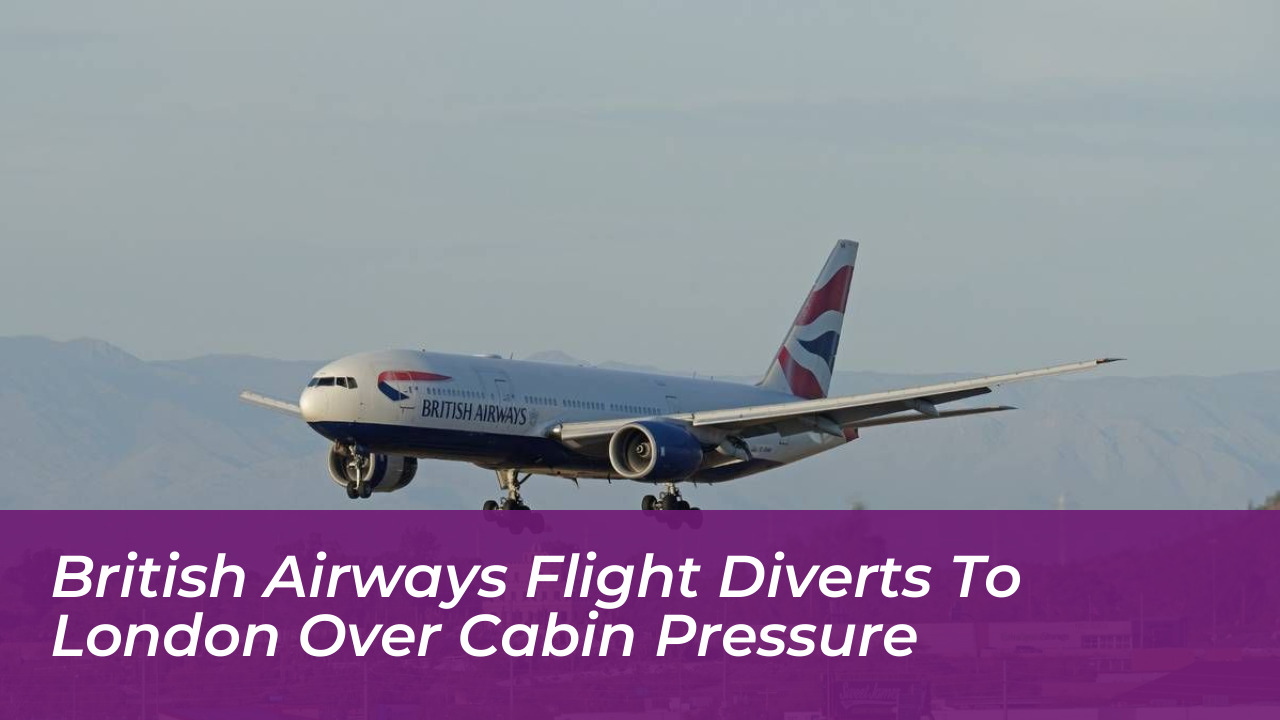



A Chicago-bound British Airways flight was forced to divert back to London Heathrow Airport on Monday, October 5, 2026, following a reported cabin depressurization incident while cruising at 36,000 feet.
Flight BA295, operated by a Boeing 777-200ER registered as G-VIIA, departed from London at 12:14 PM. Shortly after reaching cruising altitude over the Atlantic transit route, the flight crew encountered unexpected technical difficulties relating to internal cabin pressure levels.
To safely resolve the situation, flight deck crew members initiated a rapid, controlled descent to 9,000 feet, allowing the aircraft to maintain safe atmospheric conditions for all passengers and crew on board. Standard safety protocols for sudden pressure drops require dropping the aircraft below 10,000 feet, where supplemental oxygen is no longer required.
Emergency Protocols and Passenger Experience
During the rapid descent, the flight crew issued an emergency squawk code 7700 to alert regional air traffic controllers immediately. Simultaneously, an automatic Aircraft Communications Addressing and Reporting System message transmitted data confirming that the internal cabin altitude had briefly reached 10,500 feet.
The sudden change in pressure triggered the automatic deployment of emergency oxygen masks throughout the cabin. Passengers reported a swift and professional response from the cabin crew, who guided travelers through the emergency procedures as the widebody aircraft turned around toward its origin.

- Flight Number: BA295
- Aircraft Type: Boeing 777-200ER (Registration: G-VIIA, Age: 30 years)
- Route: London Heathrow (LHR) to Chicago O’Hare (ORD)
- Incident Date: Monday, October 5, 2026
- Maximum Cabin Altitude Reached: 10,500 feet
- Diversion Destination: London Heathrow Airport (LHR)
Safe Landing and Ongoing Maintenance
The Boeing 777 successfully landed back at London Heathrow without further incident, where emergency response vehicles met the aircraft as a standard precautionary measure. Ground engineering teams immediately took charge of the 30-year-old aircraft to conduct a thorough technical inspection and determine the root cause of the pressurization failure.
British Airways representatives stated that passengers were accommodated on alternative aircraft later that day to complete their journeys to Chicago. Aviation safety authorities will review flight data recorder logs and maintenance records as part of the standard follow-up protocol for high-altitude depressurization events.