
The release of a high-profile biographical drama focusing on domestic terrorist Theodore John Kaczynski has ignited widespread public interest. Commonly known as the Unabomber, Kaczynski waged a 17-year nationwide bombing campaign that terrorized the United States from 1978 to 1995. The cinematic release prompts audiences and researchers alike to separate verifiable historical facts from Hollywood dramatization. While feature films rely on narrative compression and fictionalized characters to drive emotional stakes, the real-life trail left by the Unabomber involves extraordinary intellectual achievement, severe psychological trauma, and a meticulous multi-agency federal manhunt.
- The Academic Prodigy: From Child Genius to UC Berkeley
- Early Intellectual Development and IQ Scores
- Higher Education at Harvard and the University of Michigan
- The Harvard Psychological Experiments and Dr. Henry A. Murray
- Participation in Controversial Studies
- Assessing the Psychological Impact
- The 17-Year Bombing Campaign and Federal Investigation
- Chronology of the UNABOM Task Force
- The Human Cost and Scale of the Manhunt
- The Manifesto Publication and the Breakthrough Arrest
- Industrial Society and Its Future
- The Tip from David Kaczynski
- Fact Versus Fiction in Modern Cinema
- Hollywood Dramatization vs. Historical Reality
- Legal Resolution, Imprisonment, and Final Years
- Guilty Plea and Supermax Incarceration
- Final Chapter
- Unexplored Angles: The Logistical Economics of Domestic Espionage
- Funding Isolation and Frugality
- Frequently Asked Questions
- What was Theodore Kaczynski’s IQ score?
- How was the Unabomber eventually captured?
- Did Harvard psychological experiments cause Kaczynski’s crimes?
The Academic Prodigy: From Child Genius to UC Berkeley
Early Intellectual Development and IQ Scores
Long before federal authorities tracked an anonymous domestic terrorist, Theodore Kaczynski displayed exceptional intellectual capabilities. Born in Chicago in 1942, Kaczynski exhibited remarkable aptitude in mathematics and sciences during his early education. Academic archives and historical biographies confirm his rapid progression through the school system, which included skipping two grades.
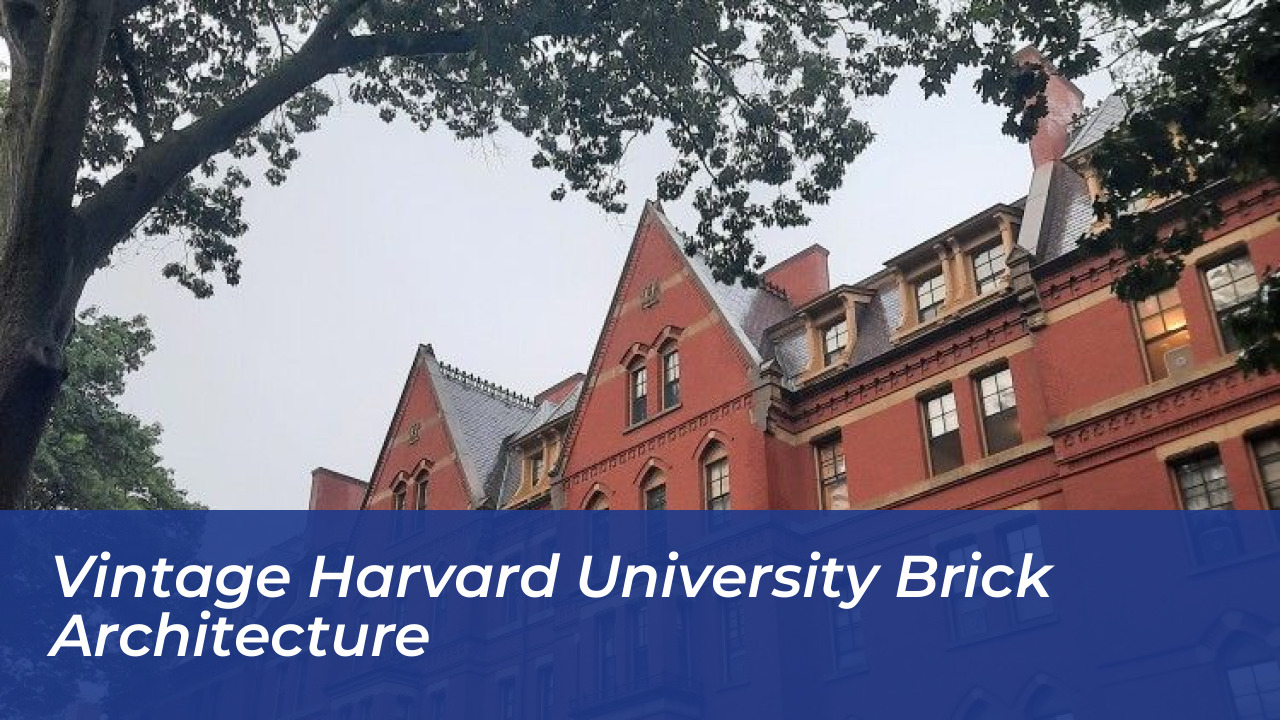
Standardized testing records indicate that Kaczynski scored an exceptional 167 on an IQ test during the fifth grade. This extraordinary metric placed him within the extreme upper tier of human intelligence. Capitalizing on his advanced cognitive abilities, Kaczynski entered Harvard University at the remarkably young age of 16 in 1958.
Higher Education at Harvard and the University of Michigan
Following his undergraduate years at Harvard, Kaczynski pursued advanced studies, earning a master’s degree and a doctorate in mathematics from the University of Michigan. His academic output during this period demonstrated a deep proficiency in complex mathematical theory, earning the respect of his peers and professors.
Upon completing his doctoral studies, Kaczynski secured a position as an assistant professor at the University of California, Berkeley. He taught mathematics briefly before resigning abruptly in 1969. This sudden departure marked the beginning of his retreat from conventional academic society and his eventual move toward total isolation.
The Harvard Psychological Experiments and Dr. Henry A. Murray
Participation in Controversial Studies
A central focal point of recent cinematic retellings involves Kaczynski’s undergraduate years at Harvard and his participation in controversial psychological studies. Historical documentation confirms that Kaczynski participated in prolonged, ethically questionable psychological experiments directed by Dr. Henry A. Murray, a prominent Harvard psychologist and former Office of Strategic Services researcher.
During these sessions, undergraduate participants wrote detailed essays outlining their personal philosophies and core beliefs. Researchers then subjected the students to aggressive, highly personal verbal interrogations conducted by a trained lawyer. The interrogators deployed mockery and hostility designed to provoke severe emotional stress while researchers measured physiological responses, including heart rate and galvanic skin response.
Assessing the Psychological Impact
Historical accounts show Kaczynski spent approximately 200 hours as a subject in Murray’s study. While biographers and psychological analysts debate the long-term impact of these experiments, historians emphasize a distinct boundary regarding his later actions.
Although the studies caused documented distress, no definitive empirical evidence establishes a direct cause-and-effect relationship between Murray’s experiments and Kaczynski’s subsequent transition into domestic terrorism decades later. The psychological toll remains a subject of intense academic study without a clear causal bridge to his violent crimes.
The 17-Year Bombing Campaign and Federal Investigation
Chronology of the UNABOM Task Force
Between May 1978 and April 1995, Kaczynski executed a calculated campaign of mail and hand-delivered explosives across the United States. The Federal Bureau of Investigation established a dedicated multi-agency task force code-named UNABOM, an acronym derived from University and Airline Bombing, the primary targets of the early attacks.
The operational scope of the Unabomber case spanned nearly two decades, involving more than 150 full-time investigators, postal inspectors, and ATF agents. Kaczynski targeted individuals he believed were advancing modern industrial technology and destroying the natural environment. His targets included university professors, computer store owners, geneticists, and corporate executives.
The Human Cost and Scale of the Manhunt
Official FBI records document the destructive chronology of his devices, beginning with an explosion at the University of Illinois in May 1978 and culminating in a fatal attack in April 1995 against the president of the California Forestry Association in Sacramento.
In total, Kaczynski’s terror campaign resulted in three fatalities and 23 injuries, making the manhunt one of the most expensive and exhaustive investigations in federal history. The sheer difficulty of tracking an anonymous bomber who left minimal forensic evidence frustrated federal agencies for nearly twenty years.
The Manifesto Publication and the Breakthrough Arrest
Industrial Society and Its Future
The definitive turning point in the Unabomber investigation occurred in 1995 when Kaczynski demanded the publication of a 35,000-word essay titled Industrial Society and Its Future. He threatened to continue mailing lethal packages unless major print media outlets published the manuscript in full.
Following extensive internal debate, FBI Director Louis Freeh and Attorney General Janet Reno approved the publication of the manifesto in The Washington Post and The New York Times. The strategic decision aimed to expose the unique ideological phrasing and writing style of the author to the general public.
The Tip from David Kaczynski
The publication triggered thousands of tips from readers. Among them, David Kaczynski and his wife, Linda Patrik, recognized distinct ideological themes and linguistic patterns matching personal letters and essays written years earlier by David’s reclusive older brother, Ted.
David contacted authorities through an attorney, providing historical writing samples that matched the linguistic profile of the published manifesto. On April 3, 1996, federal agents raided Kaczynski’s remote, off-the-grid 10-by-14-foot plywood cabin near Lincoln, Montana, recovering a live bomb and 40,000 pages of handwritten journals.
Fact Versus Fiction in Modern Cinema
Hollywood Dramatization vs. Historical Reality
The resurgence of public discourse regarding the Unabomber highlights the creative liberties taken by biographical dramas. While core milestones remain historically accurate, filmmakers introduce fictional elements for dramatic effect.
| Event / Element | Historical Reality | Film Depiction |
|---|---|---|
| Lead FBI Investigator | Handled by a large multi-agency task force including agents like Terry Turchie. | Agent Joanne Miller serves as a fictional amalgamation of multiple investigators. |
| David Kaczynski’s Motivation | Recognized linguistic similarities between the manifesto and Ted’s prior writings to stop violence. | Depicted initially trying to prove his wife wrong and insisting his brother was innocent. |
| Dr. Henry Murray’s Relationship | Kaczynski participated anonymously as an undergraduate test subject in a clinical study. | Depicted as having a direct, personal mentor relationship with ongoing confrontations. |
Understanding these discrepancies helps viewers separate theatrical license from the grim reality of the multi-decade federal investigation. While cinema compresses timelines and invents interpersonal conflicts, the core historical record remains grounded in meticulous police work and linguistic analysis.
Legal Resolution, Imprisonment, and Final Years
Guilty Plea and Supermax Incarceration
During the 1998 federal trial in Sacramento, Kaczynski sought to dismiss his court-appointed attorneys because they wanted to present a defense based on mental illness. Ultimately, Kaczynski entered a guilty plea to all federal charges in exchange for avoiding the death penalty, accepting life imprisonment without the possibility of parole.
Authorities transferred him to the United States Penitentiary Administrative Maximum Facility, known as ADX Florence, in Colorado. This supermax prison houses the most dangerous federal inmates in total isolation, restricting human contact and movement to prevent any further threat to public safety.
Final Chapter
After spending more than two decades incarcerated at ADX Florence, Kaczynski experienced declining health. In 2023, federal prison officials transferred him to the Federal Medical Center in Butner, North Carolina, for specialized medical care.
Kaczynski passed away on June 10, 2023, at the age of 81. His death concluded a dark chapter in domestic security history, leaving behind enduring questions regarding technological progression, mental health, and the limits of privacy in modern society.
Unexplored Angles: The Logistical Economics of Domestic Espionage
Funding Isolation and Frugality
A frequently overlooked aspect of Kaczynski’s 17-year campaign involves the financial mechanics of sustaining an off-the-grid lifestyle in rural Montana without traditional employment. Investigators discovered that Kaczynski survived on extreme frugality, self-reliance, and modest financial resources.
He supplemented his meager savings through occasional financial assistance from family members and small inheritance shares following the passing of his father. By living entirely without electricity or running water in a self-built cabin, his operational expenses remained minimal, allowing him to purchase mail-order bomb components without drawing financial suspicion from banking institutions.
Frequently Asked Questions
What was Theodore Kaczynski’s IQ score?
Standardized testing records confirm that Kaczynski scored an exceptional 167 on an IQ test during the fifth grade.
How was the Unabomber eventually captured?
His brother David recognized linguistic patterns in the published manifesto and notified federal authorities, leading to the 1996 Montana cabin raid.
Did Harvard psychological experiments cause Kaczynski’s crimes?
Historians and researchers find no direct empirical evidence linking his participation in Dr. Murray’s study to his later domestic terrorism.