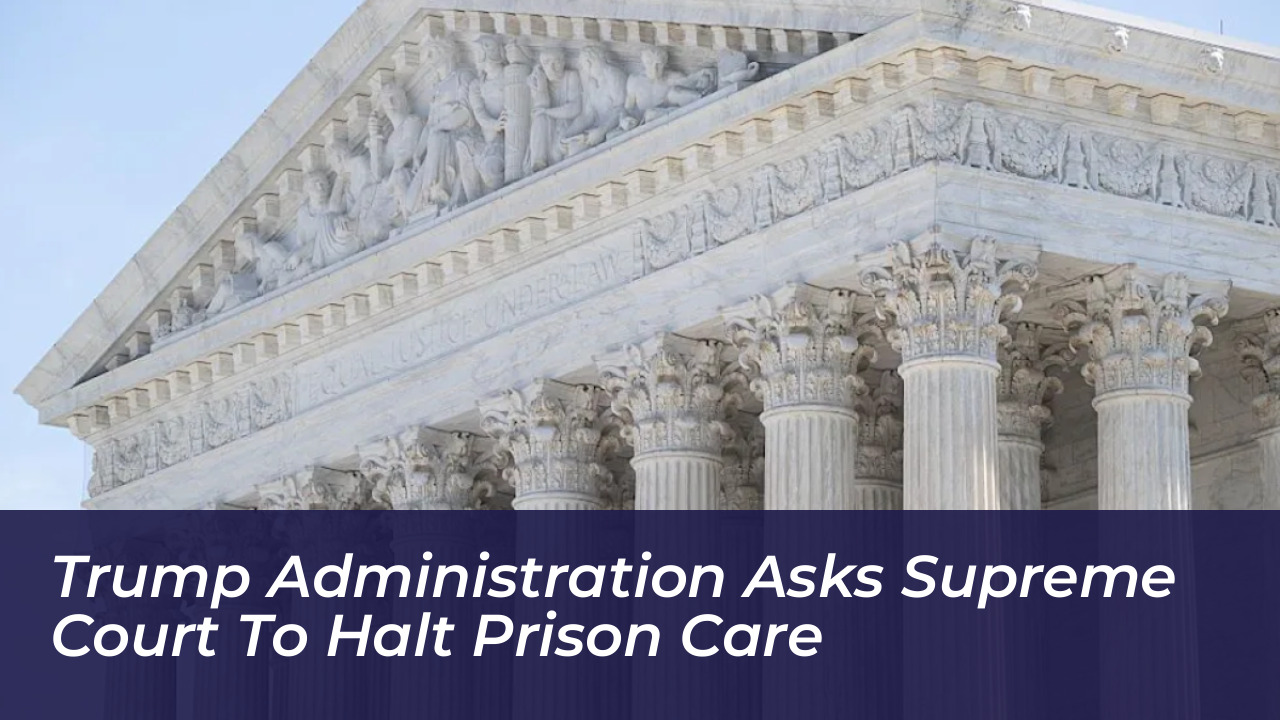
The Trump administration filed an emergency request with the Supreme Court on September 28, 2026. The appeal asks the justices to suspend lower court orders and allow federal prison officials to enforce restrictions on transgender medical treatments. The filing seeks to halt gender-transition surgeries, hormone therapies, and social accommodations for inmates across the federal prison system while broader legal challenges continue.
The Department of Justice urges the high court to freeze an injunction issued by Senior U.S. District Judge Royce Lamberth. Lamberth previously ruled that the Federal Bureau of Prisons must continue providing complete medical treatments to inmates diagnosed with gender dysphoria. Solicitor General D. John Sauer argued in the filing that the lower court improperly substituted its own policy judgment for that of the agency. He warned that the injunction undermines institutional security determinations made by prison officials.
Origins of the Federal Bureau of Prisons Policy
The legal battle stems from directives implemented during President Donald Trump’s second term. Shortly after taking office, President Trump signed an executive order. The order prohibited using federal funds for medical procedures or treatments aimed at conforming an inmate’s appearance to the opposite sex. Following that directive, the Bureau of Prisons issued new guidance in early 2025 restricting clothing and medical interventions.
The agency instituted a formalized policy in February 2026. Officials maintained that the rules were established independently to govern prison operations. Under the contested framework, federal facilities still permit mental health services, such as psychotherapy and psychiatry, for affected prisoners. However, the guidelines strictly prohibit:
- Sex-trait-modification and transition surgeries
- Hormone replacement therapies
- Social accommodations including wigs, chest binders, breast padding, and makeup
Before these restrictions took effect, records showed that the Bureau of Prisons provided hormone therapy to more than 600 inmates.
Legal Arguments and Lower Court Rulings
Inmates diagnosed with gender dysphoria filed a class-action lawsuit to challenge the policy. In June, U.S. District Judge Royce Lamberth blocked the implementation of the new rules. He ruled that the agency’s policy was “reverse engineered” to improperly execute the president’s executive order. Lamberth issued another order last month to continue blocking enforcement.
Following the district court’s decision, the Trump administration appealed to the U.S. Court of Appeals for the District of Columbia Circuit. A divided appeals court panel declined to lift the injunction. This left the medical care mandate in place while litigation moves forward.
Attorneys representing the inmates, including lawyers from the American Civil Liberties Union (ACLU), denounced the policy. They called it a clear violation of fundamental rights. They argue that withholding prescribed gender-affirming healthcare threatens the safety and well-being of transgender individuals in custody and constitutes cruel and unusual punishment.
Conversely, the administration maintains that the agency acted within its authority to establish standards for managing federal correctional facilities. The Supreme Court has previously allowed various executive initiatives regarding transgender individuals to proceed. The justices will now decide whether to intervene in this federal prison dispute.