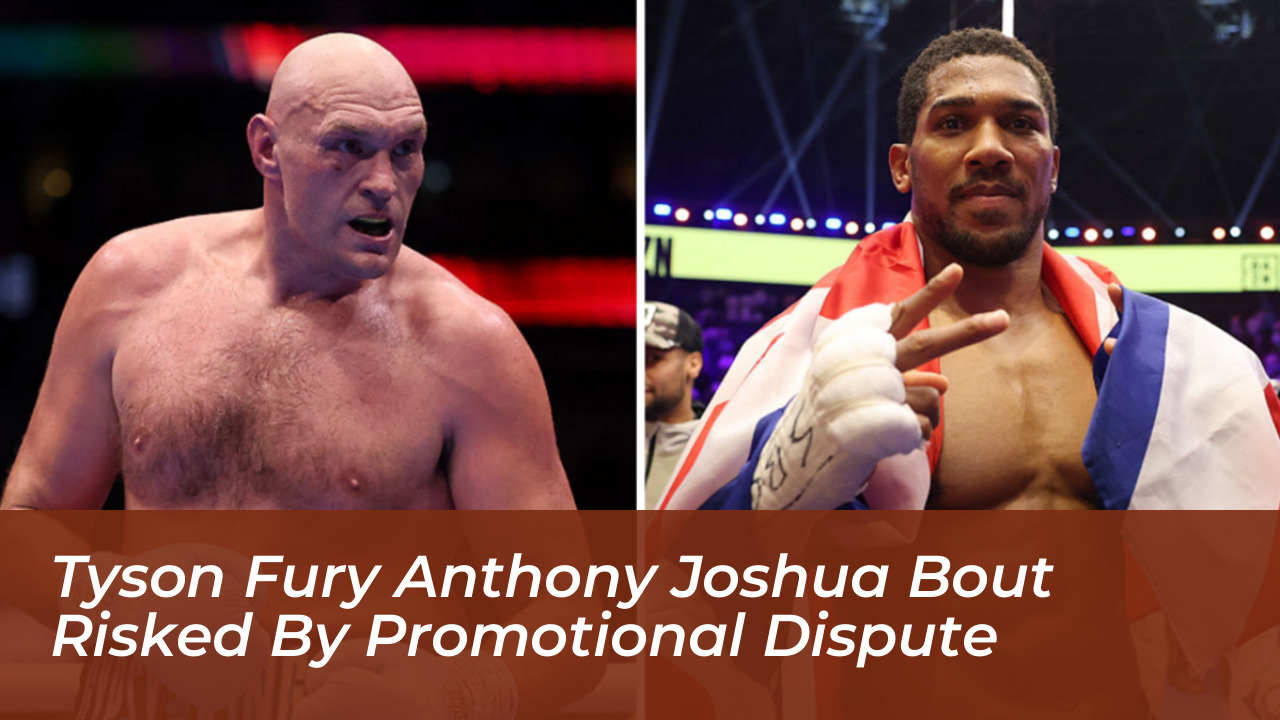
The heavyweight landscape resembles a volatile chessboard where corporate alliances and egos often outweigh sporting legacy. A promotional dispute has jeopardized the long-awaited heavyweight boxing match between Tyson Fury and Anthony Joshua, originally scheduled for December 11 at Cardiff’s Principality Stadium, according to statements made by Fury on September 26, 2026. The matchup represents the ultimate collision between two defining British fighters of their generation. Yet, boardroom friction involving major streaming platforms, multi-million dollar promotional entities, and cross-code executives threatens to derail the spectacle before either man steps through the ropes.
- Anatomy of a Breakdown: Promotional Politics Threaten the Heavyweight Landscape
- The Genesis of the December 11 Cardiff Showdown
- Contractual Clauses, Territorial Tugs-of-War, and Venue Disagreements
- Eddie Hearn Versus Dana White: The Clash of Combat Code Titans
- Fighters in the Middle: Fury and Joshua Face Business Politics
- Alternative Pathways: What Happens If the Bout Collapses Permanently?
- Summary of Potential Next Steps
Anatomy of a Breakdown: Promotional Politics Threaten the Heavyweight Landscape
The December 11 Cardiff showdown at Principality Stadium was supposed to be the pinnacle of modern boxing matchmaking. Instead, sudden jeopardy surrounds the fixture as corporate stakeholders clash over control, revenue streams, and global distribution rights. When sovereign wealth funds and Silicon Valley streaming giants enter the traditional boxing ecosystem, friction is inevitable. Modern boxing no longer relies solely on regional ticket sales and classic pay-per-view buys. It operates on a massive international scale where digital subscribers take precedence over local stadium loyalty.
This reality exposes a deep fracture between sporting legacy and corporate boardrooms. Traditional promoters built their reputations on controlling domestic talent, managing venue gates, and negotiating television rights on a fight-by-fight basis. Global streaming platforms and sovereign wealth funds function differently. They demand long-term intellectual property rights, multi-territory exclusivity, and streamlined corporate structures that bypass traditional middlemen. Consequently, a bout of this magnitude becomes a proxy war for the future control of combat sports economics.
The involvement of cross-code executives further complicates the traditional hierarchy. Boxing operates with a fragmented regulatory framework, unlike corporate sports leagues with centralized commissioners. When external power brokers attempt to impose unified structures, incumbent promotional stables push back to protect their market share. This institutional resistance turns simple scheduling agreements into multi-million dollar legal standoffs.
The Genesis of the December 11 Cardiff Showdown
The path to the proposed December 11 date in Cardiff was neither straightforward nor traditional. The event was announced as a joint venture between Saudi powerbroker Turki Alalshikh’s The Ring, UFC president Dana White, and streaming monolith Netflix. This coalition represents a seismic shift in how combat sports are financed, produced, and distributed globally. For decades, traditional boxing promotions relied on a fragmented ecosystem of regional networks and rival stables.
The entry of Alalshikh and Netflix injects unprecedented capital while demanding mass-market global streaming distribution. Traditional television networks built empires on exclusive subscription fees and regional advertising revenue. Netflix operates on a different economic model, leveraging hundreds of millions of global subscribers to turn a single sporting event into a worldwide cultural phenomenon. This transition maximizes exposure but clashes with traditional broadcast windows and localized marketing strategies.
British boxing promotions have a long history of protecting their domestic turf. When non-traditional partners enter the UK market without deferring to established promotional hierarchies, immediate friction occurs. Matchroom Boxing and Queensberry Promotions spent decades building the infrastructure that makes UK stadium fights profitable. Bypassing or minimizing their institutional role triggers defensive reactions that quickly stall negotiations.
Contractual Clauses, Territorial Tugs-of-War, and Venue Disagreements
At the center of the dispute lie conflicting interpretations of contractual exclusivity and venue mandates. Matchroom and Joshua’s camp maintained that their foundational agreements stipulated a strict United Kingdom home-soil requirement. Eddie Hearn aggressively pushed for a primetime showcase at Wembley Stadium in London to maximize live gate revenue and domestic cultural resonance. Meanwhile, event financiers Sela and broadcast partner Netflix explored alternative global hubs, including Madison Square Garden in New York City.
The rationale behind the New York push centered on capturing prime-time American viewership and expanding the cross-border subscription market. While Fury repeatedly stated his willingness to fight anywhere, Joshua’s side anchored their position to contractual clauses restricting foreign relocation without significant financial recompense. This territorial tug-of-war exposed a fundamental disagreement over where the primary value of the fight resides.

, the discrepancy between the two fighters’ contractual terms regarding third-party involvement created an insurmountable hurdle. Tyson Fury revealed a critical detail regarding promotional restrictions:
In Joshua’s contract, apparently, it says that TKO and Dana couldn’t be involved, but that was in mine – but I took it out. I took it out so he could be involved. F*ck ’em. Yeah, I want him involved.
This single concession by Fury dismantled the unified front required to finalize the bout under the proposed banner. While Fury welcomed the involvement of the UFC executive, Joshua’s camp viewed the intrusion as a direct violation of legacy promotional boundaries.
Eddie Hearn Versus Dana White: The Clash of Combat Code Titans
The personal and professional animosity between Eddie Hearn and Dana White serves as the primary emotional catalyst for the current breakdown. White, following the expansion of Zuffa Boxing under the TKO umbrella, stepped into the traditional boxing promotional space with the backing of Saudi capital and The Ring magazine. This crossover represents an existential threat to legacy boxing promoters who view Silicon Valley-backed and MMA-adjacent entities as interlopers.
Fury did not mince words regarding the underlying motivations of Matchroom’s resistance, accusing Hearn of weaponizing venue preferences to block outside executives. Territorial posturing played a massive role, with Fury claiming that constant demands for a UK-only venue functioned primarily as a negotiating tactic to freeze out non-traditional partners. The historical tension between Hearn and White created an environment where corporate cooperation became secondary to ego preservation.
Matchroom’s desire to retain sole promotional jurisdiction clashed directly with Turki Alalshikh’s multi-promoter consortium model. Hearn publicly expressed outrage over the sudden announcement that The Ring and Dana White would lead the promotion, omitting traditional acknowledgment of Matchroom and Queensberry’s historical stewardship. This omission triggered legal warnings and public posturing that poisoned the well just weeks before official fight week preparations were set to begin.
Fighters in the Middle: Fury and Joshua Face Business Politics
While promoters and executives battle for television dominance, press releases, and executive titles, the two athletes bear the physical and psychological toll of prolonged inactivity. Both Fury and Joshua navigated successful tune-up bouts earlier in the year to clear the path for this undisputed showdown. Joshua secured a second-round knockout over Kristian Prenga, while Fury overcame Mariusz Wach to maintain active status.
Fury expressed deep frustration with the perpetual cycle of negotiations, noting that neither Hearn nor Frank Warren steps between the ropes to absorb physical trauma. The contrast between executive posturing and athletic vulnerability highlights a fundamental truth of the sport. Promoters risk capital and reputation; fighters risk their neurological and physical longevity.
Joshua’s camp remained steadfast in protecting their contractual rights, viewing concessions on promotional partners as a dangerous precedent for future earnings and control. Meanwhile, Fury’s willingness to alter his own contract to accommodate Dana White demonstrated a widening philosophical gap between the two training camps. This divergence made a unified athletic front nearly impossible to maintain.
Alternative Pathways: What Happens If the Bout Collapses Permanently?
If current negotiations fail to salvage the December 11 date, both fighters must pivot quickly to alternative opponents. Tyson Fury has several viable contenders waiting in the heavyweight division. Matchups against Agit Kabayel, Filip Hrgovic, or Daniel Dubois offer compelling sporting challenges without the bureaucratic nightmares of cross-platform co-promotion.
Matchroom Boxing has equally pragmatic domestic alternatives for Anthony Joshua within the UK stadium circuit. An internal domestic clash or a rematch against a top-tier contender keeps Joshua relevant in the lucrative British market. However, missing a Netflix-backed global spectacle carries massive long-term financial and legacy costs for both men.
Summary of Potential Next Steps
- Tyson Fury: Pursue mandatory defenses or high-profile European matchups against Agit Kabayel or Daniel Dubois.
- Anthony Joshua: Focus on domestic stadium bouts via Matchroom Boxing, retaining strict promotional control.
- Streaming Partners: Reallocate capital toward alternative combat sports ventures or single-fighter promotional deals.
Ultimately, the collapse of this matchup exposes the fragile ecosystem of modern boxing. Until corporate egos take a backseat to sporting necessity, mega-fights will remain perpetually vulnerable to boardroom politics.