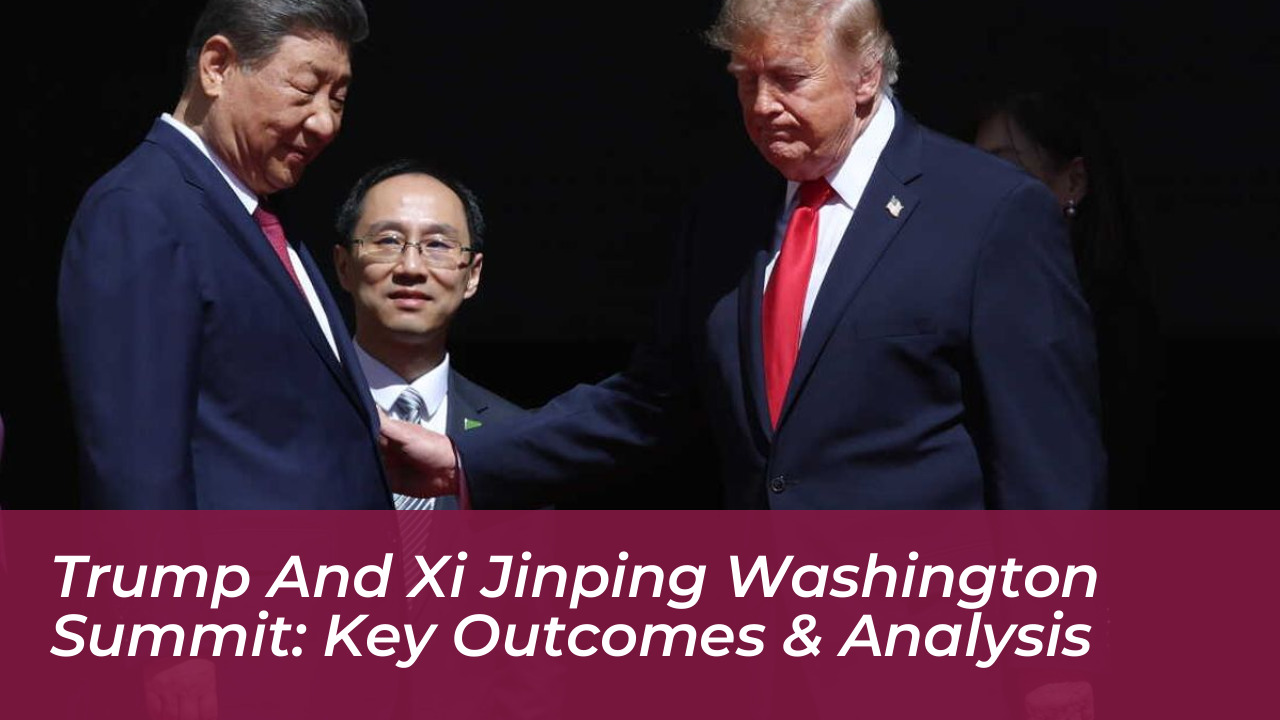
The state visit of Chinese President Xi Jinping to Washington, D.C., marked a high-stakes chapter in bilateral relations between the two largest economies in the world. Hosted by U.S. President Donald Trump, the multi-day summit balanced grand diplomatic pageantry with intense closed-door negotiations amid ongoing strategic competition. Against a backdrop of technological rivalries and global geopolitical flashpoints, the meeting aimed to stabilize a relationship tested by trade disputes and security concerns while projecting managed coexistence. Substantive policy breakthroughs remained limited beneath the surface of diplomatic warmth, highlighting the enduring structural divides separating Washington and Beijing.
- Arrival Ceremonies and Diplomatic Pageantry
- Breaking Protocol at Joint Base Andrews
- The South Lawn Welcome and Public Protest Friction
- The Extended Busan Agreement: Economic Truce and Trade Mechanics
- Extending the Tariff Truce
- Critical Resources and Structural Imbalances
- Artificial Intelligence and the Superintelligence Arms Race
- Competing Priorities in Advanced Computing
- Establishing a Modern Crisis Hotline
- Corporate Titans and the White House State Dinner
- Silicon Valley and Wall Street Elites in Attendance
- Soft Diplomacy and Cultural Gestures
- Geopolitical Friction Points: Taiwan, Iran, and Regional Security
- Taiwan and Congressional Arms Sales
- Middle Eastern Security and Proxy Operations
- Conclusion and Future Outlook of U.S.-China Relations
- Frequently Asked Questions
- What was the main outcome of the Washington summit between Donald Trump and Xi Jinping?
- Why was the Busan trade agreement extended?
- Which corporate executives attended the White House state dinner?
- How did the two leaders address the topic of artificial intelligence?
- What geopolitical flashpoints were discussed behind closed doors?
Arrival Ceremonies and Diplomatic Pageantry
Breaking Protocol at Joint Base Andrews
President Trump departed from standard protocol by traveling outside Washington to Joint Base Andrews in Maryland to personally greet Xi Jinping and his wife, Peng Liyuan. This gesture matched the hospitality Trump received during his visit to Beijing earlier in the year. The high-profile arrival featured a 30-metre red carpet, a 21-gun salute, and military flyovers by B-1 bombers, setting a tone of elevated protocol typically reserved for closest allies rather than strategic competitors.
Such an elaborate reception signaled a deliberate effort by the White House to establish strong personal rapport with the Chinese delegation. Officials on both sides understood that optics mattered immensely for domestic audiences, projecting strength and composure during a time of intense global uncertainty.
The South Lawn Welcome and Public Protest Friction
The pageantry continued on the South Lawn of the White House with an elaborate official welcome ceremony. The United States Army Old Fife and Drum Corps, the Herald Trumpets, and a military review in the Rose Garden underscored the administration’s focus on theatrical diplomacy. Supporters viewed the red-carpet rollout as an effective tool to build personal rapport and prevent dangerous escalations.
Critics, including several congressional leaders, raised concerns about offering such a warm reception to an authoritarian adversary. Outside the gates of Lafayette Park, protestors gathered to voice opposition against Beijing’s domestic and foreign policies. Chants echoing through the security perimeter highlighted ongoing tensions regarding Hong Kong, Tibet, human rights, and political prisoners, serving as a reminder of the public friction that runs parallel to high-level statecraft.
The Extended Busan Agreement: Economic Truce and Trade Mechanics
Extending the Tariff Truce
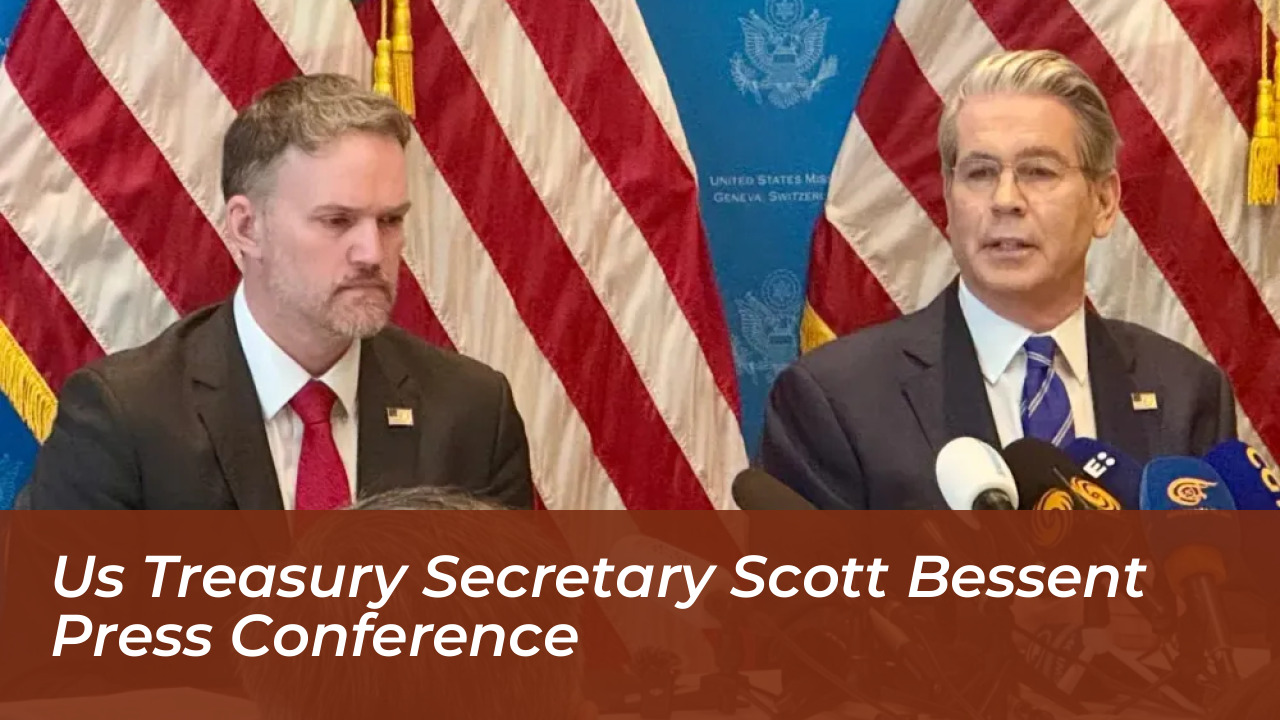
Economic discussions during the summit centered on extending the temporary trade agreement initially forged in Busan, South Korea. Treasury Secretary Scott Bessent announced that the truce, which was originally scheduled to expire in November, would be extended until January 10. This crucial extension forestalls a return to the severe tariff escalation that saw levies surpass 100 percent during the height of the trade hostilities.
Markets responded with cautious optimism to the news, as businesses on both sides gained a temporary reprieve from unpredictable trade barriers. However, financial analysts noted that short-term extensions do little to resolve the underlying structural grievances plaguing the bilateral commercial relationship.
Critical Resources and Structural Imbalances
The temporary pact maintains reciprocal market access provisions, allowing the United States continued access to critical Chinese rare earth elements essential for manufacturing and defense technologies. In exchange, China retains access to certain advanced American semiconductor chips under controlled parameters. Official delegations omitted key implementation details regarding pending agricultural purchases, particularly soybean quotas, and the proposed U.S.-China Board of Trade.
Despite the extension, structural trade imbalances persist. The U.S. trade deficit with China remains above $91 billion, fueling domestic political pressure from cabinet members and lawmakers urging stricter decoupling. While Chinese officials floated the prospect of negotiating a broader, comprehensive trade deal, U.S. negotiators adopted a cautious approach, prioritizing short-term stability over sweeping concessions.
| Economic Agreement Component | Previous Status | Current Washington Summit Status |
|---|---|---|
| Busan Trade Truce | Expiring November | Extended until January 10 |
| Rare Earth Elements | Restricted periodically | Access maintained for U.S. manufacturers |
| Semiconductor Chips | Subject to strict export bans | Limited access to approved customers |
| Agricultural Commitments | Unfulfilled soybean targets | Reaffirmed without strict implementation timelines |
Artificial Intelligence and the Superintelligence Arms Race
Competing Priorities in Advanced Computing
Artificial intelligence emerged as a primary agenda item, reflecting the growing urgency surrounding advanced computing models and national security. Both leaders acknowledged the dual nature of AI development, recognizing its potential for economic growth alongside its capacity to disrupt geopolitical stability. President Trump maintained his position that winning the global AI race is vital for American economic and military supremacy, dismissing domestic calls to slow research or implement heavy regulations.
President Xi called for responsible management and human oversight, emphasizing that the two superpowers share a duty to keep artificial intelligence under control. The divergence in philosophy highlights a deep competition over who will write the rules governing the future of global technology.
Establishing a Modern Crisis Hotline
U.S. Trade Representative Jamieson Greer likened the newly established bilateral AI dialogue to a modern equivalent of the Cold War-era Moscow-Washington hotline. This communication channel aims to provide a direct mechanism for sharing risk assessments and preventing algorithmic miscalculations without implementing formal binding limitations on AI development.
While tech experts welcomed any mechanism reducing the risk of automated conflict, skeptics questioned whether a simple dialogue channel could withstand the intense geopolitical pressures driving the race for artificial general intelligence.
Corporate Titans and the White House State Dinner
Silicon Valley and Wall Street Elites in Attendance
The social centerpiece of the visit was a high-profile state dinner held in the East Room, attended by an influential guest list of corporate executives, technology leaders, and financial figures. The presence of Silicon Valley and Wall Street elites underscored the deep economic entanglement between the two nations, even as geopolitical tensions mount.
Notable attendees included Elon Musk, Jensen Huang, Sam Altman, Sundar Pichai, Tim Cook, Mark Zuckerberg, Jeff Bezos, and Jamie Dimon. Their presence illustrated the reality that corporate stakeholders continue to navigate cross-border dependencies despite political calls for total economic separation.
Soft Diplomacy and Cultural Gestures
During the dinner, President Trump offered guests a preview of the ongoing construction of the new White House ballroom, boasting about its capacity to host larger delegations in the future. The evening also featured traditional diplomacy, including the announcement that China will send two giant pandas, named Ping-Ping and Fu Shuang, to Zoo Atlanta, signaling a return of panda diplomacy as a gesture of goodwill.
These cultural touchpoints provided a momentary reprieve from heavy policy debates, allowing both administrations to project a semblance of interpersonal warmth and mutual respect to the global public.
Geopolitical Friction Points: Taiwan, Iran, and Regional Security
Taiwan and Congressional Arms Sales
While economic and technological cooperation dominated public statements, critical geopolitical flashpoints remained contentious behind closed doors. Taiwan occupied a central position in strategic discussions. With Congress considering multibillion-dollar arms sales to Taipei, Beijing reiterated warnings against foreign interference in what it views as a domestic sovereignty issue.
The Trump administration maintained its official strategic ambiguity, utilizing the pending arms package as a diplomatic lever while avoiding explicit public commitments that could rupture the fragile summit atmosphere. Military planners continue to monitor the Taiwan Strait closely for any signs of miscalculation.
Middle Eastern Security and Proxy Operations
Intelligence assessments regarding Chinese logistical support and satellite imagery provided to Iran formed another tense topic of discussion. Washington issued clear demands for the cessation of such support, seeking assurances from Chinese counterparts through diplomatic channels managed by Ambassador David Perdue.
Beijing defended its commercial and diplomatic ties in the Middle East, maintaining that its engagements comply with international norms. These divergent viewpoints exposed the limits of bilateral cooperation when addressing regional conflicts driven by proxy dynamics.
Conclusion and Future Outlook of U.S.-China Relations
The final day of the summit featured a private tea in the White House Red Room and a joint tour of foundational American documents at the National Archives alongside Bradford Wilson. These concluding events reinforced the symbolic nature of the visit, blending historical appreciation with high-level diplomacy.
Independent analysts viewed the summit as a high-level containment exercise rather than a true resolution of structural conflicts. Both administrations reaffirmed the necessity of maintaining stable, sincere bilateral communications, but the fundamental contest for global supremacy remains entirely unchanged.
Frequently Asked Questions
What was the main outcome of the Washington summit between Donald Trump and Xi Jinping?
The summit resulted in the extension of the Busan trade truce until January 10, the establishment of a direct communication channel for artificial intelligence risk management, and the reaffirmation of ongoing bilateral dialogues despite deep structural differences.
Why was the Busan trade agreement extended?
Treasury Secretary Scott Bessent extended the temporary trade pact to prevent a return to severe tariff escalations and maintain market access for critical rare earth elements and semiconductor chips while negotiators address broader economic concerns.
Which corporate executives attended the White House state dinner?
The high-profile guest list featured prominent technology and financial leaders, including Elon Musk, Jensen Huang, Sam Altman, Sundar Pichai, Tim Cook, Mark Zuckerberg, Jeff Bezos, and Jamie Dimon.
How did the two leaders address the topic of artificial intelligence?
While President Trump emphasized winning the global AI race without restrictive international treaties, President Xi called for human oversight and responsible management, leading to the creation of a direct bilateral dialogue channel akin to a modern crisis hotline.
What geopolitical flashpoints were discussed behind closed doors?
Discussions covered sensitive regional security issues, including Beijing’s sovereignty claims over Taiwan amid proposed U.S. arms sales, and Washington’s concerns regarding alleged Chinese logistical support for Iran.