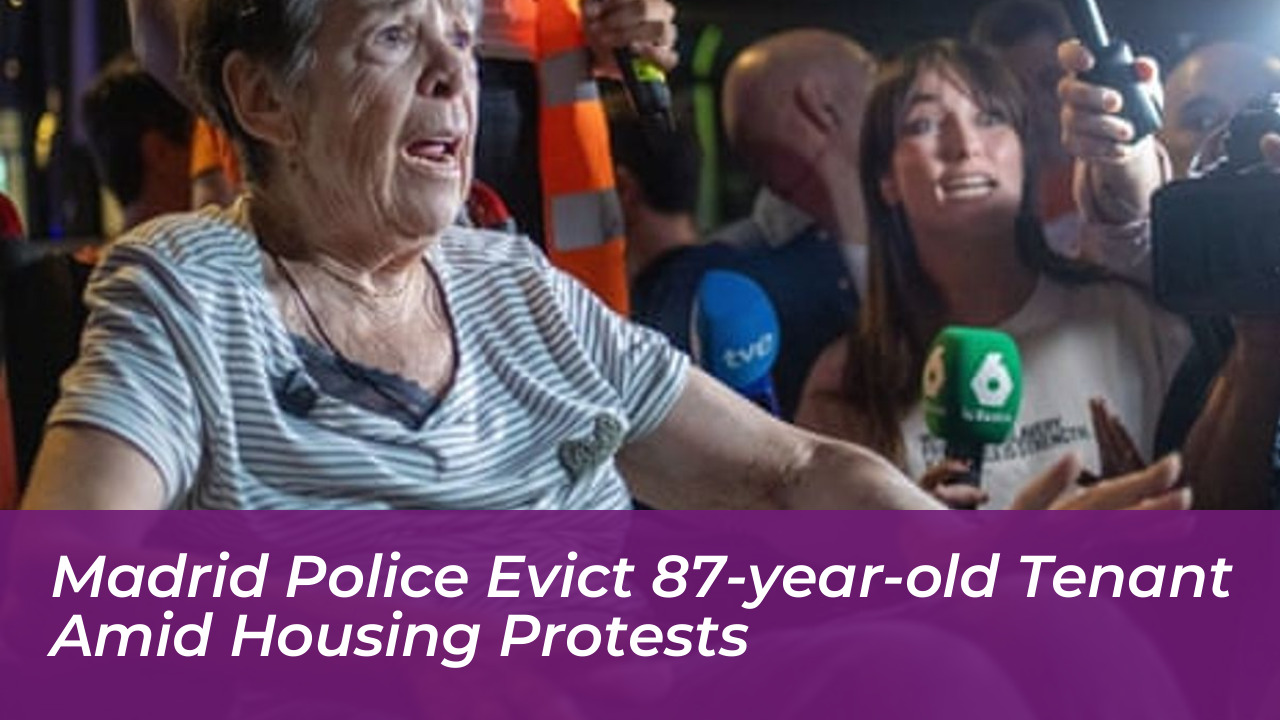
The forced removal of 87-year-old disabled resident Maricarmen Abascal from her Retiro district apartment on Alcalde Sainz de Baranda Street exposed deep fractures in Spain’s housing market. Riot police executed the eviction after an eight-year legal battle between the elderly tenant and real estate developers. Hundreds of housing rights activists, tenants’ association members, and prominent cultural figures gathered outside the building to protest the operation. Abascal, who lived in the property for 71 years under a sublease derived from her late parents’ 1956 contract, was carried out on a stretcher and taken to a local hospital. The incident ignited intense debates over tenant protections, gentrification, and speculative real estate acquisitions in Madrid and across Spain.
- The Anatomy of the Eviction on Alcalde Sainz de Baranda Street
- Decades in Retiro: The History of the 1956 Tenancy Agreement
- Legal Battles, Financial Impasses, and Supreme Court Rulings
- Public Outcry and Cultural Mobilization
- Political Fingerpointing Across Municipal, Regional, and National Levels
- Broader Implications for Spain’s Rental Market and Urban Gentrification
- Frequently Asked Questions
- Why was Maricarmen Abascal evicted from her Madrid apartment?
- How long had Maricarmen Abascal lived in the Retiro district apartment?
- What role did the United Nations play in the case?
- How did local and national authorities respond to the eviction?
The Anatomy of the Eviction on Alcalde Sainz de Baranda Street
The early morning operation in Madrid’s Retiro district unfolded with heavy tactical precision as riot police secured the perimeter. Authorities moved in to clear the building after years of mounting legal pressure. Security forces cordoned off the street to prevent onlookers and supporters from interfering with the forced clearance.
Emergency medical personnel eventually wheeled Abascal out of the building on a stretcher. The extreme stress of the confrontation and her pre-existing physical disabilities necessitated her immediate transfer to a local hospital. Demonstrators who had maintained a round-the-clock vigil outside the building watched in horror as the operation concluded with her departure.
For days prior to the final removal, human barricades choked the street. Activists camped overnight in freezing conditions to block access to the property. When police moved to clear the blockades, clashes erupted. Security forces deployed baton charges and tear gas to disperse the crowd, leading to injuries and heightened tensions between citizens and law enforcement agencies.
Decades in Retiro: The History of the 1956 Tenancy Agreement
Old-rent contracts in Spain trace their roots back to mid-century housing frameworks designed to guarantee long-term residential stability. Abascal’s family secured their apartment under one such historical agreement in 1956. These legacy frameworks allowed families to maintain occupancy across generations, with annual rent adjustments tied strictly to the Consumer Price Index rather than volatile market fluctuations.
For 71 years, Abascal maintained her home under this protected status. Private landlords managed the building for decades without challenging the arrangement. The neighborhood of Retiro evolved around her, shifting from a quiet residential quarter into a prime urban zone characterized by skyrocketing property values and intense commercial interest.
The status quo shattered in 2018 when Urbagestión Desarrollo e Inversiones SL acquired the entire residential building. Corporate real estate entities often view legacy tenancies as financial obstacles to maximizing asset value. Consequently, the new owners launched a structured legal campaign to phase out the historical leases and empty the building for high-end renovations.
Legal Battles, Financial Impasses, and Supreme Court Rulings
The judicial conflict dragged on for years through various lower courts before reaching Spain’s Supreme Court. The highest judicial body ultimately ruled in favor of the real estate developer, setting aside the historical protections that had shielded Abascal for decades. This verdict cleared the path for the physical eviction.
The financial demands starkly contrasted with the tenant’s economic reality. Abascal subsisted on a state pension of €1,350 per month. Initially, the developer offered to sell the apartment to her for €247,000 or raise her monthly rent from €500 to €2,650. Even after subsequent negotiations lowered the demanded rent to €1,650 per month, the sum still exceeded her total monthly income.
Desperate attempts to bridge the gap failed. Legal representation led by attorney Beatriz Duro attempted multiple delays and settlement proposals. In an extraordinary gesture, anonymous donors offered to cover the financial difference between her pension and the demanded rent. Developers rejected all such proposals, insisting on vacant possession of the property. Even an intervention by the United Nations calling for a suspension of the eviction order was ignored by domestic courts.
Public Outcry and Cultural Mobilization
Housing rights organizations, most notably Inquilinas de Madrid, mobilized quickly to support Abascal. They organized street blockades, rallies, and informational campaigns that drew national attention to the plight of vulnerable tenants facing corporate displacement. The protests transformed the Retiro district into a focal point for the broader housing crisis.
Prominent Spanish cultural figures lent their voices to the cause. Actors such as Juan Diego Botto, Carlos Bardem, and Sergio Peris-Mencheta joined the street demonstrations. They performed poetry, sang songs, and addressed the gathered crowds, using their public platforms to amplify the urgency of tenant protection laws.
Protesters chanted slogans that echoed across mainstream media channels. Phrases like “Maricarmen, you are not alone” and “This is not an eviction, it is murder” captured the deep public anger. Social media platforms flooded with videos of the police operation, galvanizing solidarity groups across other Spanish cities facing similar gentrification pressures.
Political Fingerpointing Across Municipal, Regional, and National Levels
The eviction triggered immediate political fallout across all levels of government in Spain. The Spanish Ministry of Housing publicly condemned the municipal and regional leadership. Officials from the national ministry accused the Madrid City Council of failing to evaluate Abascal’s vulnerability in a timely manner and blamed regional authorities for neglecting their duty to provide alternative public housing or financial subsidies.
The Madrid City Council rejected these accusations. Municipal representatives stated that local social services issued a formal vulnerability report at the specific request of the court. , council officials claimed they provided ongoing home-help services and offered alternative accommodation options, which the tenant ultimately declined due to attachment to her lifelong home.
Meanwhile, the conservative regional administration led by President Isabel Díaz Ayuso defended its market-oriented housing policies, arguing that private property rights must be upheld. Left-wing national coalition partners pointed to the legislative gridlock in Parliament as the primary barrier preventing the passage of nationwide rent controls and stronger safeguards for elderly tenants.
Broader Implications for Spain’s Rental Market and Urban Gentrification
Maricarmen Abascal’s case illustrates the escalating vulnerability of long-term tenants caught in Spain’s severe rental bubble. Rapid urban gentrification, tourism-driven housing shortages, and the conversion of residential blocks into speculative assets have driven rental prices to record highs in major urban centers like Madrid and Barcelona.
Institutional investors continue to acquire entire residential buildings, leaving long-standing tenants under historical rent frameworks entirely unprotected. When corporate landlords push to renovate or resell units at market rates, elderly residents with fixed incomes find themselves with nowhere to go. This dynamic accelerates the displacement of traditional communities.
Tenant unions are now demanding sweeping legislative reforms to curb corporate real estate speculation. They argue that urban development cannot come at the expense of basic social welfare mandates. The eviction serves as a grim benchmark for the ongoing struggle between profit-driven real estate markets and the right to housing in European metropolitan areas.
Frequently Asked Questions
Why was Maricarmen Abascal evicted from her Madrid apartment?
Developers acquired her residential building and successfully challenged her historical lease agreement through the Supreme Court. The new owners raised her rent beyond her monthly pension capacity and rejected all settlement proposals.
How long had Maricarmen Abascal lived in the Retiro district apartment?
She resided in the property on Alcalde Sainz de Baranda Street for 71 years, having inherited the tenancy framework established by her parents in 1956.
What role did the United Nations play in the case?
The United Nations called on Spanish authorities to suspend the eviction order due to the tenant’s advanced age and disability, though local courts ultimately proceeded with the enforcement anyway.
How did local and national authorities respond to the eviction?
The national Housing Ministry blamed municipal and regional leaders for failing to provide alternative housing or financial aid. City officials countered that they monitored her vulnerability and offered alternative living arrangements.