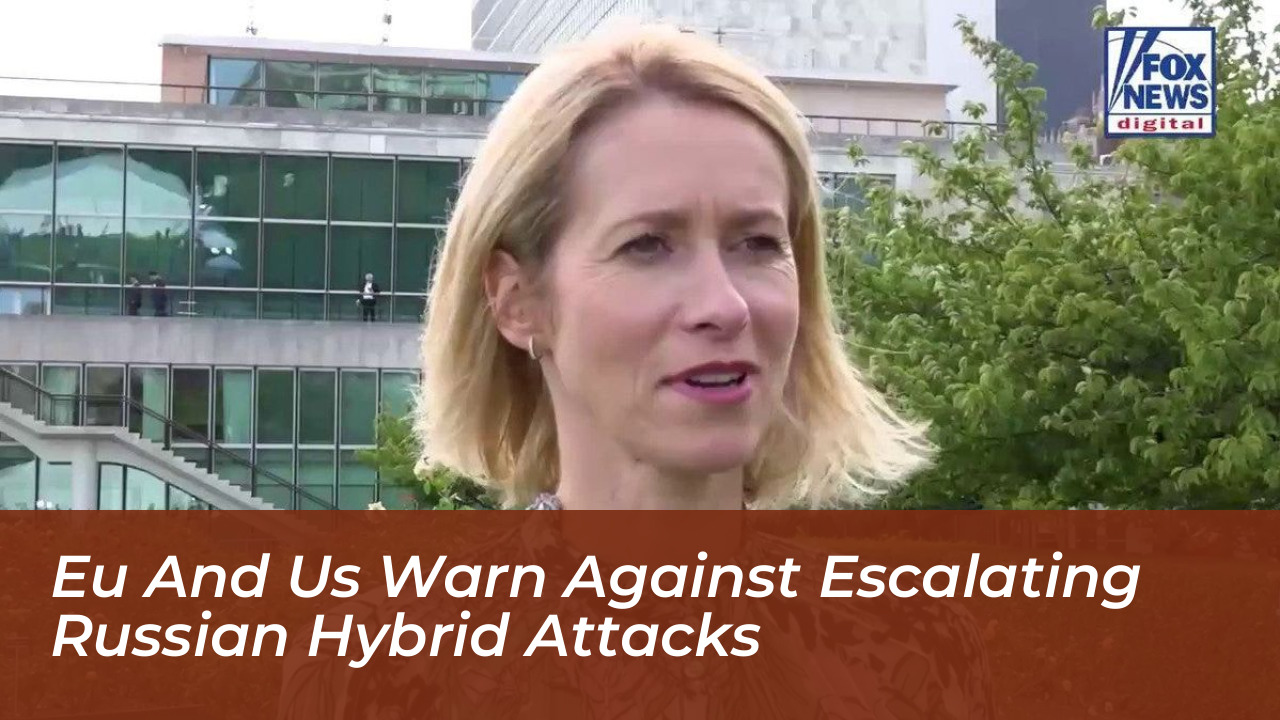
Western diplomats, security officials, and political leaders meeting on the sidelines of the United Nations General Assembly issued urgent warnings regarding an intensifying campaign of hostile activities across Europe. European Union foreign policy chief Kaja Kallas stressed that Moscow utilizes a deliberate strategy of intimidation designed to induce fear across European capitals, with the ultimate objective of forcing a retreat from Western military aid and financial support for Ukraine. Understanding the escalation of Russian hybrid warfare in Europe requires a close look at how modern adversaries operate below the threshold of traditional military conflict, targeting the structural foundations of Western societies.
- The Escalation and Scope of Modern Shadow Conflict
- Surging Incident Numbers Across Europe
- Multi-Domain Threat Vectors
- The Mechanics of Modern Sabotage and Infrastructure Vulnerabilities
- Plausible Deniability and Proxy Operations
- Primary Targets Across European Industrial Sectors
- Comparative Analysis of Hybrid Incident Types
- Geopolitical Posturing and the Terminology Debate
- Rhetorical Challenges Facing European Leaders
- The Risks of Soft Language and the Hybrid Label
- Strategic Implications for NATO and Future Defense Readiness
- Hardening Domestic Defenses and Civil Preparedness
- Deterrence and Joint Military Readiness
- Frequently Asked Questions
- What constitutes a Russian hybrid attack in Europe?
- Why do European officials use the term hybrid warfare instead of calling it a direct war?
- How are European countries responding to these escalating security threats?
- What specific sectors are most vulnerable to these sabotage operations?
Intelligence directors from Washington to Berlin share growing concerns that these covert tactics will continue to expand throughout the year. Analysts suggest that the shifting nature of geopolitical friction demands a permanent adaptation of domestic security protocols. Western agencies must remain proactive to counter stealthy disruptions before critical services face catastrophic failure.
The Escalation and Scope of Modern Shadow Conflict
Surging Incident Numbers Across Europe
Authorities recorded over 100 hybrid incidents between January and August, a sharp increase from roughly 60 incidents during the same period in the previous year. NATO military assessments factor in unacknowledged cyberattacks and localized disruptions to push real figures past 200.
This rapid expansion reflects a shifting risk appetite within the Kremlin. As conventional military operations in Ukraine face strategic hurdles, foreign intelligence agencies redirect resources toward covert disruptions in Western Europe. The goal is to fracture political unity without provoking a direct conventional war.
Local authorities across multiple member states report rising instances of suspicious surveillance near military installations. Counterintelligence units struggle to monitor every potential threat actor operating within open borders. National governments now prioritize real-time data sharing to track cross-border proxy movements effectively.
Multi-Domain Threat Vectors
The modern shadow conflict operates across multiple domains simultaneously. State-sponsored sabotage operations target domestic supply chains, while cyberattacks aim to paralyze public administration and critical communications. Airspace violations and border provocations continually test Western defense response times.
These multi-domain tactics create a constant state of friction. Governments must allocate massive resources to monitor skies, networks, and industrial yards simultaneously. The sheer volume of simultaneous threats strains local law enforcement and national intelligence services.
Coordinated disruptions across energy pipelines and telecommunications cables highlight systemic vulnerabilities in civilian infrastructure. Defense planners now treat digital resilience with the same urgency as traditional border protection. Securing these vital networks requires unprecedented public-private partnerships.
The Mechanics of Modern Sabotage and Infrastructure Vulnerabilities
Plausible Deniability and Proxy Operations
Modern hybrid warfare relies heavily on plausible deniability. Orchestrators use online proxies, disposable agents, and third-party operatives to execute disruptive missions. This layered approach obscures state responsibility and helps hostile actors avoid direct military confrontation thresholds.
Recruiting local criminals through encrypted messaging apps has become a standard operational playbook. These temporary operatives carry out arson, reconnaissance, and parcel bombings for cash. When caught, their handlers distance themselves, shielding the foreign state from immediate diplomatic retaliation.
Law enforcement agencies continuously adapt their investigative techniques to track anonymous handlers behind digital recruitment networks. Financial tracking remains a primary method to uncover funding streams flowing to local saboteurs. Exposing these financial footprints helps disrupt operations before physical damage occurs.

Primary Targets Across European Industrial Sectors
Critical infrastructure serves as the primary target for these covert operations. Defense plants, public utilities, transport systems, aviation hubs, and critical communication networks face relentless physical and digital pressure. Specific case studies include armed drones near Leipzig airport and maritime drone threats in the Black Sea.
Rail networks handling logistics for Ukraine face constant sabotage attempts. Saboteurs use radio signals and illegal surveillance to disrupt civilian and military supply lines. These attacks raise the stakes for civilian safety across Eastern Europe and force operators to implement costly security overhauls.
Industrial facility managers now deploy advanced perimeter sensors and AI-driven drone detection systems to protect active manufacturing zones. Security upgrades represent a significant financial investment for private companies supporting defense supply chains. Protecting these factories is essential to maintain steady material flow to frontline allies.
Comparative Analysis of Hybrid Incident Types
| Incident Type | Reported Locations | Strategic Objective |
|---|---|---|
| Airspace Violations & Drones | Poland, Lithuania, Romania, Moldova | Test NATO air defense response times and intimidate border populations. |
| Critical Infrastructure Sabotage | Germany, Estonia, Italy, France | Undermine defense manufacturing, energy grids, and supply chains. |
| Rail Network Disruptions | Ukraine-Poland border regions | Interdict Western military and humanitarian aid transit into Ukraine. |
| Cyberattacks & Disinformation | Brussels (NATO HQ), Pan-European networks | Sow public panic, disrupt communications, and paralyze public administration. |
Geopolitical Posturing and the Terminology Debate
Rhetorical Challenges Facing European Leaders
Political leaders across the European Union face a difficult rhetorical challenge when characterizing these hostile actions. French President Emmanuel Macron warned that the threat facing Europe has intensified significantly, prompting him to order comprehensive protection plans for critical infrastructure and defense sites. Similarly, Polish Prime Minister Donald Tusk warned of a real risk that Moscow could launch direct drone or missile strikes against NATO territory while falsely claiming the incursions were accidental.
Public awareness remains a vital shield against these psychological operations. Leaders must communicate the reality of these threats without causing panic. Clear, transparent messaging helps citizens recognize disinformation campaigns and local sabotage attempts.
Strategic communication teams work daily to debunk coordinated false narratives spreading across social media networks. Citizens must develop digital literacy to filter out hostile influence campaigns targeting democratic elections. Government transparency remains the strongest antidote to foreign psychological manipulation.
The Risks of Soft Language and the Hybrid Label
Calling hostile acts hybrid threats allows the European Union and NATO to avoid triggering Article 5 mutual defense clauses. However, critics argue that soft terminology minimizes the psychological gravity of assassinations, explosive packages, and grid attacks, lulling the public into complacency.
When governments label dangerous kinetic attacks as mere hybrid interference, they risk normalizing acts of war. A measured vocabulary is necessary for diplomacy, but public safety demands a clear acknowledgment of state sponsored violence. Precision in language ensures proper resource allocation for defense readiness.
Legal experts debate how international law should classify state-backed sabotage operations conducted via proxy networks. Updating legal frameworks will help Western allies impose meaningful economic sanctions on aggressive regimes. Clear definitions ensure robust international accountability for asymmetric acts of aggression.
Strategic Implications for NATO and Future Defense Readiness
Hardening Domestic Defenses and Civil Preparedness
European governments are taking concrete steps to harden their domestic defenses. Lithuania has updated its national evacuation protocols to handle sudden crisis scenarios. Germany is actively preparing civilian hospitals for potential large-scale conflict events, and Finland has constructed physical barriers along its southeastern frontier to counter weaponized migration tactics.
Civilian resilience forms the backbone of modern deterrence. When cities train populations for infrastructure failures and cyber outages, hostile actors lose their primary leverage. Preparedness transforms soft targets into resilient communities.
Municipal authorities conduct regular drills to test emergency power grids and backup communication systems during simulated cyber attacks. Community leaders distribute preparedness guides detailing how households can sustain themselves during short-term utility blackouts. Every prepared citizen reduces the psychological impact of hostile disruption tactics.
Deterrence and Joint Military Readiness
Maintaining collective security requires absolute vigilance and joint military readiness. Swedish and German naval drills near the strategic island of Gotland demonstrate an increased readiness to project deterrence. Intelligence warnings from US and European agencies regarding potential brazen escalations against Baltic states keep defense forces on high alert.
Intelligence sharing between allies neutralizes proxy networks before they strike. By exposing covert operations publicly, Western nations strip hostile actors of plausible deniability. Unified counterintelligence cooperation remains the most effective tool against shadow conflicts.
Joint military commands continuously update regional defense plans to account for rapid hybrid escalation scenarios. Allied air policing missions along the eastern flank maintain a constant presence to deter airspace incursions. Collective strength guarantees that hostile states think twice before attempting direct provocations.
Frequently Asked Questions
What constitutes a Russian hybrid attack in Europe?
Hybrid attacks encompass non-military and semi-covert methods designed to destabilize an adversary, including cyberattacks against critical infrastructure, targeted sabotage, disinformation campaigns, airspace violations by drones, and the weaponization of migration.
Why do European officials use the term hybrid warfare instead of calling it a direct war?
Labeling these aggressive acts as hybrid threats allows NATO and European Union member states to address hostile actions while remaining below the threshold of formally declared war, preventing immediate direct military responses and severe economic repercussions.
How are European countries responding to these escalating security threats?
European nations are upgrading critical infrastructure protection, conducting joint military deterrence exercises, updating national civil defense and evacuation plans, and enhancing counterintelligence operations to detect and neutralize proxy agents.
What specific sectors are most vulnerable to these sabotage operations?
Defense manufacturing plants, energy pipelines, telecommunications networks, aviation hubs, and trans-continental railway logistics lines represent the primary targets for foreign sabotage and remote electronic interference.