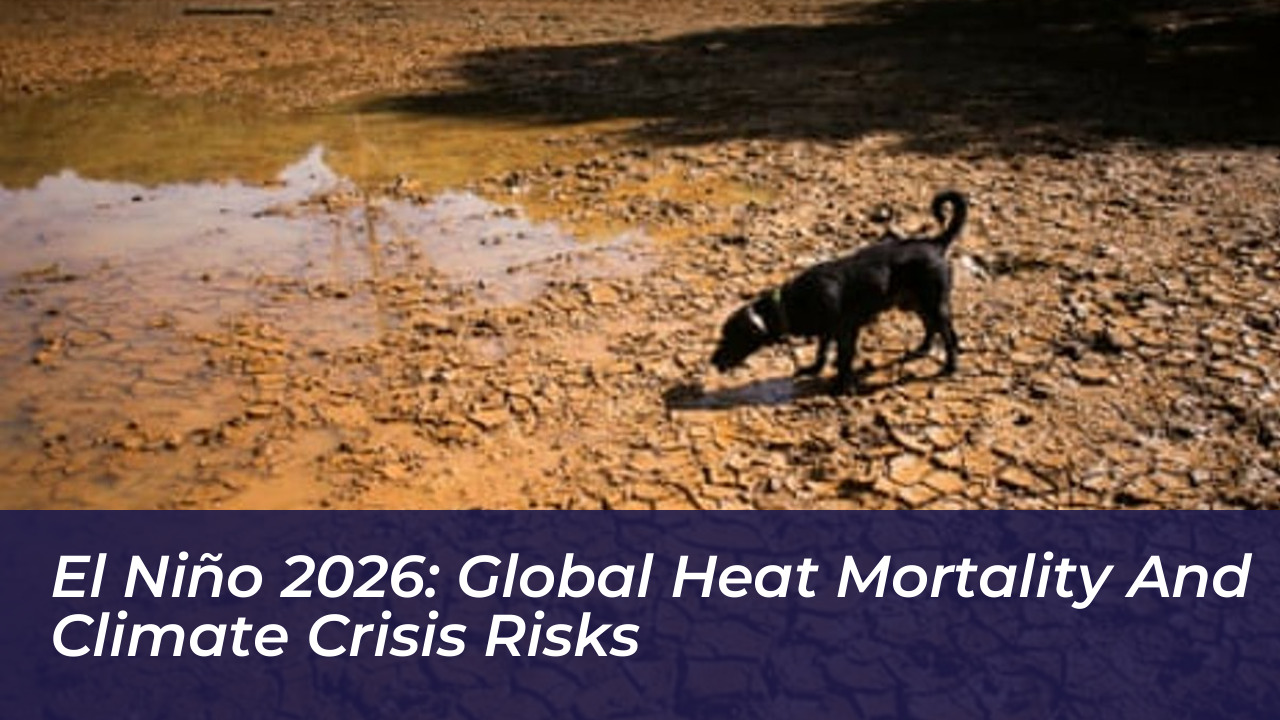
A severe El Niño climate pattern is active across the equatorial Pacific, pushing ocean surface temperatures to unprecedented levels and threatening hundreds of thousands of lives. Researchers warn that this intense weather anomaly will drive extreme global temperatures and a surge in heat mortality, exposing deep structural vulnerabilities across multiple continents.
- Understanding the Super El Niño Threat and Global Heat Mortality
- The Science Behind Peak Pacific Temperatures
- How Mortality Risks Are Calculated
- Regional Breakdown of Projected Fatalities
- The Sahel and African Nations
- Southeast Asia and South Asia
- Latin America and Industrialized Nations
- Socioeconomic Vulnerability and Infrastructure Deficits
- Electrical Grid Capacity and Mechanical Cooling
- Outdoor Labor Markets and Physiological Stress
- Cascading Environmental Disasters Beyond Extreme Heat
- Wildfire Amplification and Agricultural Stress
- Maritime Trade Disruptions and Water Scarcity
- Emergency Mitigation and Long-Term Adaptation Frameworks
- Evidence-Based Emergency Interventions
- Moving From Crisis Management to Structural Resilience
- Frequently Asked Questions
Understanding the Super El Niño Threat and Global Heat Mortality
Researchers warn that this active climate anomaly will result in 451,000 additional heat-related deaths globally. This forecast covers the critical period from June through February, capturing the full cycle of peak seasonal warmth in both the Northern and Southern Hemispheres.
Quantifying the human toll of extreme weather requires sophisticated modeling that links historical temperature data with public health outcomes. The research team analyzed temperature forecasts alongside historical health records across more than 24,000 distinct regions globally. Their methodology compares projected mortality rates for the current El Niño cycle against a baseline average established between 1996 and 2025.
The Science Behind Peak Pacific Temperatures
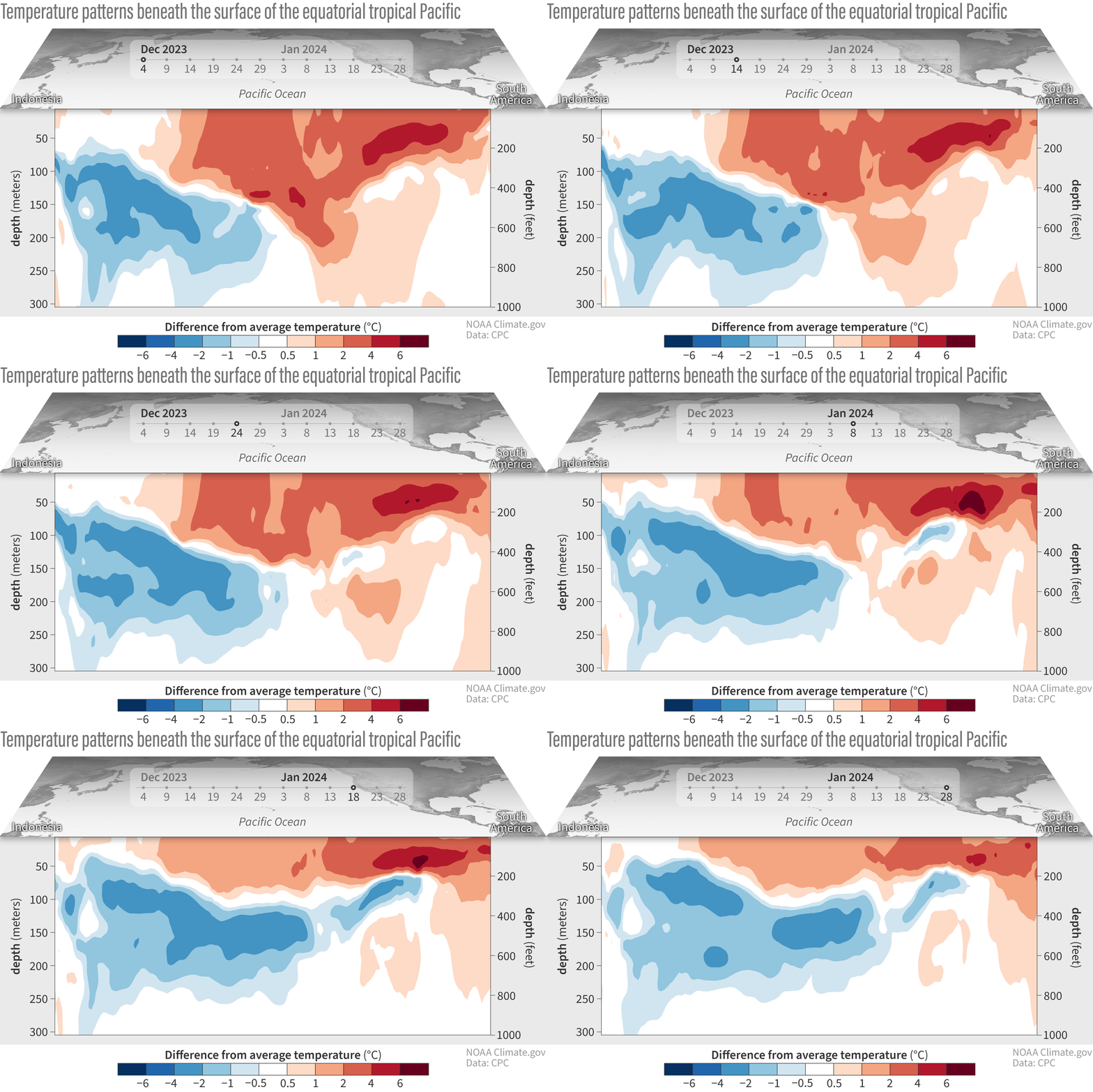
- Sea surface temperature anomalies reaching 3 to 4 degrees Celsius above normal levels.
- Comparison with historical 2015 El Niño peaks.
- Interaction between natural cyclical warming and background greenhouse gas emissions.
How Mortality Risks Are Calculated
- Methodology linking temperature forecasts with public health records across 24,000 distinct regions.
- Baseline averages established between 1996 and 2025.
- Projections indicating 44 percent more extremely hot days.
- El Niño acting as a twenty-year preview of mid-century baseline climates.
Regional Breakdown of Projected Fatalities
The burden of extreme heat distribution heavily impacts the Global South. Seasonal timing plays a primary role in this concentration, as the forecast period encompasses summer in the Southern Hemisphere, coinciding with annual peak temperatures in those tropical and subtropical latitudes.
Northern sub-Saharan Africa faces the highest concentration of excess mortality. The Sahel region is projected to register 66,800 excess deaths over the six-month forecast window, highlighting an urgent need for targeted public health interventions in regions with limited climate adaptation infrastructure.
The Sahel and African Nations
- Sahel region registering 66,800 excess deaths over the six-month forecast window.
- National breakdown includes Nigeria (31,400), Sudan (17,500), Niger (10,000), and Chad (8,000).
Southeast Asia and South Asia
- Combined impacts across the Philippines, Vietnam, Thailand, and Cambodia reaching 19,400 deaths.
- Indonesia toll scaling up to 19,300 additional fatalities.
- India facing 15,800 heat-related deaths due to shifting monsoon patterns.
Latin America and Industrialized Nations
- Brazil registering 13,300 projected deaths from prolonged heatwaves.
- United States ranking within the top twenty most affected nations with 3,500 additional fatalities.
Socioeconomic Vulnerability and Infrastructure Deficits
Physical exposure to high temperatures tells only part of the story when evaluating overall risk. Socioeconomic resilience dictates whether a heatwave remains a manageable environmental challenge or escalates into a humanitarian crisis. Poorer regions experience disproportionately higher mortality rates compared to wealthier areas facing identical thermometer readings.
Electrical grid capacity serves as a primary determinant of survival during extreme heat events. In urban and rural centers across Nigeria and other parts of the Global South, limited electrical infrastructure restricts widespread air conditioning use, leaving vulnerable populations without refuge during multi-day heat domes.

Electrical Grid Capacity and Mechanical Cooling
- Limited electrical infrastructure restricting widespread air conditioning use in Nigeria and developing regions.
- Absence of reliable power grids preventing refuge during multi-day heat domes.
Outdoor Labor Markets and Physiological Stress
- Millions of workers in agriculture, construction, and resource extraction continuing outdoor labor.
- Escalating physiological stress and rising heat stroke incidence in tropical zones.
Cascading Environmental Disasters Beyond Extreme Heat
Heat mortality represents only one component of the broader crisis triggered by the current El Niño cycle. Shifted rainfall patterns and prolonged dry spells amplify multiple environmental risks simultaneously across vulnerable developing economies.
Drought conditions worsen uncontrolled fires across Southeast Asia, particularly on the islands of Sumatra and Borneo, where agricultural land clearing practices get out of hand. Meanwhile, lower water levels in critical corridors such as the Panama Canal restrict cargo transit, slowing international supply chains.
Wildfire Amplification and Agricultural Stress
- Drought conditions worsening uncontrolled fires in Sumatra and Borneo.
- Absence of seasonal rainfall disrupting crop cycles in Central America and South Asia.
Maritime Trade Disruptions and Water Scarcity
- Lower water levels in corridors like the Panama Canal restricting cargo transit.
- Prolonged drying trends straining municipal water supplies in developing nations.
Emergency Mitigation and Long-Term Adaptation Frameworks
International humanitarian networks and municipal governments are mobilizing response protocols to mitigate the worst outcomes of the current climate cycle. Public health experts emphasize several evidence-based interventions that successfully reduce heat mortality.
Researchers caution against remaining in a permanent state of crisis management as temperatures continue to rise globally. Experts stress the need for structural adaptation to prevent future catastrophes.
Evidence-Based Emergency Interventions
- Advanced early warning systems and public cooling centers.
- Worker protection mandates and healthcare surge capacity.
Moving From Crisis Management to Structural Resilience
- Insights on moving beyond temporary emergency responses.
- Investing in decentralized renewable energy for off-grid cooling and upgrading building codes.
Frequently Asked Questions
- What is causing the current spike in global temperatures? A strong El Niño climate pattern in the equatorial Pacific is combining with background greenhouse gas emissions to drive extreme sea surface temperature anomalies.
- How many excess deaths are projected during this El Niño? Experts estimate 451,000 additional heat-related deaths globally between June and February.
- Which regions face the highest mortality risks? The Global South bears the heaviest burden, particularly the Sahel region in Africa, Southeast Asia, and parts of Latin America.
- What long-term solutions are recommended? Experts recommend investing in decentralized renewable energy, upgrading building codes for passive cooling, and expanding healthcare infrastructure in rural areas.