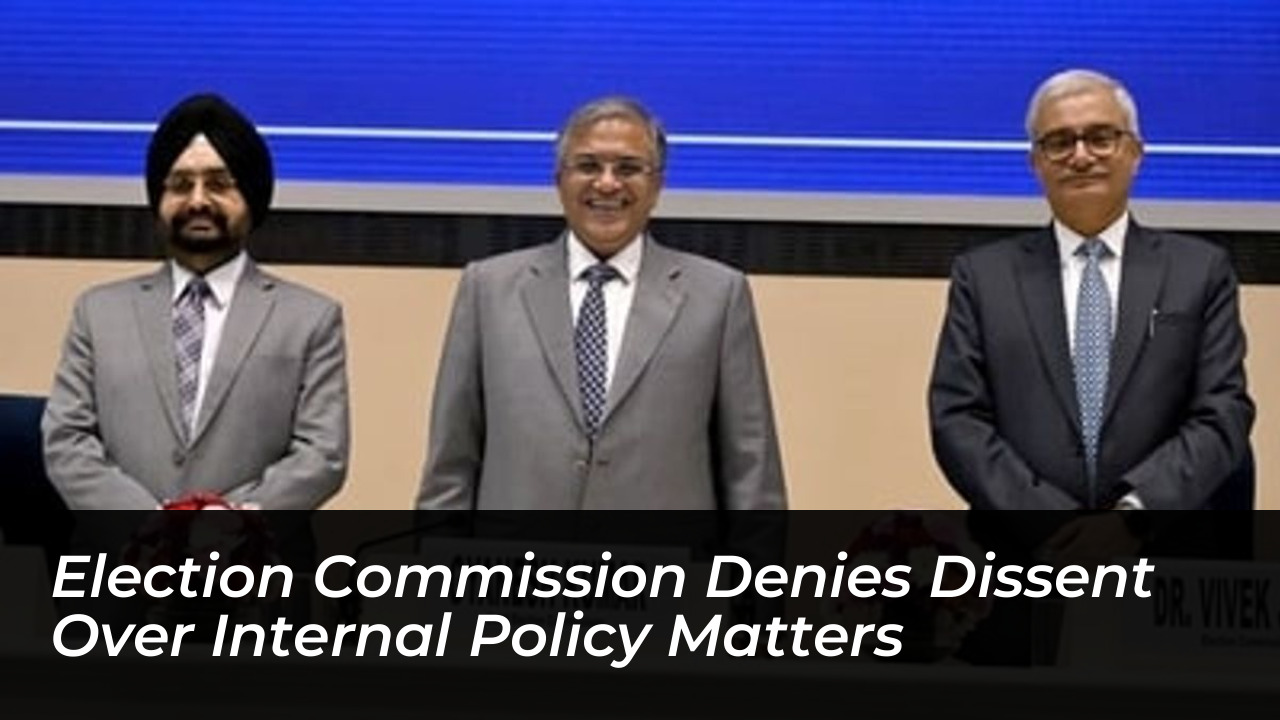
The Election Commission of India faces intense public scrutiny following media disclosures of administrative notes and internal correspondence among its top officials. This wave of attention places the apex poll panel at the center of a national debate regarding institutional autonomy and procedural transparency. Chief Election Commissioner Gyanesh Kumar, alongside Election Commissioners Sukhbir Singh Sandhu and Vivek Joshi, recently convened to address these reports. Understanding this controversy requires examining the operational mechanics of India’s electoral machinery, the statutory rules governing multi-member bodies, and the distinct line between routine administrative feedback and actual policy disagreement.
- Understanding the Election Commission Internal Friction Controversy
- Overview of the Nirvachan Sadan Full-Member Meeting
- Origins of the Media Reports
- Clarification on Special Intensive Revision and Voter Roll Deletions
- The Special Intensive Revision Framework
- Operational Queries and Database Handling
- Legal Foundations and Multi-Member Decision-Making
- Constitutional Mandate Under Article 324
- The Value of Consultative Deliberations
- Distinguishing Individual Opinions from Institutional Decisions
- Standard Administrative Consultations
- Maintaining Operational Continuity
- Political Repercussions and Institutional Autonomy
- Opposition Demands and Parliamentary Scrutiny
- Defense of Independent Statutory Machinery
- Administrative Clarifications on Work Redistribution
- The Communication With the Cabinet Secretary
- Securing Core IT Infrastructure
- Frequently Asked Questions
- What triggered the recent controversy involving the Election Commission?
- Did the Election Commission confirm any internal policy dissent?
- What constitutional article governs the Election Commission of India?
- How does the commission handle differing opinions among its members?
Understanding the Election Commission Internal Friction Controversy
Recent media reports generated significant public interest by highlighting potential administrative friction within the apex poll panel. In response, Chief Election Commissioner Gyanesh Kumar convened a high-level full-member meeting at Nirvachan Sadan in New Delhi. Election Commissioners Sukhbir Singh Sandhu and Vivek Joshi participated in these discussions to review internal workflows and address the narratives surrounding institutional discord.
The disclosures stemmed from claims that junior commissioners registered formal administrative objections across a ten-month period. These reports focused heavily on procedural disagreements related to nationwide electoral roll management. Political opposition parties quickly amplified these media leaks, using the administrative notes to question the institutional integrity and neutrality of the Election Commission.
Overview of the Nirvachan Sadan Full-Member Meeting
- Details regarding the high-level meeting convened by Chief Election Commissioner Gyanesh Kumar.
- Participation of Election Commissioners Sukhbir Singh Sandhu and Vivek Joshi in New Delhi.
- Addressing public interest generated by reports of administrative friction within the apex poll panel.
Origins of the Media Reports
- Claims regarding formal objections raised by junior commissioners across a ten-month period.
- Focus on procedural disagreements related to nationwide electoral roll management.
- The role of political opposition parties in amplifying institutional integrity debates.
Clarification on Special Intensive Revision and Voter Roll Deletions
At the heart of the operational queries lie updates to voter lists and the execution of extensive database revisions. Critics and opposition groups alleged that the nationwide Special Intensive Revision disproportionately targeted specific demographics for voter deletions. These allegations led to widespread speculation regarding potential bias within the database management process, prompting detailed clarifications from the commission.
Election Commission sources confirmed that Commissioners Sandhu and Joshi filed administrative notes concerning name removals and data handling protocols. However, the poll body maintains that these queries represent standard operational feedback rather than formal policy dissent. Digital platforms like ECINet continue to utilize strict security protocols, ensuring that District Election Officers maintain data accuracy without unauthorized manipulation.
The Special Intensive Revision Framework
- Scope and implementation of the nationwide Special Intensive Revision across various states.
- Allegations concerning voter deletions and demographic impacts raised by critics.
- Official commission stance regarding routine administrative inquiries versus systemic bias.
Operational Queries and Database Handling
- Specific administrative notes filed by Commissioners Sandhu and Joshi concerning name removals.
- Distinction between preliminary operational feedback and formal policy dissent.
- Role of digital platforms like ECINet in maintaining data security and procedural transparency.
Legal Foundations and Multi-Member Decision-Making
The operational framework of the Election Commission derives its authority directly from Article 324 of the Constitution of India. This constitutional mandate establishes the poll panel as a collective authority, operating alongside modern statutory legislation governing the appointment and service conditions of commissioners. Balancing administrative execution with Supreme Court guidelines requires robust internal checks and balances.
Multi-member bodies naturally experience administrative debates and technical suggestions before reaching final consensus. Encouraging individual commissioners to submit written feedback strengthens democratic oversight and improves voter registration accuracy. These consultative deliberations ensure that every administrative decision aligns fully with national electoral laws.
Constitutional Mandate Under Article 324
- How the Constitution of India establishes the collective authority of the Election Commission.
- Statutory legislation governing the appointment and service conditions of election commissioners.
- Balancing administrative execution with statutory compliance and Supreme Court guidelines.
The Value of Consultative Deliberations
- Why internal checks and balances form a critical component of institutional health.
- Encouraging technical suggestions to strengthen democratic oversight and voter registration accuracy.
- How multi-member bodies resolve administrative debates before reaching consensus.
Distinguishing Individual Opinions from Institutional Decisions
Differing views represent a standard component of high-level administrative governance. Preliminary notes and operational queries do not constitute formal institutional rulings until the full panel adopts a consensus approach. Over the past year, the three commissioners successfully coordinated dozens of major electoral exercises and structural reforms without facing operational deadlock.
Maintaining operational continuity requires separating routine administrative dialogue from policy paralysis. The commission successfully avoids internal gridlock by relying on established internal protocols. This structured approach reassures stakeholders regarding the stability of the apex electoral machinery.
Standard Administrative Consultations
- Why differing views represent a normal element of high-level administrative governance.
- The legal status of preliminary notes versus formal institutional rulings.
- Tracking the successful coordination of major electoral exercises and reforms over the past year.
Maintaining Operational Continuity
- Evidence of functional consensus across dozens of state-level electoral processes.
- Avoiding administrative paralysis through established internal protocols.
- Reassuring stakeholders regarding the stability of apex electoral machinery.
Political Repercussions and Institutional Autonomy
The disclosure of internal administrative notes triggered sharp reactions from national political leaders. Prominent opposition figures accused the leadership of compromising constitutional neutrality, leading to calls for parliamentary accountability and potential Supreme Court intervention. Lawmakers argued that administrative disputes undermine collective decision-making protocols.
In contrast, the ruling administration defended the independent statutory machinery of the poll panel. Officials emphasized the importance of preserving public trust in electoral oversight by separating constitutional duties from partisan political pressure. Maintaining this boundary remains vital for preserving faith in democratic institutions.
Opposition Demands and Parliamentary Scrutiny
- Reactions from national political leaders regarding institutional neutrality.
- Calls for accountability, parliamentary motions, and Supreme Court intervention.
- Arguments presented by opposition lawmakers regarding collective decision-making protocols.
Defense of Independent Statutory Machinery
- Response from the ruling administration defending the autonomy of the poll panel.
- Measures taken to preserve public trust in electoral oversight.
- Reaffirming the separation of constitutional duties from partisan political pressure.
Administrative Clarifications on Work Redistribution
Recent developments also brought staff management and internal workflow coordination into focus. Correspondence sent to Cabinet Secretary T V Somanathan by Commissioners Sandhu and Joshi addressed the implementation hurdles of an officer on deputation. The commission clarified that these letters did not concern overarching policy matters or information technology divisions.
Oversight of the crucial IT division under the Deputy Election Commissioner remained entirely stable throughout these administrative discussions. Dispelling rumors of structural dysfunction through direct operational transparency reinforces the ongoing commitment to legally compliant electoral management.
The Communication With the Cabinet Secretary
- Details concerning correspondence sent to Cabinet Secretary T V Somanathan.
- Clarification that letters did not address overarching policy matters or information technology divisions.
- Addressing implementation hurdles linked to an officer on deputation.
Securing Core IT Infrastructure
- Confirmation of stable leadership within the crucial IT division under the Deputy Election Commissioner.
- Dispelling rumors of structural dysfunction through direct operational transparency.
- Summary of ongoing commitments to transparent, legally compliant electoral management.
Frequently Asked Questions
What triggered the recent controversy involving the Election Commission?
Media reports revealed that two Election Commissioners allegedly raised formal objections on fourteen occasions over ten months regarding voter roll revisions and administrative orders.
Did the Election Commission confirm any internal policy dissent?
The Election Commission denied any fundamental policy dissent, stating that major decisions, including the Special Intensive Revision, were adopted unanimously through consensus.
What constitutional article governs the Election Commission of India?
The commission functions under the mandate of Article 324 of the Constitution of India, alongside specific statutory rules and institutional conventions.
How does the commission handle differing opinions among its members?
The commission regards written notes, technical suggestions, and differing preliminary views as standard administrative practices designed to ensure complete legal compliance before finalizing decisions.