The Belfast High Court has dismissed a final legal challenge against an Orange Order parade on Garvaghy Road in Portadown. This decision allows 35 members of the Protestant organisation to complete a historic procession down the contested route after nearly three decades of bans. The late-night judicial proceedings culminated at 2:15 a.m. on Sunday when Justice Michael Humphreys ruled that the determination made by the Parades Commission of Northern Ireland could not be successfully impugned via judicial review. The ruling brought a sudden end to emergency efforts mounted by nationalist residents and political leaders to halt the controversial march.
- Chronology of the Emergency Legal Battle
- Initial Parades Commission Decision
- High Court Injunction and Appellate Interventions
- Final Dismissal by Justice Michael Humphreys
- The Garvaghy Road Flashpoint and Historical Context
- The 30-Year Precedent
- Strict Conditions Imposed by the Parades Commission
- On-the-Ground Protests and Community Reactions
- Political Fallout and Institutional Repercussions
- Nationalist and Republican Condemnation
- Unionist and Loyalist Responses
- Procedural Vulnerabilities of the Parades Commission
- Frequently Asked Questions
- Why was the Orange Order banned from Garvaghy Road for nearly 30 years?
- What specific restrictions were placed on the Sunday morning parade?
- What grounds did the Belfast High Court use to dismiss the appeal?
- How did local residents respond to the court ruling?
Chronology of the Emergency Legal Battle
The sequence of events leading to the Sunday morning march unfolded through a frantic 24-hour cycle of legal filings, emergency hearings, and appellate interventions across Belfast courts. Legal teams on both sides worked around the clock as tension mounted across the region.
Courts operated through the night to address the fast-moving developments, reflecting the high stakes involved in the public procession dispute.
Initial Parades Commission Decision
On Friday, the Parades Commission reversed its decades-long stance regarding the Drumcree-to-Portadown route. The independent regulatory body granted permission for a restricted daytime procession involving the Orange Order along the Garvaghy Road. This decision sparked immediate praise from unionist politicians and intense condemnation from nationalist representatives.
The regulatory body defended its choice by citing a need to balance cultural expression with public order management. Critics, however, pointed out the sudden departure from historical precedent without apparent justification in local security assessments.
High Court Injunction and Appellate Interventions
On Saturday, Justice Patricia Smyth issued a temporary injunction blocking the commission decision. She warned that the long-standing dispute possessed the capacity to escalate tensions throughout Northern Ireland. However, the legal victory for residents proved short-lived.
At 11:30 p.m. on Saturday, Lady Chief Justice Siobhan Keegan convened the Court of Appeal and ruled that the initial injunction contained legal errors. The appellate court found that the emergency judge had overstepped standard review parameters when assessing the independent body’s administrative choice.
Final Dismissal by Justice Michael Humphreys
Following the Court of Appeal ruling, nationalist objectors filed a fresh application in the High Court. Justice Michael Humphreys presided over this emergency session, which commenced after midnight.
Humphreys concluded that the threshold required to overturn a public body’s reasoned determination had not been met, officially clearing the path for the Sunday morning parade. His judgment emphasized that courts must avoid second-guessing expert regulatory bodies unless clear illegality is demonstrated.
The Garvaghy Road Flashpoint and Historical Context
The Garvaghy Road represents one of the most volatile symbols of community division in Northern Ireland. The route cuts through a predominantly nationalist area in Portadown, County Armagh.
During the 1990s, the annual Drumcree church parade generated severe civil unrest, roadblocks, and violent clashes between loyalist marchers, nationalist residents, and the security forces. The intense stand-offs nearly derailed the political peace process before the signing of the 1998 Good Friday Agreement.
The 30-Year Precedent
Following the establishment of the Parades Commission in 1998, successive annual applications by the Portadown Orange Lodge to march down the Garvaghy Road were consistently refused. This created a nearly 30-year precedent of prohibition.
The unbroken string of bans came to define post-conflict community relations in County Armagh, making any alteration to the status quo an explosive political event.
Strict Conditions Imposed by the Parades Commission
To mitigate potential flashpoints and community friction, the regulatory body subjected the Sunday morning procession to rigorous operational restrictions:
- Participation was capped strictly at 35 members of the Portadown Orange Lodge.
- The procession was mandated to be completely silent, with no accompanying musical bands or external supporters allowed on the route.
- The march commenced at 8:00 a.m. departing from Drumcree Church and was required to conclude swiftly under police oversight.
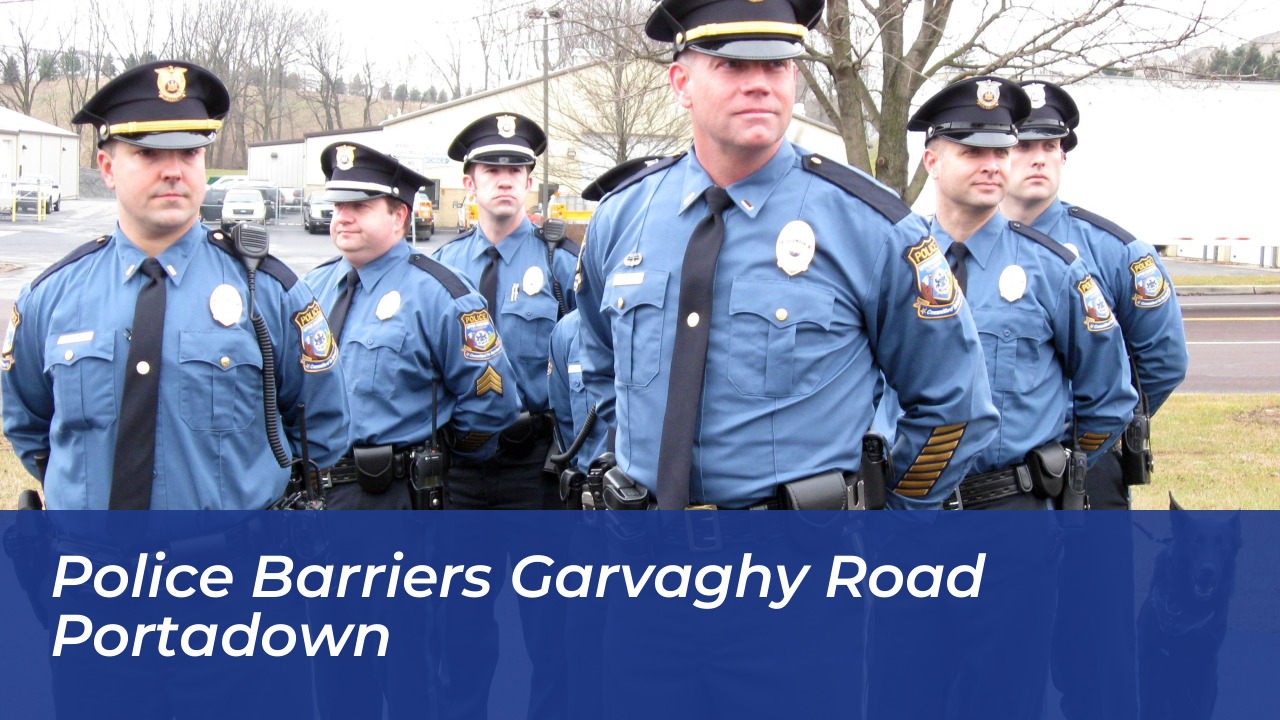
- Enhanced security arrangements were deployed by the Police Service of Northern Ireland (PSNI), utilizing mutual aid officers from outside the immediate region.
These conditions aimed to minimize the physical footprint of the parade and prevent confrontational displays that might trigger local unrest.
On-the-Ground Protests and Community Reactions
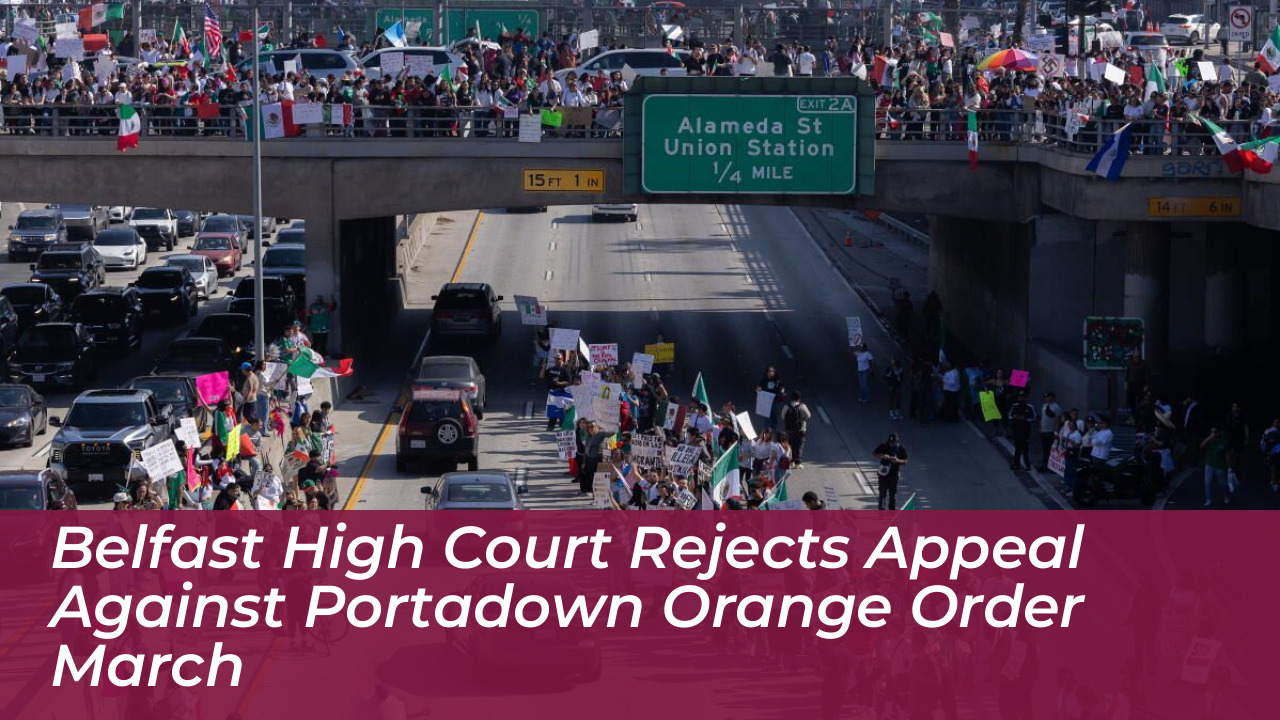
As news of the late-night court reversals spread, approximately 1,000 demonstrators gathered near the lower end of Garvaghy Road shortly before midnight on Saturday. Protesters parked vehicles across the street and formed human blockades to prevent access.
Garvaghy Road Residents Coalition leader Breandán Mac Cionnaith addressed the gathered crowds. He instructed demonstrators to clear broken glass and debris from the tarmac to prevent injuries in the event of a police clearance operation.
Uniformed PSNI officers monitored the scene from a distance without immediately attempting to disperse the gathering. The atmosphere remained tense but disciplined as community leaders urged peaceful opposition.
Political Fallout and Institutional Repercussions
The court ruling triggered immediate and polarized responses from political leaders across Northern Ireland and the United Kingdom, highlighting deep divisions over public accountability and community rights.
Nationalist and Republican Condemnation
Sinn Féin First Minister Michelle O’Neill labeled the court outcome disgraceful, asserting that the march carried a history of sectarian tension. Sinn Féin leader Mary Lou McDonald described the decision as utterly reckless and confirmed her party’s full solidarity with the Garvaghy Road community.
SDLP leader Claire Hanna characterized the parade plans as provocative actions capable of reopening historical traumas that the community worked decades to heal.
Unionist and Loyalist Responses
Conversely, Democratic Unionist Party (DUP) representatives, including MP Carla Lockhart, welcomed the resolution as a vindication of lawful parading rights. Lockhart maintained that residents had nothing to fear from a small, restricted group of 35 individuals exercising their cultural traditions.
Loyalist activist Jamie Bryson also hailed the developments as a significant legal milestone for unionism, arguing that statutory bodies must uphold civil liberties without yielding to threats of disruption.
Procedural Vulnerabilities of the Parades Commission
The weekend emergency hearings followed a broader institutional crisis surrounding the Parades Commission. Earlier in August 2026, the High Court quashed a separate commission determination due to internal procedural flaws.
Investigations revealed that not all statutory commissioners had signed off on specific rulings before publication, and controversies emerged regarding internal communication channels. These administrative missteps prompted demands for structural reform.
Northern Ireland Secretary Chris Bryant emphasized that the regulatory body must retain cross-community confidence to function effectively, signaling upcoming reviews into its internal decision-making frameworks.
Frequently Asked Questions
Why was the Orange Order banned from Garvaghy Road for nearly 30 years?
Following intense violent clashes, riots, and security stand-offs at Drumcree during the 1990s, the Parades Commission was established in 1998. It routinely barred marches along the Garvaghy Road to prevent public disorder and protect community safety.
What specific restrictions were placed on the Sunday morning parade?
The regulatory commission restricted the procession to 35 participants from the Portadown Orange Lodge, mandated a silent walk without musical bands, and enforced an early morning schedule starting at 8:00 a.m.
What grounds did the Belfast High Court use to dismiss the appeal?
Justice Michael Humphreys ruled that courts must respect the independent judgment of statutory public bodies like the Parades Commission. He concluded that objectors failed to prove the decision was legally irrational or procedurally flawed enough to warrant judicial intervention.
How did local residents respond to the court ruling?
Roughly 1,000 demonstrators mobilized late Saturday night, forming peaceful vehicle and human blockades along Garvaghy Road while community leaders maintained order on the ground.