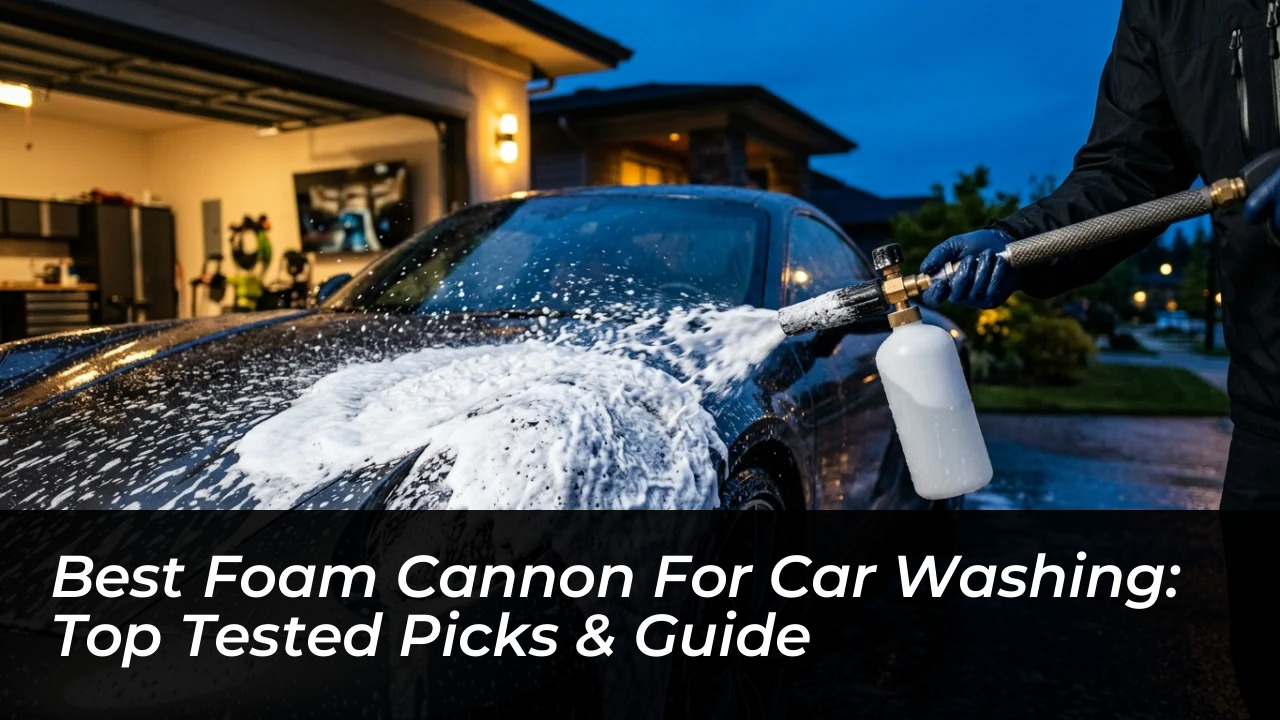

Investing in a high-performing foam cannon allows you to blanket your vehicle in a thick lather that loosens road grime, dust, and pollen before you ever touch the paint with a wash mitt. Operating efficiently between 1,500 and 3,000+ psi, this pre-wash method actively prevents the micro-scratches and unsightly swirl marks caused by scrubbing abrasive debris directly into your clear coat. While professional vehicle detailers have used high-pressure foam systems for years, modern hardware allows everyday motorists to achieve showroom-level results at home.
Modern lance designs feature adjustable spray patterns, variable dilution dials, and swappable internal jets that cater to both modest electric washers and heavy-duty petrol machines. The secret to effective cleaning lies in dwell time: the blanket of suds lifts contaminants and lets gravity pull them away from panels before physical contact begins. Choosing the wrong equipment leads to watery drips and wasted shampoo. Understanding how each unit performs across key criteria ensures you pair the right tool with your existing pressure washer setup.
Top-Rated Foam Cannons Compared
Selecting the right attachment depends on your cleaning goals, your pressure washer specifications, and your budget. Rigorous testing reveals distinct standouts for everyday maintenance, maximum value, and enthusiast-grade durability.
- Top Pick: Chemical Guys TORQ Foam Blaster 6 / Ethos Foam Cannon Pro V2 (Offering versatile dial control and thick lather)
- Best Value: Greenworks High Pressure Foam Cannon (Providing dependable high-pressure foaming)
- Premium Pick: MTM Hydro PF22.2 / Adam’s Polishes Foam Gun Sprayer (Featuring high-grade components and wide-mouth bottle design)
Model Performance and Key Advantages
When comparing hardware options, certain structural details dictate long-term reliability and foam density. Here is how top contenders stack up:
| Model | Key Advantage |
|---|---|
| Chemical Guys TORQ Foam Blaster 6 | Top overall pick delivering thick lather and versatile dial control |
| Greenworks High Pressure Foam Cannon | Best value option providing dependable high-pressure foaming |
| Adam’s Polishes Foam Gun Sprayer | Premium pick featuring high-grade components and wide-mouth bottle design |
Essential Hardware Features to Consider
Not all foam attachments deliver equal results on the driveway. Premium units incorporate brass or stainless-steel internal fittings, which resist high operating pressures and corrosion far better than brittle plastic threads that crack or leak after minimal use.
Bottle architecture also plays a vital role in convenience. A reservoir featuring a wide, stable base prevents accidental tip-overs, while clear measurement markings and a broad mouth eliminate the frustration of using funnels during dilution. Precise adjustability is equally critical. Top-mounted mixture knobs let you manage the ratio of water to car shampoo, while rotating front nozzles adjust your output from a concentrated vertical pencil jet to a sweeping, fan-like snowstorm across broad body panels.
Matching Pressure and Flow Rates
A standard foam cannon generally demands a water flow between 1.2 and 5.0 gallons per minute (gpm) and operates reliably within a window of 1,500 to 3,000+ psi. Connecting an oversized lance to a low-output machine results in thin, watery foam that slides off panels instantly.
A common mistake in practice is running a standard 1.25-mm internal orifice on a compact electric pressure washer, which starves the mixture of pressure and yields thin, runny suds. Swapping to a 1.1-mm orifice restricts flow just enough to increase internal velocity, producing ultra-dense foam even on compact domestic power washers.
Step-by-Step Guide to Safe Pre-Washing
- Fill your bottle with warm water first, then add dedicated automotive shampoo according to the manufacturer’s dilution instructions to avoid premature foaming inside the reservoir.
- Attach the bottle to your lance and connect it to your pressure washer trigger assembly via the quick-connect fitting, ensuring a solid, leak-free lock.
- Adjust the top dial to regulate soap suction, then test the spray pattern on the ground to dial in a wide, even fan.
- Coat the vehicle starting from the lower sills and moving upward, allowing the clingy foam to dwell on the surface to loosen grit.
- Rinse the vehicle thoroughly using clean high pressure before touching any panel with a wash mitt or bucket.
Myth vs. Reality: Washing Products and Paint Safety
A widespread misconception among motorists is that household washing-up liquid makes a suitable, cheap substitute for dedicated car soap in a pressure washer bottle. While washing-up liquid can produce bubbles, its chemical formulation strips away protective wax layers, degrades sealants, and lacks the lubricity required to encapsulate grit safely.
In contrast, specialised automotive detailing shampoos feature pH-balanced formulations that clean without compromising paint coatings. High-lubricity surfactants suspend fine abrasives so they wash away without scouring delicate clear coats. Foam lances are also exceptionally safe and effective across diverse surfaces, including automotive glass, exterior plastic trim, and painted sheet metal on everyday hatchbacks, large SUVs, and commercial vans alike.
Upgrading your pre-wash stage is the single most effective way to eliminate paint swirl marks and cut down on exterior wash times. Checking your pressure washer’s psi and gpm specifications ensures you pick an attachment that produces thick, stable shaving-cream lather.
Frequently Asked Questions About Foam Cannons
Do foam cannons work with electric pressure washers?
Yes. If the cannon’s orifice matches your machine’s flow, electric units in the 1,300 to 2,000 PSI range will produce excellent foam. Swapping in a 1.1mm orifice often resolves thin foam issues on low-flow electric washers.
What soap should I use in a foam cannon?
Always use a dedicated, pH-balanced automotive car shampoo formulated specifically for foaming. Avoid household dish soap, as it strips protective waxes and lacks the necessary lubricating properties to prevent scratching.
How much PSI do I need to run a foam cannon?
Most quality foam cannons operate effectively starting around 1,300 PSI, provided your pressure washer delivers adequate water flow (ideally 1.4 GPM or higher).
Why is my foam cannon producing watery foam?
Watery foam is typically caused by insufficient soap concentration, an incorrect internal orifice size for your pressure washer’s flow rate, a clogged mesh filter, or running cold water instead of warm water.
Is a foam cannon actually worth the investment?
Yes. The touchless pre-wash stage removes abrasive dirt and grit safely before your wash mitt ever touches the car’s clear coat, making it the single most effective preventative tool against swirl marks.