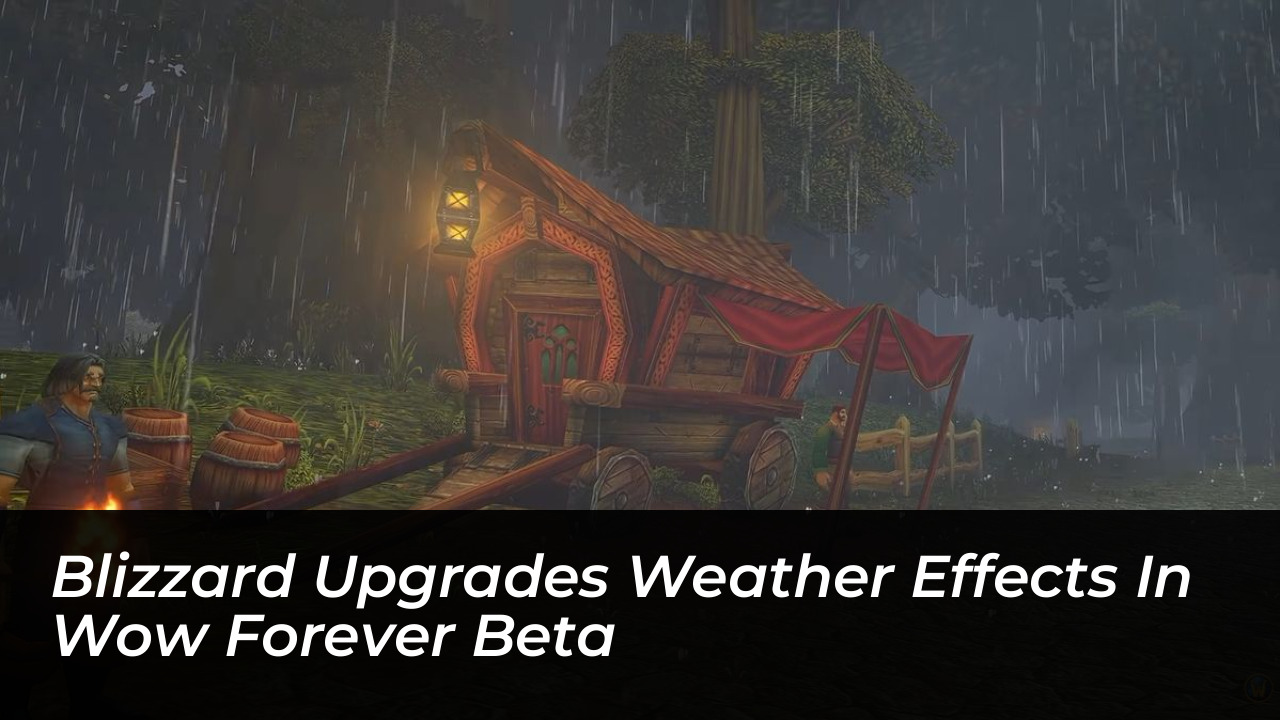
Blizzard Entertainment rolls out a major update to the World of Warcraft Forever beta client, focusing heavily on atmospheric immersion and environmental realism. Ahead of the official commercial launch on November 4, 2026, developers are answering long-standing community demands by overhauling meteorological systems. This initiative brings heavy precipitation, dense fog layers, and realistic acoustic atmospheres to starting zones, with Elwynn Forest taking center stage as the primary visual showcase for these exciting technical upgrades.
- Introduction to the World of Warcraft Forever Weather Overhaul
- Atmospheric Immersion as a Core Design Pillar
- Prioritizing Environmental Realism
- The Classic Plus Philosophy
- Elwynn Forest as the Meteorological Testing Ground
- Visual Enhancements in Goldshire
- Impact on Exploration and Resource Gathering
- Advanced Audio Engineering and Dynamic Soundscapes
- Real-Time Environmental Audio
- Acoustic Atmosphere in Open Plains
- Community Engagement and Technical Scope
- Unprecedented Beta Traffic Metrics
- Performance Optimization in Crowded Zones
- Geographic Rollout Schedule and Future Patches
- Community Reactions and Developer Insights
- Frequently Asked Questions
- When does World of Warcraft Forever launch?
- Which zones feature the new weather systems first?
- Will modern convenience features be added to Forever?
- How do weather effects impact gameplay?
Introduction to the World of Warcraft Forever Weather Overhaul
For years, fans have requested deeper environmental fidelity that goes beyond simple skybox swaps. Blizzard responds directly to this feedback by introducing dynamic weather systems to the World of Warcraft Forever beta client. A recently published video teaser highlights torrential rainfall, rolling ground fog, and crisp environmental audio tracks centered in the Elwynn Forest zone. This patch marks a turning point for the project, proving that the development team listens closely to community desires for a more alive virtual world.
Elwynn Forest serves as the primary testing ground for these meteorological additions. Video footage reveals heavy raindrops splashing against character models, wet ground textures, and thick fog settling across Goldshire and the surrounding riverbeds. Long-term fans note that these updates capture the cozy, nostalgic mood of early virtual world design while leveraging modern rendering technology to create a truly immersive experience.
Atmospheric Immersion as a Core Design Pillar
Prioritizing Environmental Realism
Game directors emphasize that environmental realism dictates the foundational identity of this upcoming title. The development team prioritizes social cooperation and grounded player journeys over high-stakes, rapid-fire progression loops. Enhanced weather systems transform routine questing routes into unpredictable, atmospheric experiences that require players to pay closer attention to their surroundings.
Players fighting through iconic low-level zones now contend with changing visibility and dynamic lighting shifts that reflect real-time meteorological states. Whether you are running a group through a dangerous cave entrance or traveling down a familiar road, the weather creates a living backdrop that influences every single moment of your adventure.
The Classic Plus Philosophy
World of Warcraft Forever operates under a strict Classic Plus design framework. Developers maintain older mechanical limitations to preserve the original challenge and community interdependence. Systems like shared mob tagging and modern quality-of-life conveniences remain absent by design to protect the social fabric of the game.
The focus stays entirely on world-building, social dynamics, and authentic environmental immersion. By keeping the core mechanics intact while upgrading the audio-visual presentation, the team creates a sweet spot for veterans who want the exact challenge of the original release paired with modern atmospheric depth.
Elwynn Forest as the Meteorological Testing Ground
Visual Enhancements in Goldshire
Walking through Goldshire feels radically different during a heavy beta storm. Raindrops realistically interact with character armor and weapon models, creating wet surface shaders that react dynamically to the lighting. Thick fog rolls across the riverbeds, obscuring distant tree lines and forcing players to rely on their local map knowledge rather than long-range sightlines.
Balancing cozy nostalgic moods with modern rendering technology requires careful tuning. The art team ensures that the enhanced particle effects and lighting interactions do not wash out the iconic visual style that defined the original zones two decades ago.
Impact on Exploration and Resource Gathering
Low visibility conditions alter how players scout for crafting nodes and rare creatures. Herbalists and miners must adapt to reduced sightlines, adding a layer of tactical awareness to routine resource harvesting across the zone.
When a dense storm rolls over the hills, gathering peacebloom or hunting local wildlife becomes an exercise in caution. Predators and wandering mobs blend easily into the darkened, rain-soaked environment, increasing the general danger of solo exploration.

Advanced Audio Engineering and Dynamic Soundscapes
Real-Time Environmental Audio
Realistic audio design accompanies the visual updates to pull players deeper into the world. Ambient sound design shifts dynamically based on zone topography, forest density, and open plains. Thunderclaps, wind howling, and rainfall intensity adjust in real-time as characters move across different geographic sub-zones.
Engineers design audio propagation systems that mimic how sound travels through dense timber versus wide-open spaces. When a heavy storm strikes a forest, the rustling leaves and muffled thunder create a distinct acoustic profile compared to storms rolling over coastal flats.
Acoustic Atmosphere in Open Plains
Sound propagation across varied terrain types in starting zones ensures that every region feels distinct. Orc and human starting areas feature unique acoustic signatures that match their respective biomes, giving veterans auditory cues regarding their precise geographical location.
Community Engagement and Technical Scope
Unprecedented Beta Traffic Metrics
Player response across social platforms and community forums remains overwhelmingly positive. Fans praise the cozy aesthetic of questing through familiar zones under heavy storm clouds. Josh Greenfield, World of Warcraft Classic developer, stated on social media that beta participation numbers represent the highest traffic he has witnessed in his seventeen-year tenure at the studio.
This massive wave of engagement provides the developers with invaluable telemetry data. The engineering team relies on direct bug reports from the beta client to fine-tune particle physics and lighting interactions before the November commercial rollout.
Performance Optimization in Crowded Zones
High player density in starting areas creates unique performance hurdles during weather particle generation. Client engineers optimize particle density controls to ensure smooth frame rates during large-scale community gatherings in active storm zones.
Maintaining high frame rates while thousands of players congregate in Goldshire requires clever optimization tricks. The engineering team continuously refines rendering pipelines to ensure that weather particle effects scale gracefully across various hardware specifications.
Geographic Rollout Schedule and Future Patches
Initial deployment is strictly limited to select human and orc starting zones. Subsequent beta patches will expand these dynamic atmospheric systems to contested territories and higher-level dungeons before the November launch.
Beta testers anticipate additional weather patterns beyond standard rainfall. Community discussions point toward potential dust storms in arid regions and heavy snowstorms in alpine zones as the expansion roadmap continues to unfold.
Community Reactions and Developer Insights
Guild leaders and streaming personalities share positive feedback about the visual updates across various online platforms. Developers actively monitor player suggestions to improve rain physics and sound echo properties inside enclosed cave systems.
These community test sessions help fine-tune server loads and client stability before millions of players log in simultaneously this November.
Frequently Asked Questions
When does World of Warcraft Forever launch?
The game is scheduled for an official commercial release on November 4, 2026.
Which zones feature the new weather systems first?
Initial deployment focuses on select human and orc starting zones, with Elwynn Forest serving as the primary visual showcase.
Will modern convenience features be added to Forever?
No. The Classic Plus philosophy maintains older mechanical limitations and omits modern quality-of-life conveniences to protect community interdependence.
How do weather effects impact gameplay?
Reduced visibility alters resource gathering, exploration, and combat awareness, forcing players to adapt to dynamic meteorological states.