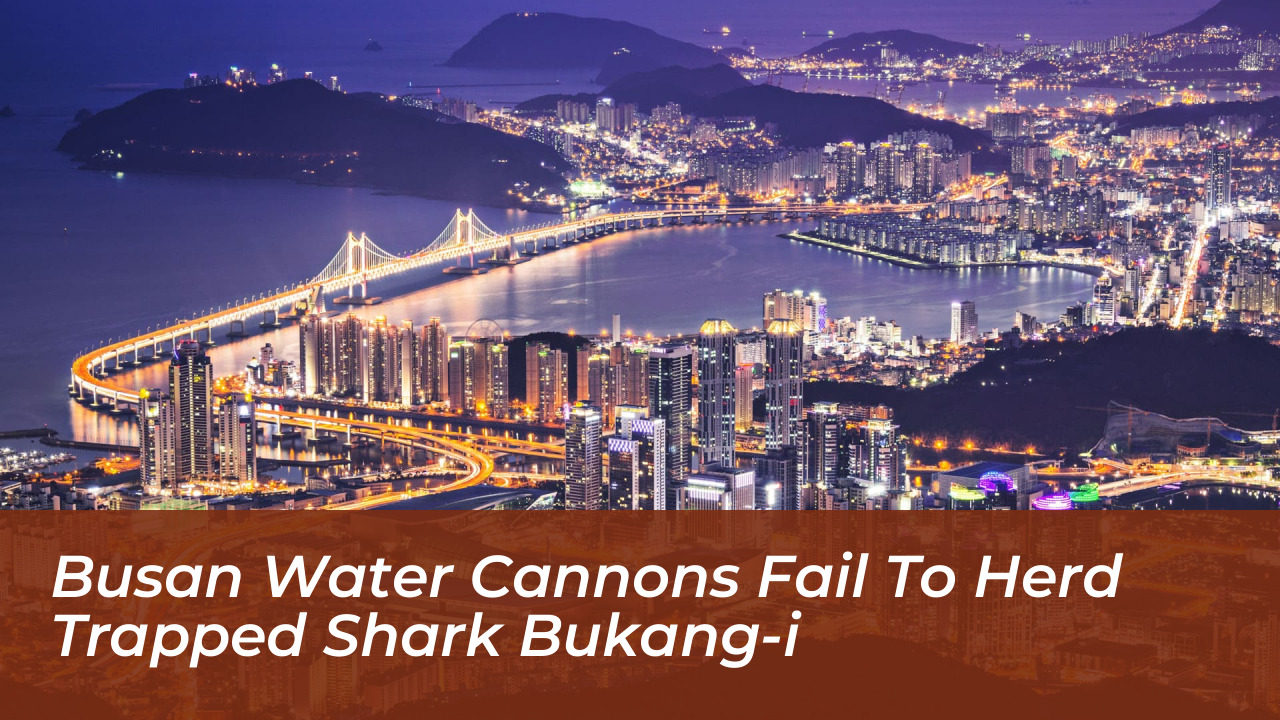
South Korean rescue teams failed to herd a stranded shark out of the Busan North Port waterway on Tuesday, September 29, 2026. The teams used water cannons and fire rescue vessels in the attempt. Following the unsuccessful effort, local maritime authorities scheduled a custom net capture operation for October 2 to safely relocate the animal to the open sea.
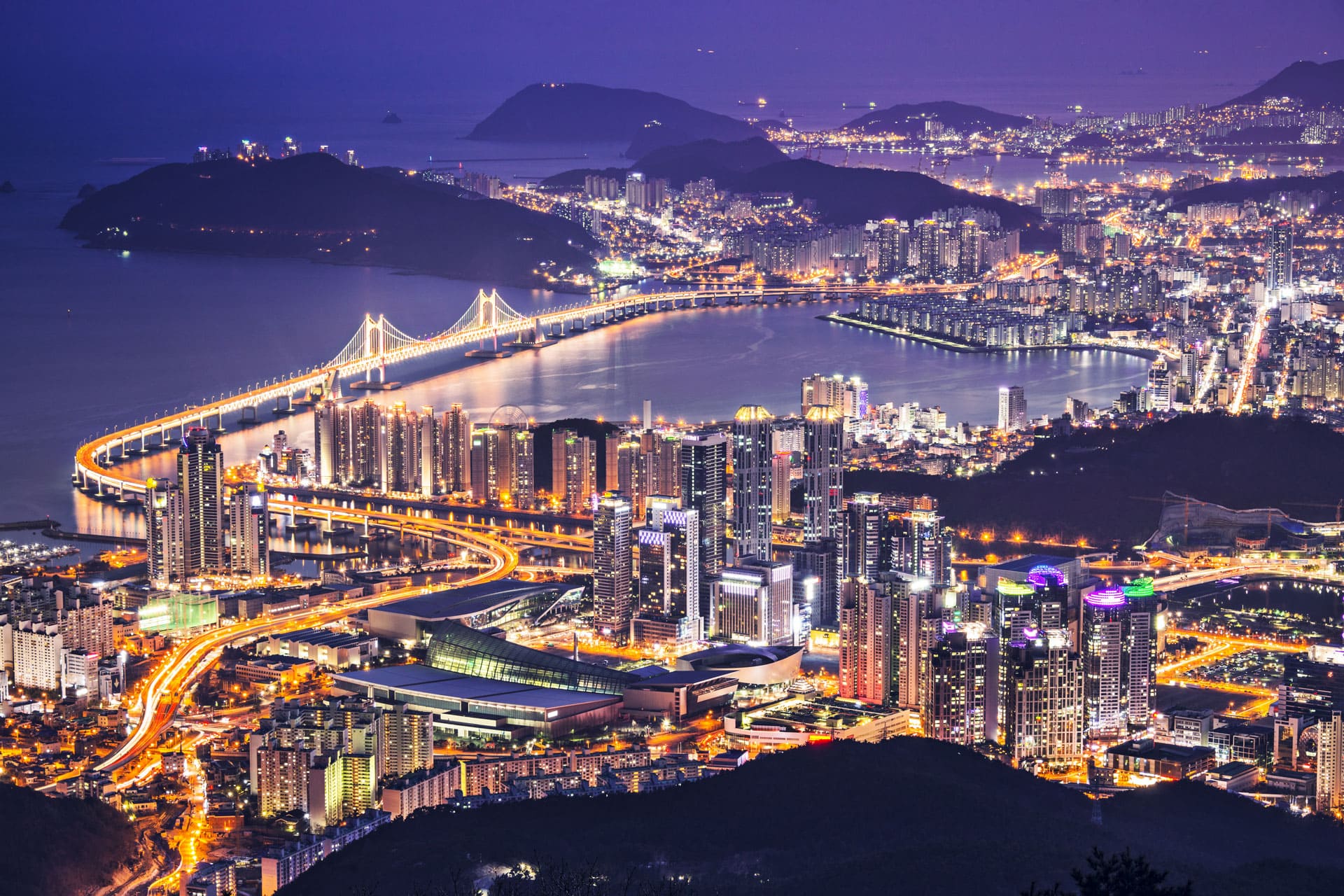
The marine animal has been trapped in the artificial waterway at a waterfront park for nearly two weeks. Locals affectionately named it “Bukang-i,” a combination of Bukhang (North Port) and the Korean suffix “i.” First spotted on September 18, the 3.5-meter creature is believed by experts to be a bronze whaler shark. Authorities think it followed prey into the narrow channel and could not find its way out.
Details of the Failed Water Cannon Operation
The Busan Coast Guard, alongside the National Institute of Fisheries Science and local fire services, launched the rescue operation at 10 a.m. on Tuesday. Crews deployed five vessels into the canal. They used water pumps and hoses to spray heavy streams of water behind the shark to drive it toward open waters.
Maritime authorities modeled the technique on a successful 2004 rescue operation that guided a stranded great white shark out of a salt marsh in the United States. However, Bukang-i repeatedly evaded the currents. The animal submerged to avoid the water pressure, swam swiftly past the rear of the rescue boats, and ventured past a nearby pedestrian bridge only twice during dozens of attempt rounds.
By 3:20 p.m., officials called off the operation. Authorities noted that the shark appeared stable. However, its restricted ability to move and feed in the sheltered canal could weaken it over time, prompting the need for a more effective removal strategy.
Why the Shark is Refusing to Leave
The shark’s prolonged stay has transformed it into a massive tourist attraction. It drew a cumulative crowd of 607,000 visitors to the North Port Waterfront Park between September 19 and 28. The overwhelming public interest even led the Busan Metropolitan Government to appoint the animal as an honorary goodwill ambassador, giving it the title “Shafluencer” after a popular Instagram poll.
Marine experts suggest that specific environmental conditions inside the sheltered, artificial canal are encouraging the animal to remain rather than return to the open sea.
“I suspect it might keep entering the waterway to give birth. Also, because this is a waterway, it is safe, and the water temperature is higher here than elsewhere. This fellow prefers warm waters,” said Kim Jin-gu, a professor in the Department of Marine Bio-Resource and Environment at Pukyong National University.
Local sightings of large sharks have increased in South Korea this year. The fisheries institute recorded 46 large sharks off the east coast in the first half of 2026, which is nearly four times the figure from the previous year. Officials attribute the surge to warmer coastal seas and an abundance of prey fish.
Next Steps: Custom Net Operation on October 2
The water cannon strategy proved ineffective. Therefore, the National Institute of Fisheries Science is currently fabricating a custom net that is 50 meters wide and 4 meters high. Workers engineered this net specifically to fit the width and depth of the Busan waterway. Authorities plan to deploy this specialized net barrier on October 2 to guide Bukang-i safely out of the canal and into the outer sea.