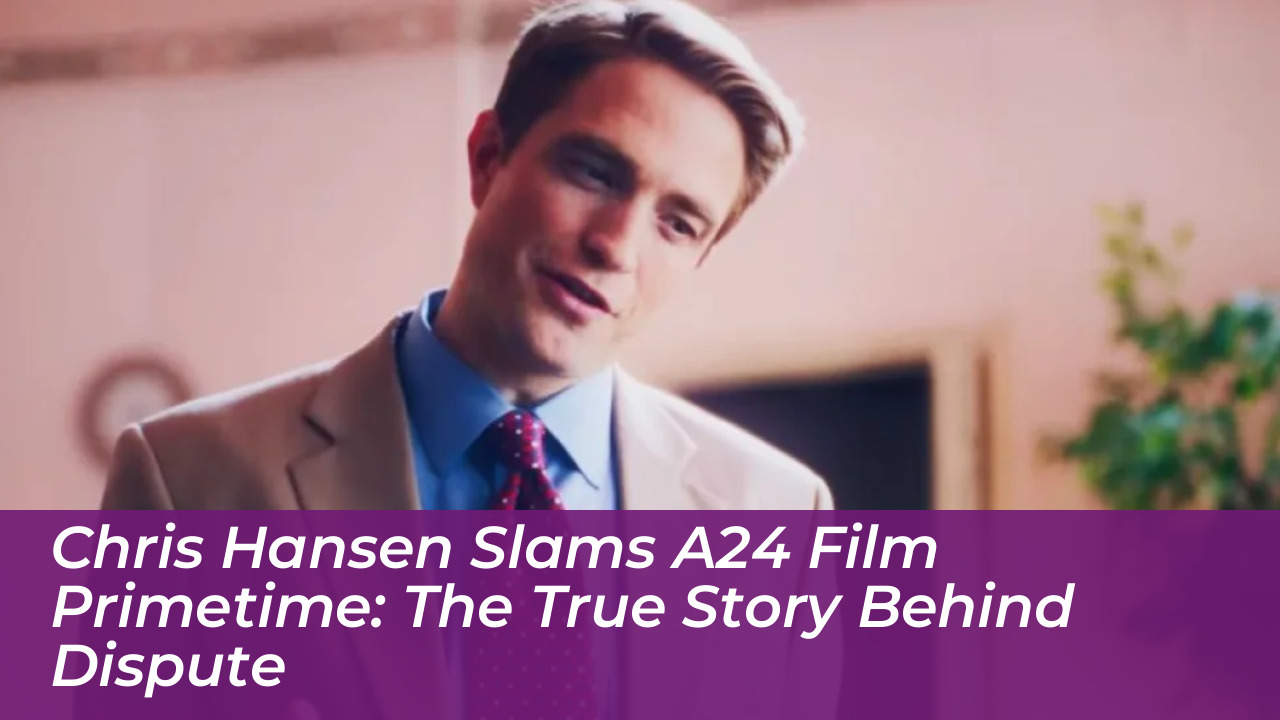
The collision between Hollywood fiction and real-world true crime sparks intense debate, but few modern releases generate a public feud quite like A24’s narrative feature film Primetime. Directed by Lance Oppenheim and starring Robert Pattinson as a fictionalized iteration of the famed television host, the movie dramatizes the explosive era of Dateline NBC’s investigative segment To Catch a Predator. Former television host Chris Hansen has voiced robust objections to the project, discovering that a major studio built a dramatic cinematic narrative around his identity without granting him any creative input. Observers can examine the anatomy of the dispute, Robert Pattinson’s cinematic reinvention, the dark historical events that inspired the script, and the strategic marketing countermeasures deployed by Hansen.
- Anatomy of the Dispute: Why Chris Hansen Objects to Primetime
- The Nondisclosure Agreement Impasse
- Robert Pattinson’s Portrayal and Journalistic Integrity
- The Human Element Behind the Headlines
- The Dark Historical Context That Inspired the Film
- The TruBlu Guerrilla Marketing Masterclass
- Frequently Asked Questions
- Why is Chris Hansen upset with A24 over Primetime?
- Did Chris Hansen watch the film before its release?
- How did Chris Hansen respond to the movie’s release?
- Conclusion
Anatomy of the Dispute: Why Chris Hansen Objects to Primetime
The friction between Chris Hansen and the creative team behind Primetime materialized long before the movie secured a theatrical release date. Hansen learned through industry channels that a feature film centered on his 2006 television phenomenon was entering production. Despite bearing his name, likeness, and career history, the production team never reached out to establish an open dialogue or request his professional insights.
When interviewers asked why he felt alienated from the project, Hansen emphasized that the finished product diverges wildly from reality. The movie allegedly creates entirely fabricated dialogue, manufactured interpersonal conflicts, and distorted emotional responses that misrepresent his professional conduct. One specific detail that troubled his long-time production staff involved a sequence in the promotional trailer showing the protagonist yelling aggressively at newsroom colleagues, contradicting decades of actual staff accounts.
The Nondisclosure Agreement Impasse
Details surrounding a pre-release private screening invitation also poured fuel on the fire. A24 invited Hansen to view the film prior to its public premiere, but conditioned the viewing on his signature on a restrictive nondisclosure agreement. While studio sources asserted that this paperwork represented standard boilerplate protocol designed to protect unreleased movie plots from digital leaks, legal experts noted that the restrictive clauses exceeded typical industry standards.
Hansen declined to sign the paperwork, skipped the private screening, and resolved to experience the film alongside regular audiences in a standard movie theater. This decision set the stage for an unprecedented clash between an independent media personality and a major prestige film studio.
Robert Pattinson’s Portrayal and Journalistic Integrity
Actor Robert Pattinson stepped into the lead role, capturing headlines and early Oscar speculation following the film’s international debut at the Venice Film Festival. Pattinson adopted a high-energy, intensely driven persona to portray a journalist intoxicated by ratings and desperate to secure a permanent primetime television slot. While critics praised the technical execution of the performance, the real-life figure behind the character offered a starkly different evaluation.
Hansen described Pattinson’s acting style as overly dramatic and fundamentally detached from his actual demeanor during intense sting operations. During the height of To Catch a Predator, Hansen maintained a composed, clinical, and measured interview style when confronting suspects on camera. The cinematic version swaps this cool investigative approach for a volatile, obsessive seeker of prime-time glory who invests his entire psychological wellbeing into the pursuit of television ratings.

The Human Element Behind the Headlines
Despite his criticisms of the script and character conception, Hansen expressed personal respect for Pattinson as a performer. He noted that the actor handled a difficult public relations position with grace on red carpets. Interestingly, Hansen noted that members of his own family watched the promotional trailers and conceded that Pattinson managed a reasonably accurate vocal imitation of his signature cadence.
The Dark Historical Context That Inspired the Film
Mainstream coverage of the Primetime controversy often glosses over the specific journalistic source material that inspired the screenplay. To truly understand why the film generates such intense reactions, observers must examine the documented events of November 2006 and the investigative report by journalist Luke Dittrich published in Esquire magazine in September 2007.
Primetime reaches its dark narrative climax by dramatizing the tragic death of Louis William Conradt Jr., a chief felony assistant district attorney in Rockwall County, Texas. In November 2006, volunteers from an online watchdog group engaged in explicit online chats with a decoy posing as a minor. While Conradt never traveled to the central sting house, law enforcement officers obtained arrest warrants based on the digital evidence.
On November 5, 2006, local police and a tactical entry team approached Conradt’s home in Terrell, Texas. As television crew members captured the unfolding drama for broadcast, Conradt fatally shot himself when officers breached the residence. The subsequent legal fallout, multi-million-dollar lawsuits, and network settlements fundamentally altered the landscape of investigative television, providing the tragic emotional core for the A24 screenplay.
The TruBlu Guerrilla Marketing Masterclass
Faced with an unauthorized cinematic adaptation of his life’s work, Chris Hansen turned a potential public relations challenge into a strategic business opportunity. He authorized his team at TruBlu, his true-crime streaming network, to purchase targeted local theatrical advertising inventory ahead of screenings.
Promoting the independent streaming network directly to moviegoers buying tickets for Primetime created a clever guerrilla marketing loop. Instead of simply absorbing the narrative blow delivered by the studio film, Hansen redirected the massive cultural curiosity surrounding the project toward his own subscription platform. This move establishes a fascinating new paradigm for how public figures can respond when major studios commercialize their personal histories without permission.
Frequently Asked Questions
Why is Chris Hansen upset with A24 over Primetime?
Hansen objects because the studio created a dramatic feature film based on his career without seeking his input, resulting in fictionalized events and a distorted portrayal of his professional conduct.
Did Chris Hansen watch the film before its release?
No, he declined a private screening invitation because A24 required him to sign an overly restrictive nondisclosure agreement beforehand.
How did Chris Hansen respond to the movie’s release?
He launched a targeted guerrilla marketing campaign via his TruBlu streaming network, placing advertisements directly in theaters showing the film to capture audience interest.
Conclusion
The controversy surrounding A24’s Primetime highlights the ongoing tension between artistic license and journalistic accountability in modern cinema. While Robert Pattinson delivers a critically acclaimed performance, the film’s departure from real-world facts ignited a valid debate about the ethics of unauthorized biographical adaptations. By standing his ground and utilizing clever marketing countermeasures, Chris Hansen proves that real-world investigative figures can successfully navigate and capitalize on Hollywood dramatizations.