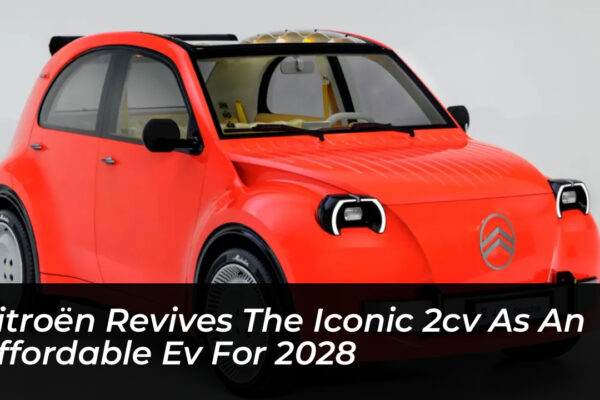

Citroën is bringing back its legendary 2CV as an affordable, all-electric vehicle slated for a 2028 release. First previewed through the 2CV Concept at the Paris Motor Show, the upcoming production model aims to capture the original philosophy of simple, practical, and accessible motoring while utilizing modern zero-emission technology.
Positioned within the brand’s small vehicle lineup between the Ami and the e-C3, the reborn electric 2CV targets a starting price of around €15,000 (roughly £13,000). This pricing structure places the vehicle directly alongside budget competitors like the Dacia Spring, offering a compelling alternative in an era where new car prices have steadily climbed.
Engineering Affordability and Nostalgia
The original 2CV, affectionately known as the “Tin Snail,” was launched in 1948 to motorize post-war France with a vehicle that was slow, quirky, simple, and cheap to maintain. Over 42 years, nine million units were produced, making it a foundational pillar of automotive history.
Citroën executives have emphasized that the modern successor will not merely rely on retro styling for marketing purposes. Instead, it seeks to channel the original vehicle’s core engineering principles:
- Lightweight Design: Targeting a total vehicle weight of roughly 1,000 kilograms (2,205 pounds) to maximize efficiency.
- Optimized Battery Sizing: Utilizing a compact battery pack, expected to be around 27.5kWh with Lithium Iron Phosphate (LFP) chemistry, to keep purchase costs low.
- Functional Simplicity: Avoiding heavy technological bloat and complex gadgets in favor of user-friendly practicality and lower repair costs.
The concept measures 3,760mm long, making it roughly 70mm shorter than the original 1948 model and approximately 130mm longer than a Fiat 500e. It provides ample headroom and interior space due to its tall roofline.
Design and Cabin Philosophy
The exterior styling draws clear inspiration from the historic TPV project that previewed the original car. It features separate round headlight pods, pronounced fenders, an upright windshield, and an iconic curved roofline. True to its heritage, the concept includes a folding fabric roof, exposed wipers, and 19-inch steel wheels that may be adjusted for the final production run.
Inside, the cabin strips away traditional dashboard clutter. A minimal cylindrical assembly houses the steering wheel and primary controls. This is accompanied by a “Smart Vision Display” and a square eight-inch touchscreen featuring comic-inspired graphics. Practicality shines through unique touches, such as door pockets designed specifically to carry eggs-a direct nod to the original vehicle’s legendary suspension brief.
Production Plans and Market Impact
To achieve its sub-€15,000 target, Citroën is developing the car around Stellantis’s dedicated ultra-affordable EV architecture. Manufacturing is planned within Europe to comply with the European Commission’s proposed M1E vehicle category, which aims to support regulatory stability and secure local EV purchase subsidies.
As development progresses toward its official market launch in 2028, the electric Citroën 2CV represents a bold attempt to answer a question the automotive industry has largely neglected: how to provide everyday drivers with a functional, new electric vehicle they can genuinely afford.