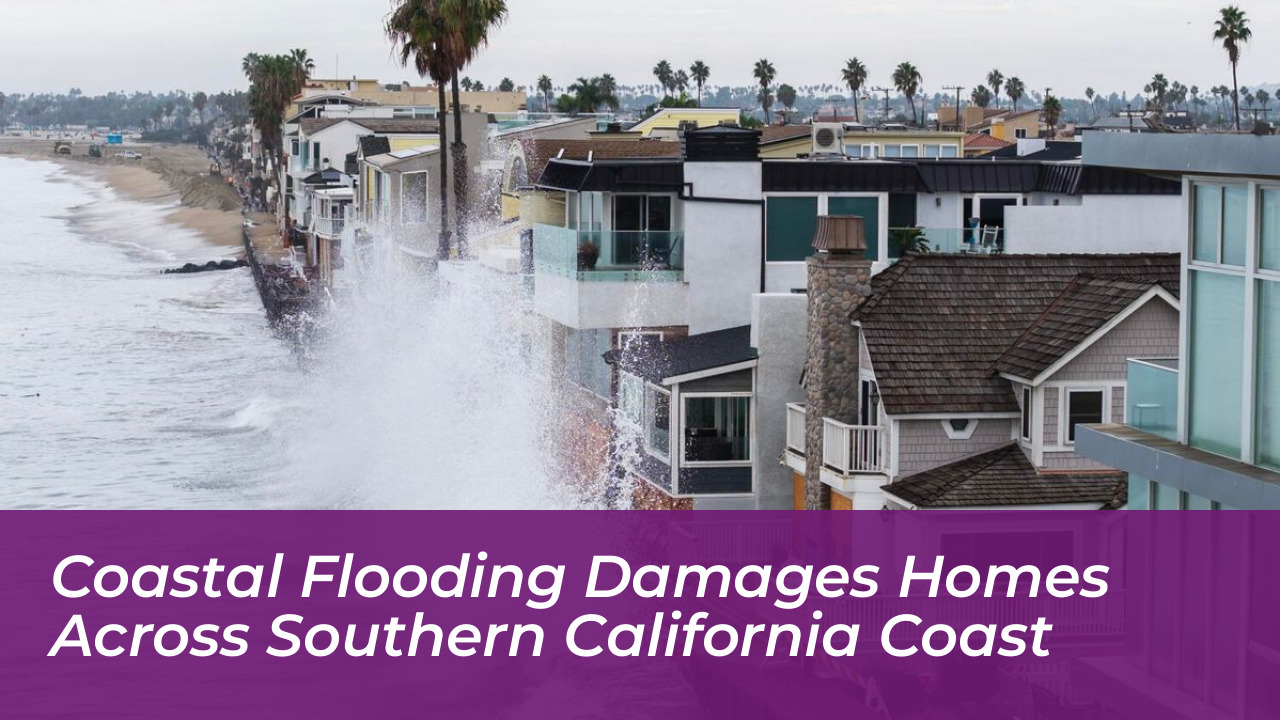

Severe coastal flooding, intense high surf, and heavy erosion battered communities across the Southern California coastline. The weather damaged homes, buckled boardwalks, and forced widespread evacuations from Newport Beach to Long Beach and Malibu. Driven by powerful swells from offshore weather systems and elevated astronomical tides, coastal municipalities rushed to declare local emergencies and build up defenses. Officials warned that the destructive weather could preview a severe winter ahead.
According to the National Weather Service, elevated ocean levels and high surf warnings remained in place as tides rose 1 to 1.5 feet above astronomical predictions. Los Angeles Harbor recorded water levels reaching 7.7 feet, standing roughly 1.6 feet higher than predicted. Newport Beach declared a local emergency after rushing ocean waters breached protective sand berms and spilled directly onto streets and properties along the Balboa Peninsula.
Long Beach Evacuations and Structural Damage
The historical wooden boardwalk on the Long Beach Peninsula suffered catastrophic damage after massive swells demolished protective sand barriers and breached local seawalls. The force of the pounding water flooded oceanfront residences. This prompted the Long Beach Fire Department to issue evacuation orders for approximately 24 homes until structural safety assessments could be completed.
“The whole beach is gone,” said Carmen Vaudry, a 58-year-old resident describing how the sand level had dropped several feet directly in front of her oceanfront property.
Most evacuated residents returned once waters receded. However, city building inspectors placed yellow tags on vulnerable properties, restricting access due to compromised foundations. Long Beach crews immediately mobilized to repair broken seawalls, clear sand-clogged storm drains, and deploy portable pumps to remove standing water from impacted neighborhoods.
Malibu Sinkhole and Orange County Impacts
Farther north in Malibu, aggressive coastal erosion opened a massive sinkhole measuring approximately 30 by 30 feet in a residential driveway. The collapse triggered a localized gas leak. This prompted the City of Malibu to declare a local state of emergency and red-tag five oceanfront properties to prohibit entry while emergency repair crews evaluated safety conditions.
In Orange County, the Capistrano Bay District in Dana Point faced relentless Pacific swells that tore through exterior walls and destroyed multiple beachfront decks. Local officials red-tagged seven residential structures in the community, deeming them completely unsafe for occupancy. Two additional homes received yellow tags due to structural concerns. Meanwhile, in San Clemente, high tides overran sections of the historic coastal railway, causing slope damage and erosion that forced temporary route closures.
Climate Experts Warn of an Aggressive El Niño Winter
Climate scientists and researchers emphasize that the widespread coastal damage mirrors heightened risks from an intensifying El Niño weather pattern. University of California climate scientist Daniel Swain noted that the heavy flooding serves as an early preview of potential coastal hazards expected during the fall and winter months.
U.S. Geological Survey research geologist Jonathan Warrick noted that elevated ocean temperatures already push tide lines higher, feeding extra energy into incoming storms and driving more powerful waves against a fragile coastline. In response to the escalating threats, local governments across Ventura, Los Angeles, and Orange counties are actively stockpiling sandbags, rehabilitating critical pump stations, and reinforcing vulnerable coastal defenses before the next round of severe weather arrives.