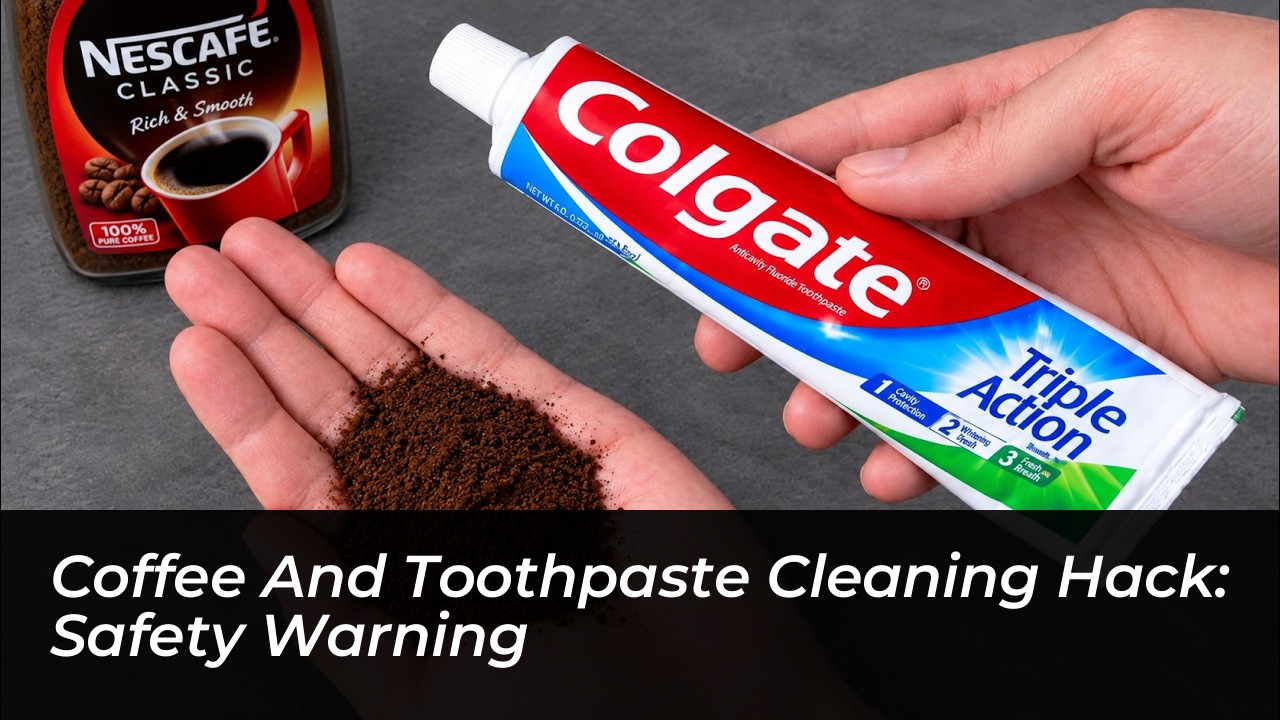

Combining spent coffee grounds with white toothpaste has quietly taken over British kitchens, transforming from a quirky social media experiment into a widely discussed DIY cleaning trick. When blended, these two common household items create an intensely abrasive, odour-neutralising scouring compound engineered to strip burnt-on grease from cookware and eliminate pungent kitchen smells in seconds. However, behind the viral excitement lies a serious misconception about personal care that UK dental experts consistently warn against.
The unusual concoction relies on two everyday staples working in tandem. While online demonstrations showcase the physical blending in action, the true utility of the mixture lies in tackling challenging household chores that ordinary dish soap cannot resolve. Yet, while its surface-cleaning properties are undeniable, applying this abrasive paste to your body can result in irreversible damage.
The Unexpected Chemistry Behind the Kitchen Scrub
At first glance, mixing dark coffee with minty toothpaste appears counter-intuitive. However, the mechanical and chemical synergy between the two ingredients creates an exceptionally potent scouring agent. Standard white toothpaste contains gentle polishing agents-predominantly hydrated silica or calcium carbonate-alongside foaming surfactants such as sodium lauryl sulphate. These components lift surface film and suspend particulate matter.
Dry or spent coffee grounds introduce a rougher, faceted grit alongside natural nitrogen compounds. Nitrogen acts as an active odour sponge, binding with volatile sulphur compounds that produce foul domestic stenches. The combination creates a textured, surfactant-rich paste that simultaneously scrubs baked carbon and absorbs foul kitchen odours.
Four Practical Household Problems This Paste Resolves
Homeowners across the UK frequently turn to caustic chemical oven cleaners to tackle stubborn kitchen messes. This DIY blend provides a cost-effective, fume-free alternative for hard-wearing surfaces:
- Rescuing Scorched Cookware: The twin abrasive action cuts through stubborn, blackened carbon rings on the underside of stainless steel frying pans and heavy roasting trays without toxic chemical fumes.
- Deodorising Wooden Chopping Boards: Cutting raw onions, garlic, or oily fish leaves pungent oils embedded in wooden fibres. A light scrub with the paste neutralises lingering scents immediately.
- Restoring Stained Sinks and Drains: Scrubbing around stainless steel plugholes lifts stubborn limescale tarnish while driving a clean, minty fragrance through the U-bend trap.
- Reviving Grubby Trainer Soles: The silica and surfactants work into textured rubber outsoles, lifting compacted road grime and oxidised scuffs from running shoes.
How to Safely Mix and Apply the Solution
To produce the mixture correctly without damaging your possessions, follow these steps:
- Combine equal parts fine-ground coffee-either dried used grounds or affordable instant granules-with a standard, non-gel white paste in a small ceramic bowl.
- Stir the ingredients using a wooden spoon until you achieve a thick, gritty paste resembling wet mortar.
- If the consistency is too dry, introduce half a teaspoon of warm water to activate the foaming surfactants.
- Apply the scrub directly onto the tarnished surface using a damp microfibre cloth or an old washing-up sponge. Rub in tight, circular motions using moderate pressure, then rinse thoroughly with warm water to clear the residue.
The Critical Boundary: Why It Must Stay Away From Your Body
Because the concoction contains ordinary hygiene products, thousands of viewers erroneously assume the mixture serves as an aggressive tooth-whitening remedy or an exfoliating beauty mask. Attempting to brush your teeth with this blend causes severe, permanent dental harm.
NHS dental guidance continually stresses that coarse home abrasives scour away protective tooth enamel, the thin outer layer that shields teeth from decay and sensitivity. Enamel does not regenerate once scrubbed away. Stripping this barrier exposes the yellow dentine beneath, leaving teeth visibly darker, rougher, and acutely vulnerable to staining from the very coffee used in the mixture.
The paste should likewise be kept away from delicate household materials. Polished marble, quartz worktops, and non-stick PTFE frying pans will scratch under the heavy grit, permanently ruining their protective finishes.
Essential Safety Tips for Home Cleaners
- Test before treating: Always test any abrasive mixture on an incons**cuous underside corner of your cookware before treating the entire item.
- Prioritise proper ventilation: While far milder than caustic commercial degreasers, working with scented pastes around warm surfaces still requires fresh air circulation.
- Keep kitchen hacks strictly functional: Never transfer household scouring methods to your personal hygiene routine, no matter how convincing viral headlines appear.
Have you tested this unusual cleaning mixture on your own pots and pans? Share your results and your favourite cleaning tips in the comments below.