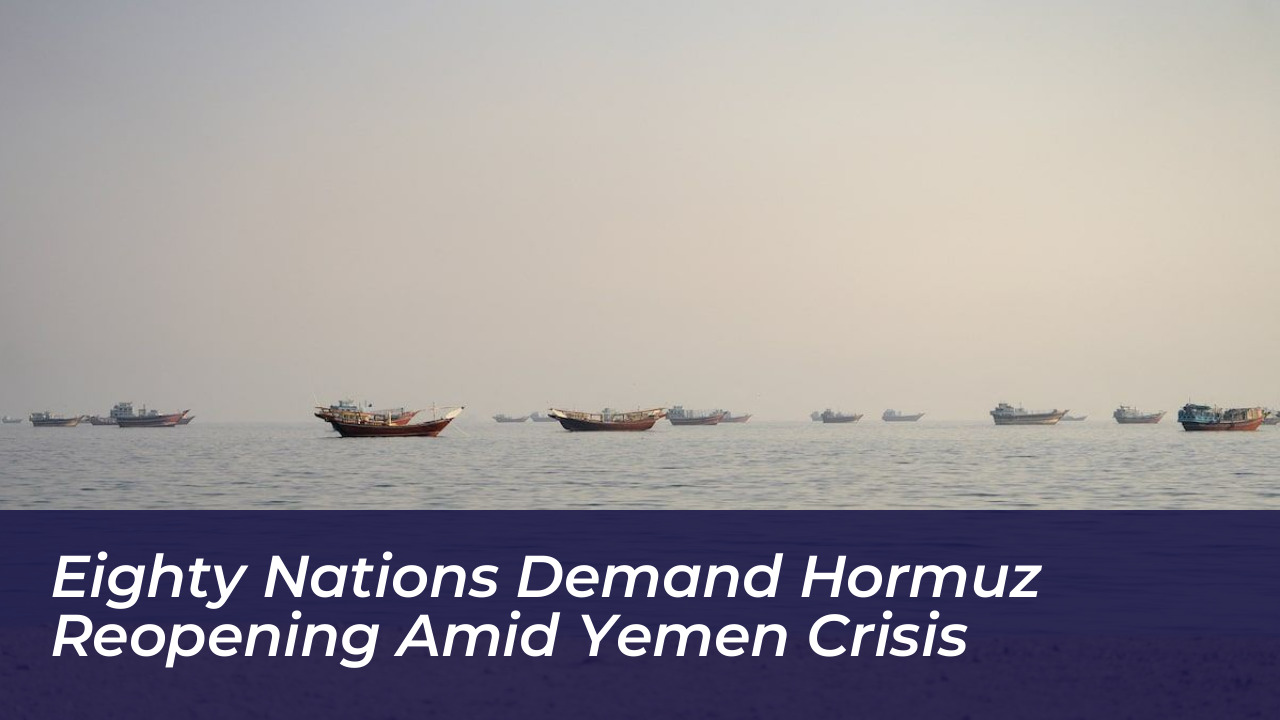

Eighty nations unite at the United Nations General Assembly to issue a stern ultimatum regarding the escalating maritime crisis in the Middle East. Global leaders face mounting pressure as regional conflicts spill over into vital international waterways. This unprecedented diplomatic alliance signals a unified response against actions that threaten the stability of worldwide commerce and energy distribution.
Global Coalition Demands Reopening of Strait of Hormuz
Eighty nations unite at the United Nations General Assembly to issue a stern ultimatum regarding the escalating maritime crisis in the Middle East. The coalition formally demands the immediate reopening of the Strait of Hormuz. International representatives condemn Iran and its Houthi allies for severe disruptions to global energy supplies and international trade routes. Western powers and Gulf Arab states back the joint statement, highlighting shared security fears over the weaponization of critical global shipping lanes.
Diplomatic pressure intensifies as maritime traffic faces continuous security threats across multiple fronts. The coalition highlights how recent territorial seizures along key coastlines compound existing dangers to commercial vessels. Authorities report that unchecked military escalations create unprecedented hazards for civilian crews and commercial enterprises alike.
United Nations General Assembly Ultimatum
- Formal demand for the immediate reopening of the Strait of Hormuz.
- Condemnation of Iran and Houthi allies for severe disruptions to global energy supplies.
- Backing from Western powers and Gulf Arab states highlighting shared security fears.
Weaponization of Global Shipping Lanes
- Growing international anxiety over the intentional blockage of vital trade corridors.
- Escalating diplomatic pressure as maritime traffic faces continuous security threats.
- Territorial seizures along key coastlines compounding dangers to commercial vessels.
Geopolitical Impact on Global Energy Markets
The restriction of critical maritime chokepoints triggers immediate economic fallout across international crude markets and shipping logistics. Energy importing nations face severe inflationary pressures as supply chains adapt to elevated security risks. Financial markets respond sharply to shifting regional stability, causing fluctuations in bond yields and currency valuations.
Producers attempt to deploy alternative tanker shuttling systems to bypass high risk areas. Yet, these workarounds fail to match the volume and speed of traditional transit routes. Consequently, industrial output slows in major economies reliant on steady petroleum imports.
Strait of Hormuz Chokepoint Vulnerability
- Status of the Strait of Hormuz as the world’s most critical oil transit chokepoint.
- Millions of barrels of petroleum feeding economies in Asia, Europe, and North America daily.
- Immediate spikes in international crude prices and freight insurance rates following disruptions.
Bab el-Mandeb Threat Realignment
- Houthi advances threatening the southern entrance to the Red Sea near the Bab el-Mandeb Strait.
- Disruption of the strategic connection between the Indian Ocean and the Suez Canal.
- Forced rerouting of vessels around the African continent, adding weeks to transit times.
Economic Fallout for Importing Nations
- Severe inflationary pressures facing energy importers as supply chains adapt.
- Sharp responses in bond yields across financial markets to shifting regional stability.
- Limitations of alternative tanker shuttling systems compared to traditional transit routes.
Diplomatic Condemnation at the United Nations
International leaders deliver a unified front against state and non-state actors destabilizing international trade and maritime law. Bahrain’s Foreign Minister, Abdullatif bin Rashid Al Zayani, delivers the joint statement on behalf of the eighty allied nations. He denounces Tehran for undermining international navigational freedoms and violating core tenets of global security.
Tehran and Houthi leadership characterize their military posture as defensive maneuvers against foreign intervention. However, the international community rejects this framing entirely. Global representatives categorize ongoing blockades and projectile attacks as direct violations of international law that demand an immediate cessation.
Bahrain Foreign Minister Leads Coalition Address
- Bahrain Foreign Minister Abdullatif bin Rashid Al Zayani delivering the joint statement for eighty nations.
- Denunciation of Tehran for undermining international maritime law and navigational freedoms.
- Emphasis on concrete grievances including the disruption of international security rights.
G7 Coordination on Regional Security
- Emergency meetings convened by Group of Seven foreign ministers prior to the General Assembly.
- Formulation of cohesive economic and maritime defense strategies.
- Efforts to deter further escalation by non-state actors and state sponsors.
Defensive Posturing Versus Aggression
- Tehran and Houthi leadership characterizing military actions as defensive maneuvers against foreign intervention.
- Rejection of this framing by the international community.
- Categorization of ongoing blockades and projectile attacks as direct violations of international law.
Expanded Maritime Security Frameworks
Naval forces from allied coalitions deploy additional e****t destroyers to patrol vulnerable lanes. This defensive posture deters pirate boards and missile strikes on civilian tankers. Admiral Thomas Smith notes that joint task forces maintain constant vigilance across the Persian Gulf.
Intelligence sharing networks expand rapidly between regional partners and international defense agencies. Early warning systems track sus**cious drone signatures long before targets enter firing range.
Naval Task Force Deployments
- Deployment of coalition destroyers to patrol vulnerable shipping lanes.
- Enhanced radar coverage tracking unauthorized skiffs and airborne threats.
- Direct radio support channels established for commercial ship captains.
Intelligence Sharing Protocols
- Real time threat telemetry shared among regional command centers.
- Satellite tracking monitoring dark vessels turning off transponders.
- Coordinated responses to neutralize incoming projectile assaults swiftly.
Regional Economic Fallout and Trade Diversions
Port authorities across the Arabian Peninsula report significant drops in cargo processing speeds. Warehouses fill rapidly as ships wait longer for security clearances before docking. Local businesses absorb higher logistics costs that trickle down to everyday consumer goods.
Aviation hubs also feel the strain as fuel prices surge in response to refinery slowdowns. Airlines adjust flight paths and ticket pricing models to absorb rising operational overhead.
Port Congestion and Logistics Delays
- Extended wait times for commercial vessels seeking safe harbor berths.
- Increased storage fees accumulating at major Middle Eastern transshipment hubs.
- Shortages of specialized container equipment due to delayed maritime rotations.
Aviation Fuel Price Pressures
- Airlines facing higher jet fuel expenses amid regional refinery constraints.
- Adjusted flight paths adding extra mileage and fuel burn to long haul routes.
- Passenger ticket prices adjusting upward to cover ballooning operational costs.
Frequently Asked Questions
Why is the Strait of Hormuz critical for international trade?
The Strait of Hormuz handles a massive percentage of the world’s liquefied natural gas and petroleum exports. Any closure or restriction halts vital energy supplies, impacting global industrial output and consumer prices.
Which countries backed the United Nations joint statement?
A coalition of eighty nations, including major Western powers and Gulf Arab states, endorsed the declaration demanding the restoration of navigational freedom.
What role do the Houthis play in the current maritime crisis?
The Houthis conduct targeted attacks using drones and projectiles against commercial tankers in the Red Sea and near the Bab el-Mandeb Strait, forcing widespread shipping disruptions.
How are shipping companies adapting to the security threats?
Operators frequently reroute vessels around the Cape of Good Hope or implement regional tanker shuttling systems to bypass high risk zones, though these measures increase transit costs.
What measures are naval coalitions taking to secure the waterways?
Allied navies deploy e****t destroyers, share real-time intelligence data, and maintain constant aerial patrols to deter attacks on commercial vessels.