An Emirates Airbus A380 operating a high-capacity international flight was forced to declare a mid-air emergency and make an unscheduled diversion to Frankfurt Airport. The unexpected change in course disrupted a routine European corridor route, prompting a rapid response from air traffic controllers and airport ground teams.
- Flight EK31 Transmits Squawk 7700 Over Europe
- Rapid Descent and Safe Landing at Frankfurt Airport
- Passenger Recovery and Revised Itinerary
- Frequently Asked Questions
- What flight was involved in the Emirates emergency diversion?
- What type of aircraft operated Flight EK31?
- Why did the flight divert to Frankfurt?
- Did the aircraft land safely?
- How were passengers affected by the delay?
Flight EK31 Transmits Squawk 7700 Over Europe
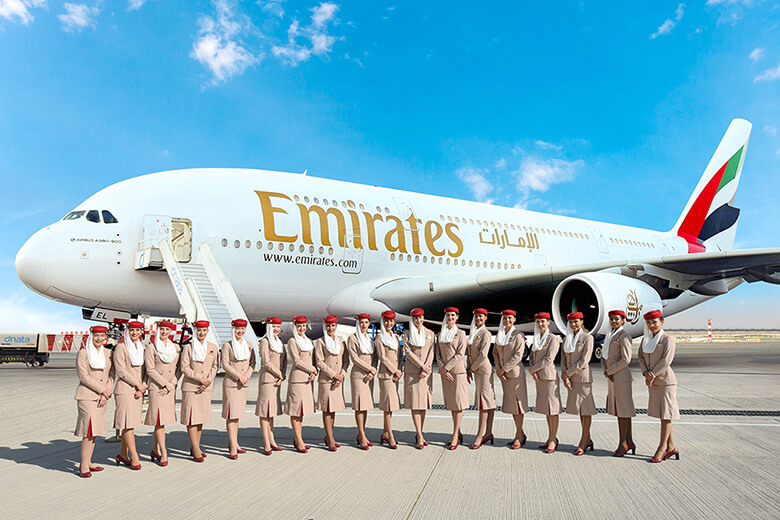
The aircraft involved in the incident was operating as Flight EK31, traveling from Dubai International Airport (DXB) to London Heathrow Airport (LHR). According to flight tracking data, the double-decker aircraft-an Airbus A380-800 registered as A6-EDX-departed Dubai at 11:25 a.m. local time on Thursday, October 1.
Roughly six hours into the scheduled seven-hour and twenty-minute journey, while cruising at an altitude of 40,000 feet over European airspace, the flight crew transmitted transponder code 7700. Squawk 7700 is the international signal for a general emergency, instantly notifying air traffic control units of an abnormal onboard situation requiring immediate priority routing and vectoring to the nearest suitable airport.
Rapid Descent and Safe Landing at Frankfurt Airport
Immediately following the emergency broadcast, the flight crew initiated a rapid descent out of its cruising altitude, steering the widebody aircraft toward Frankfurt Airport (FRA). The Airbus A380 successfully touched down on runway 25L at approximately 4:09 p.m. local time without further incident and subsequently parked at a remote stand.
The international transponder signal can be triggered by several factors, including technical engine complications, cabin pressure anomalies, or severe medical crises. When asked about the specific catalyst for the diversion, Emirates confirmed the unscheduled stop, citing operational reasons while managing passenger care protocols.
Passenger Recovery and Revised Itinerary
To minimize disruption for the hundreds of passengers onboard the high-capacity aircraft, Emirates arranged a recovery leg to complete the journey to London Heathrow. Flight-tracking schedules indicated that the replacement flight out of Frankfurt was pushed back to a revised departure time of 6:33 p.m. later that evening.
Airlines operating ultra-large aircraft like the Airbus A380 must carefully balance passenger safety, aircraft capabilities, and airport infrastructure availability when handling mid-air diversions. Because of the aircraft’s size, diversions require specialized ground support, extensive parking aprons, and suitable runway lengths, making major hubs like Frankfurt ideal choices for unexpected irregular operations.
Frequently Asked Questions
What flight was involved in the Emirates emergency diversion?
The flight involved was Emirates Flight EK31, traveling from Dubai International Airport (DXB) to London Heathrow Airport (LHR).
What type of aircraft operated Flight EK31?
The route was operated by an Airbus A380-800, bearing the aircraft registration code A6-EDX.
Why did the flight divert to Frankfurt?
The flight crew transmitted Squawk 7700-the international code for a general emergency-while cruising at 40,000 feet, prompting an unscheduled diversion to Frankfurt Airport (FRA).
Did the aircraft land safely?
Yes, the Airbus A380 landed safely on runway 25L at Frankfurt Airport at 4:09 p.m. local time and parked at a remote stand without further incident.
How were passengers affected by the delay?
Passengers experienced a temporary delay while the aircraft was on the ground in Frankfurt, after which Emirates arranged a recovery flight to transport travelers onward to London Heathrow.