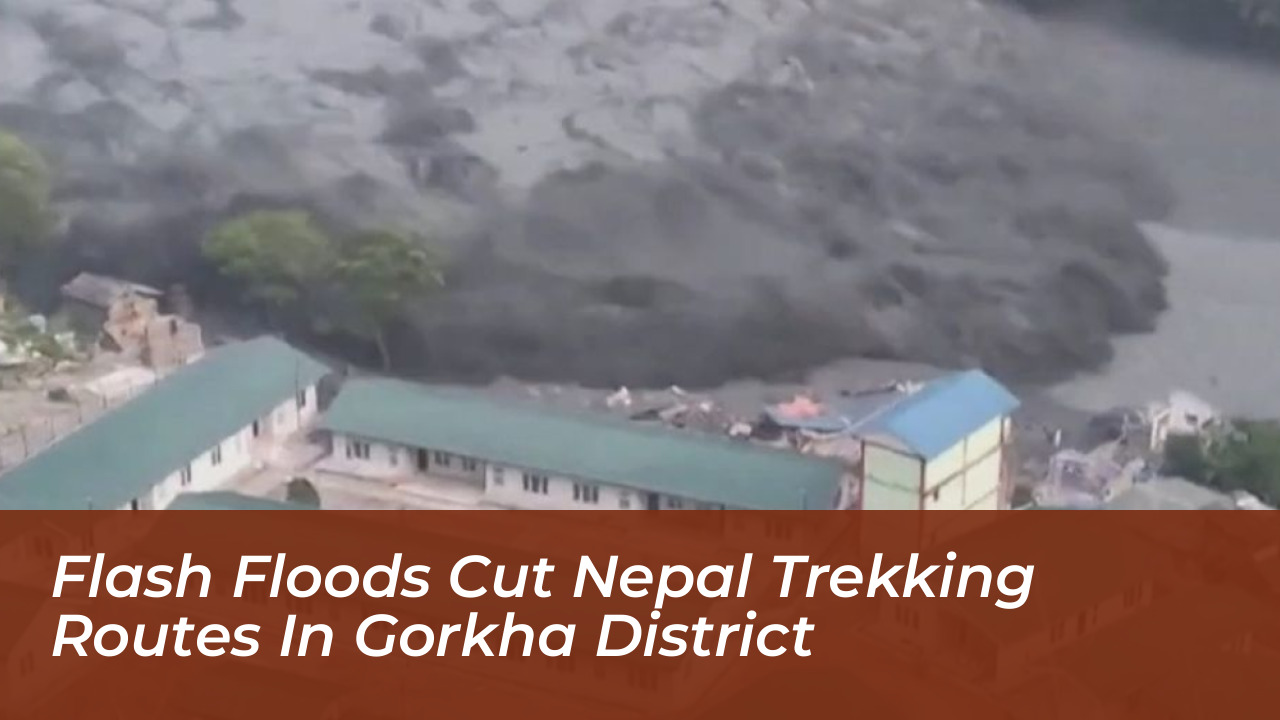

Severe flash floods struck Nepal’s central Gorkha district, causing widespread destruction to homes, vital suspension bridges, and popular trekking routes along the Manaslu trail. The sudden disaster, triggered by heavy monsoon conditions and localized river blockages, left multiple villagers missing and stranded more than 100 foreign nationals and local hikers in remote mountain corridors.
According to local authorities and disaster management reports, the flooding severely impacted communities near the Budhi Gandaki River, a major tributary of the Trishuli River system. The surge tore through infrastructure across several rural municipalities, including Dharche and Chumnubri, wiping out hotels, local lodges, and crucial footbridges just as the peak autumn trekking season commenced.
Impact on the Manaslu Circuit and Tsum Valley Trails
The sudden surge heavily disrupted trekking itineraries across the Manaslu Conservation Area. Bhuwan Raj Ojha, an information officer at the Manaslu Conservation Area Project (MCAP), confirmed that key sections of the route had been entirely swept away, leaving travelers trapped between blocked paths.
“Jagat is cut off from both directions,” Ojha noted. He explained that while some stranded visitors managed to charter emergency helicopter flights out of the region, many others remained stuck waiting for route clearances. Popular paths leading toward the Tsum Valley and the challenging Larkya La (Larke Pass) experienced severe damage after cantilever and suspension bridges collapsed under the force of the debris-laden waters.
Trekking guides and international expedition companies quickly adjusted their plans. Several agencies canceled autumn departures for the Manaslu Circuit, rerouting groups toward unaffected regions like the Annapurna Circuit or Upper Mustang, where weather conditions permitted safer passage.
Emergency Response and Government Relief Operations
In response to the crisis, the National Disaster Risk Reduction and Management Authority (NDRRMA) mobilized hundreds of security personnel and rescue teams. Helicopters were deployed to evacuate stranded trekkers and deliver essential humanitarian aid to isolated communities.
Authorities dispatched thousands of kilograms of rice, lentils, cooking oil, salt, tents, mattresses, and blankets to flood-hit families in Gorkha and neighboring Dhading. Local representatives reported that temporary shelters were established to accommodate displaced residents whose homes were inundated or washed away by the surging Budhi Gandaki and Therang rivers.
Although initial search and rescue operations confirmed no human casualties directly tied to the flood event in Gorkha, local administration offices urged independent travelers and trekking groups to strictly avoid the affected river corridors until formal safety assessments and bridge repairs are completed.
Frequently Asked Questions About the Gorkha Floods
Are trekking routes in Nepal completely closed?
No. The closures are strictly regional, affecting specific corridors in the Gorkha district such as the Manaslu Circuit and Tsum Valley. Major trekking regions like Everest and Annapurna remain open and operational.
Can tourists still visit the Manaslu Conservation Area?
Access to the Manaslu trail is severely restricted following bridge collapses and trail washouts. Local authorities, including the District Administration Office in Gorkha, have advised against travel to the affected zones until temporary crossings are established.
Were there any casualties reported from the flash floods?
Local police and district officials confirmed that there were no human casualties, as residents and hikers managed to evacuate to higher ground before the floodwaters peaked.
What alternative routes are available for stranded trekkers?
Many trekking agencies have diverted clients to the Annapurna Circuit or Upper Mustang, which rely on entirely separate river systems and remain safe for autumn trekking groups.
How can travelers check the current status of trekking routes?
Trekkers should consult registered local agencies, the Nepal Tourism Board, or official notices from the Manaslu Conservation Area Project (MCAP) for up-to-date trail conditions before planning mountain itineraries.