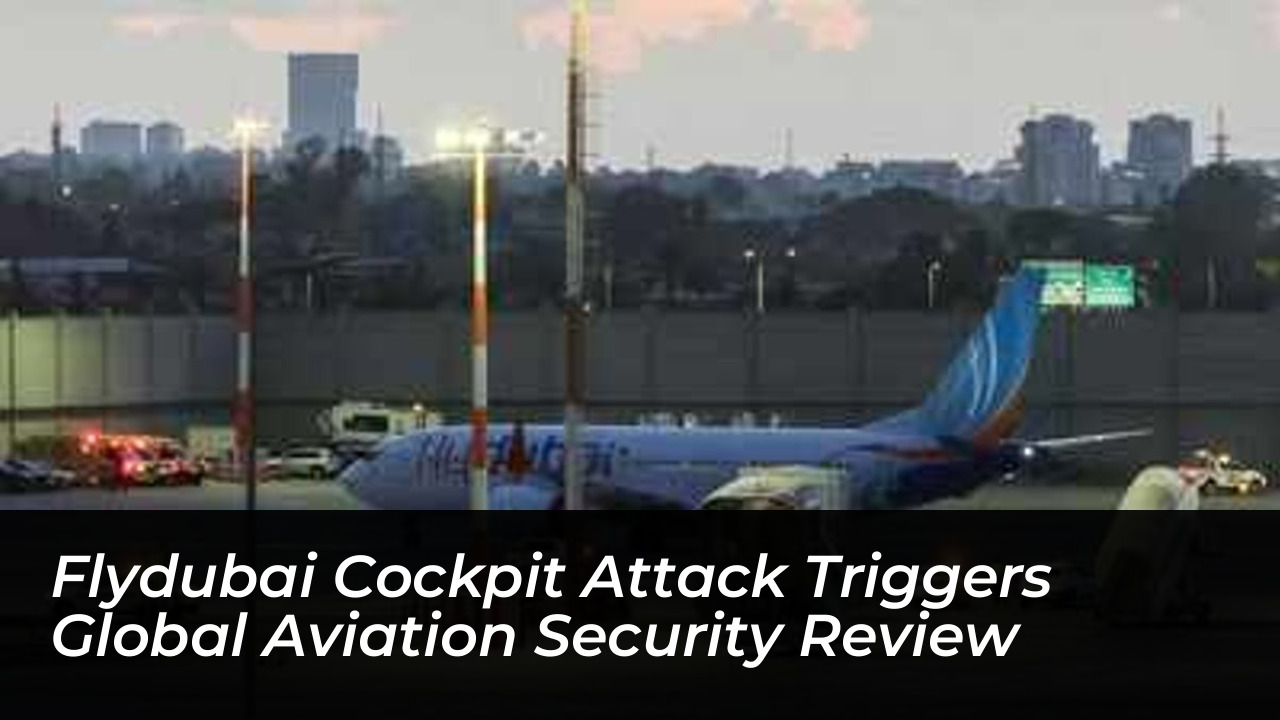



A thwarted cockpit attack aboard a Flydubai flight from Dubai to Tel Aviv on September 30, 2026, has exposed critical vulnerabilities in international aviation security. This event has prompted safety experts and global regulators worldwide to call for stricter personnel vetting and enhanced monitoring of insider threats.
Co-pilot Hamam al-Hammami, an Omani national previously terminated by Oman Air over radicalization concerns, allegedly assaulted Captain Smit Machchhar with a crash axe mid-flight in an apparent attempt to crash the aircraft. Captain Machchhar successfully unlocked the cockpit door, enabling passengers and crew members to intervene and neutralize the attacker just seconds before a catastrophic impact. Flight-tracking data revealed that Flydubai Flight FZ1073 plummeted approximately 16,625 feet in just over 30 minutes while transmitting emergency transponder codes 7700 and 7500.
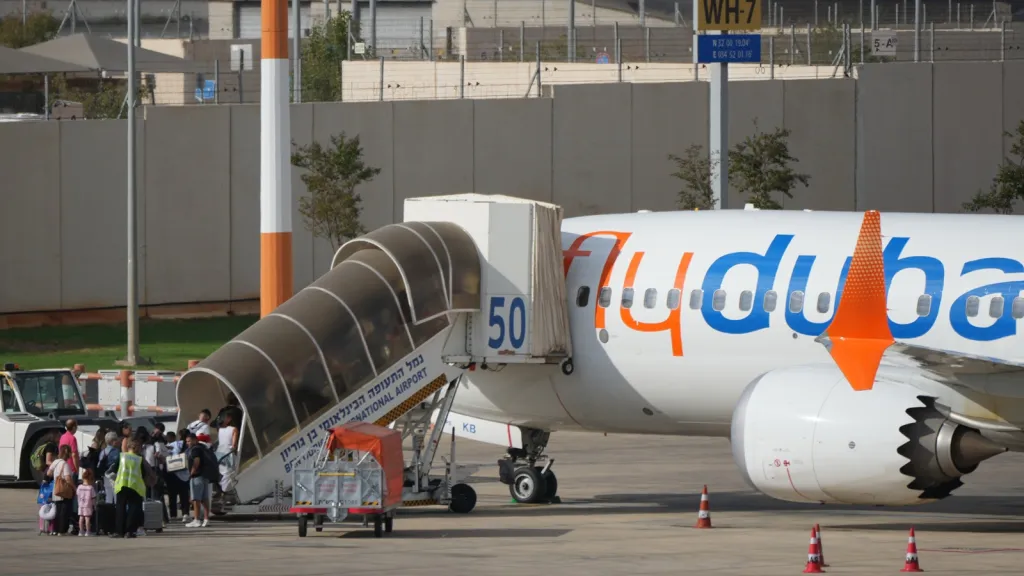
Exposing the Insider Threat Paradox in Commercial Aviation
This harrowing incident has shifted the focus of global aviation security away from external hijackers and toward the dangerous reality of insider threats. For over two decades, commercial aviation security has relied on reinforced and locked cockpit doors designed following the September 11, 2001, attacks to keep malicious actors out. However, this safety measure has inadvertently created a double-edged sword.
“The industry itself needs to recognise that flight deck doors-whilst installed for very understandable reasons to prevent a suicidal hijacking by a passenger-have also created a fortress into which the good guys cannot gain access to a rogue individual, be it a hijacker or a rogue crew member,” noted Philip Baum, an international aviation security expert and visiting professor at Coventry University.
Similar historical incidents, such as the 2015 Germanwings Flight 4U9525 crash in the French Alps and the 2013 Mozambique Airlines flight, have previously demonstrated the deadly risks associated with rogue pilots locked inside the flight deck.
Regulatory Lapses and Cross-Border Background Vetting Gaps
Investigations conducted jointly by authorities in the United Arab Emirates, Saudi Arabia, and Israel have raised serious questions regarding how al-Hammami secured employment with Flydubai despite being flagged and dismissed by his previous employer in Oman over radical security red flags.
Israeli Prime Minister Benjamin Netanyahu and security analysts highlighted dangerous gaps in international hiring and background information sharing. Because pilot vetting and pre-flight screening standards are not fully uniform across global jurisdictions, carriers often rely heavily on regional compliance rather than integrated cross-border databases.

“Obviously, there was a loophole here. And we’re taking care of that,” Netanyahu stated during a media briefing addressing the incident.
In response to the security breach, international aviation bodies, including the International Civil Aviation Organization (ICAO), face intense pressure to revisit Amendment 17 to ICAO Annex 17. Regulators are expected to push for universal, deeper background checks, routine psychological evaluations, and mandatory cross-border sharing of employee disciplinary records to ensure security flags raised in one nation are immediately visible to employers worldwide.
Emergency Diversion and Regional Tension
Following the fierce struggle inside the flight deck, the injured flight crew managed to stabilize the aircraft. After facing initial routing complications and communication hurdles over Jordanian and Saudi airspace, the crew successfully diverted and executed an emergency landing at Prince Sultan bin Abdulaziz International Airport in Tabuk, Saudi Arabia.
Both the captain and co-pilot received immediate medical attention for their injuries before being cleared to return to the UAE. Meanwhile, Flydubai temporarily suspended its scheduled flight routes to and from Israel while comprehensive internal and governmental investigations remain ongoing.
Aviation authorities have formally classified the incident as an attempted act of unlawful interference. As global regulators deliberate on sweeping changes to flight deck access controls, pre-employment screening, and in-flight security protocols, the aviation sector faces mounting operational and administrative costs to rebuild passenger confidence.