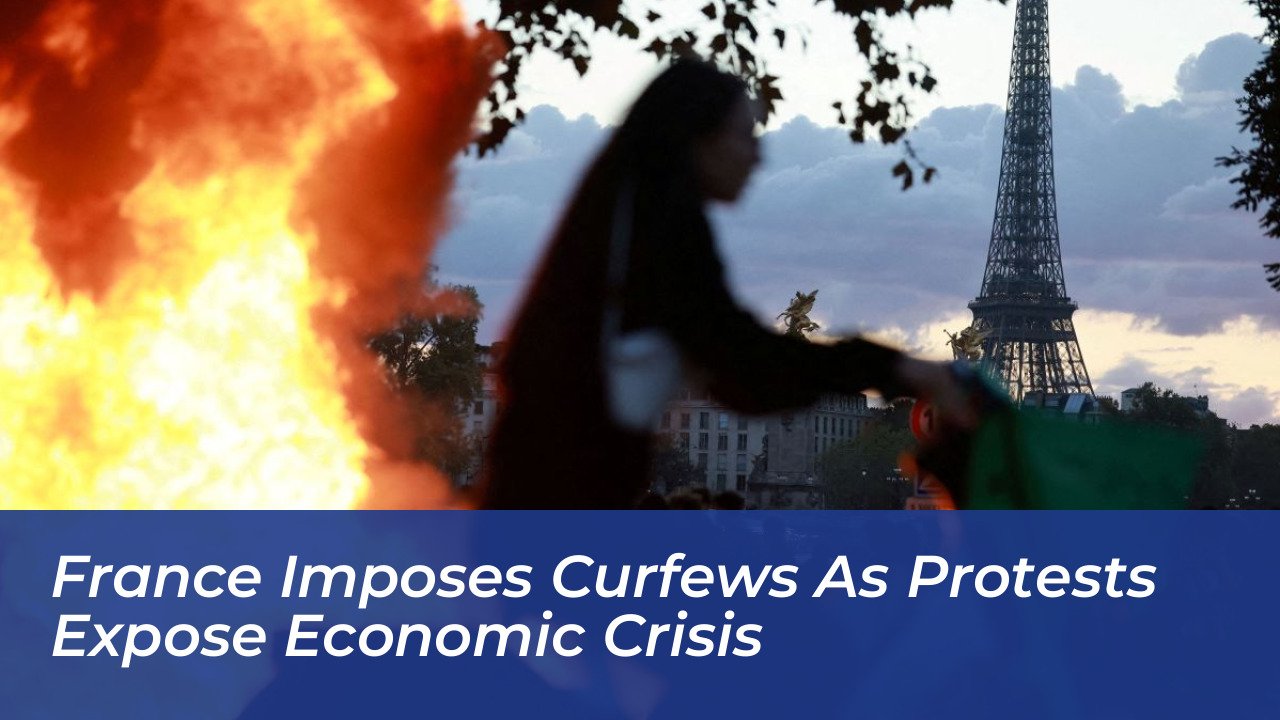

France imposed overnight curfews in several major cities, including designated zones in Paris, following a weekend of violent demonstrations that exposed severe weaknesses in public security. The restrictive measures, announced on Monday, October 19, 2026, by Prime Minister Sébastien Lecornu’s office, came in the wake of widespread looting, attacks on public infrastructure, and intense clashes between protesters and police.
The unrest stems from weeks of demonstrations initially sparked by student-led demands for education reform. Over recent weeks, however, the movement expanded into a broad outcry against the rising cost of living, deteriorating public services, and mounting public debt. Analysts warn that France’s escalating borrowing costs and fragile political landscape are pushing the nation toward a severe fiscal crisis.
Localized Curfews Restore Temporary Calm
Prime Minister Sébastien Lecornu opted for localized restrictions rather than a nationwide emergency declaration. Authorities implemented curfews from 8 p.m. to 6 a.m. for minors in four northern cities, including Lille, Douai, Wattignies, and Denain, as well as parts of Nice. In Paris, police restricted access to the Place de la République and the Les Halles shopping district from 11 p.m. Monday until 6 a.m. Tuesday.
Writing on the social platform X, Lecornu noted that the targeted measures successfully kept the night calm. "Tonight new curfews will be decided where the situation requires it. These decisions will be made on the ground, by the prefects, in coordination with the Mayors," he stated.
Interior Minister Laurent Nunez reported that over 2,500 people had been arrested since the unrest escalated, with dozens of judicial investigations underway. Nunez acknowledged that security forces struggled to contain the scale of the rioting, admitting that authorities could not look shopkeepers in the eye after thousands of businesses were sacked without conceding a temporary loss of control.
Economic Pressure and Political Fallout
The riots have intensified pressure on President Emmanuel Macron’s administration as parliament debates the 2027 national budget. The government aims to shrink the fiscal deficit to 5% of GDP from 5.4%, but soaring borrowing costs have unsettled financial markets. On Monday, French bonds, stocks, and the euro experienced sell-offs amid growing investor skepticism regarding the country’s fiscal trajectory.
Criticism also mounted against President Macron for embarking on a three-day diplomatic tour of the Middle East-visiting Kuwait, the UAE, Bahrain, and Qatar-while domestic cities suffered severe damage. Trade groups like MEDEF warned that the destruction of over 3,000 shops has severely damaged public trust in the state’s capacity to maintain basic civil order.
To mitigate the fallout, Lecornu announced that a financial support fund would be established for damaged and looted businesses, alongside accelerated insurance claim assessments. Meanwhile, French labor unions have already scheduled a fresh round of nationwide rallies for November 5, raising concerns that underlying cost-of-living grievances will continue to test the government’s grip on power.
Frequently Asked Questions
Why did France impose curfews in October 2026?
French authorities imposed localized overnight curfews to curb violent riots, widespread looting, and clashes between protesters and police that erupted during nationwide cost-of-living demonstrations.
Which cities were affected by the curfew orders?
Curfews and restrictions were enforced in Paris-specifically around Place de la République and Les Halles-as well as northern cities like Lille, Douai, Wattignies, Denain, and southern areas including Nice.
How many people were arrested during the unrest?
According to Interior Minister Laurent Nunez, French security forces took more than 2,500 people into custody amid the sustained civil unrest.
What are the primary grievances driving the protests?
Protesters are primarily demonstrating against the high cost of living, deteriorating public services, and student-led grievances regarding the French education system.
How is the economic crisis impacting the government?
The unrest coincides with a fragile fiscal climate, rising government borrowing costs, and intense parliamentary debates over the 2027 national budget as the administration attempts to reduce its deficit.