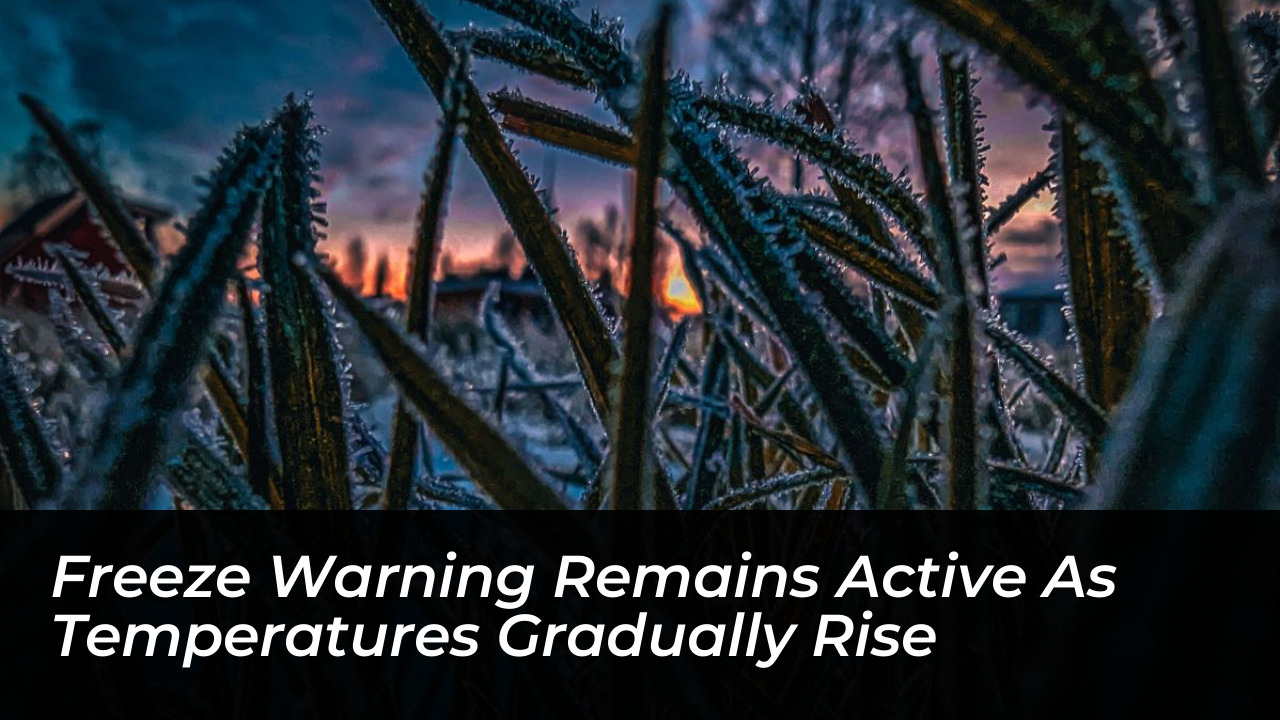

A freeze warning remains in effect across the viewing area through Wednesday morning, October 14, 2026. Residents are experiencing lingering cold conditions before a gradual warming trend arrives toward the weekend.
According to Chief Meteorologist Avaionia Smith, overnight temperatures are expected to hover near or below freezing, prompting active freeze alerts until 10 a.m. Wednesday. The persistent cold air settled into the region early in the week, bringing daytime highs on Tuesday only into the low 50s.
Weather Conditions and Forecast Outlook
While the cold front has brought crisp morning conditions, sunny skies are returning to most of the region. Meteorologists noted that scattered showers moved across the southern half of the viewing area through Tuesday evening.
- Freeze Warning Duration: Active until Wednesday morning, October 14, 2026, at 10 a.m.
- Temperature Trend: Overnight lows near or below freezing, with daytime highs reaching the low 50s on Tuesday.
- Precipitation: Scattered evening showers in the southern zones, clearing out quickly.
- Rest of the Week: Dry weather conditions will prevail following the clearance of midweek showers.
Smith indicated that dry conditions will take over for the remainder of the week. This will allow a steady and welcome warmup as the region approaches the weekend.
Preparing for Late-Season Freezes
A freeze warning is issued by the National Weather Service when surface temperatures are expected to drop below 32 degrees Fahrenheit for a significant period. These conditions pose potential risks to sensitive vegetation, outdoor plumbing, and unprotected livestock.
Agricultural extension offices recommend several protective measures during active freeze warnings:
- Cover sensitive outdoor plants or bring potted vegetation indoors.
- Disconnect and drain outdoor garden hoses to prevent splitting from frozen water.
- Ensure outdoor pets and livestock have adequate, unfrozen water sources and dry, insulated shelter.
- Monitor local forecasts closely, as microclimates can experience colder temperatures than reported regional averages.
As the current warning expires and dry, sunny weather takes over, afternoon temperatures will incrementally climb back toward seasonal averages. This will bring an end to the immediate threat of overnight hard freezes.