Leaders of the Group of Seven (G7) member countries agreed on Friday, October 2, 2026, to release up to 100 million barrels of diesel fuel and crude oil over a four-month period. This coordinated drawdown aims to address soaring global energy costs and stabilize markets that have experienced dramatic price spikes since February.
Due to high traffic on this story, please verify you are not a bot to instantly unlock the remaining content. Takes only 5 seconds!
Verify & Continue ReadingThe joint decision followed an emergency G7 videoconference hosted by French President Emmanuel Macron, who currently holds the rotating presidency of the bloc. United States President Donald Trump announced the initiative shortly after the summit concluded, noting that the release process would begin immediately.
Background and Market Pressures Driving the Release
The strategic stockpile deployment is designed to offset severe market strain resulting from multiple geopolitical conflicts. Ongoing military engagements involving the United States, Israel, and Iran, alongside escalations between Russia and Ukraine, have significantly impaired international refining capacity.
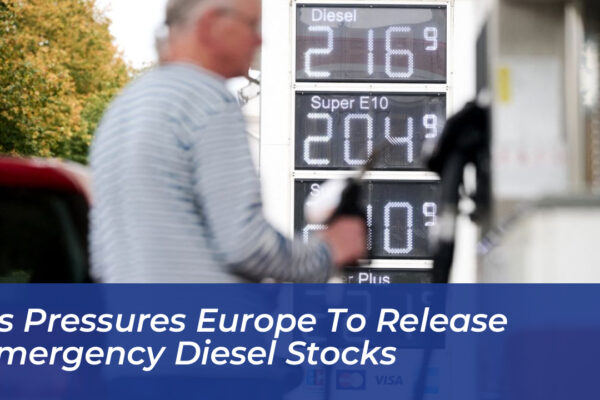
In Europe, refineries produce roughly 70 percent of the diesel they consume domestically but rely heavily on imports to bridge the shortfall. Disruptions to fossil fuel exports from the Middle East have limited output from regional refineries, while Ukrainian attacks on Russian infrastructure have driven Russian fuel output to 20-year lows.
These supply constraints led the U.S. to export a record 1.9 million barrels a week to overseas buyers in early August. The heavy export volume caused domestic U.S. distillate stockpiles to drop to their lowest seasonal levels since 1996, pushing diesel pump prices above $5.85 a gallon. In the United Kingdom, average diesel prices climbed to a record £2 a litre, significantly increasing operational costs for transport operators and farmers.
Key Details of the G7 Emergency Agreement
Under the terms of the agreement, G7 members-comprising the U.S., UK, France, Germany, Italy, Canada, and Japan-will release a balanced mix of 50 million barrels of diesel and 50 million barrels of crude oil.
- Execution Timeline: The drawdown will be coordinated through the International Energy Agency (IEA) and executed over four months.
- Front-Loaded Delivery: Members and partners committed to deploying a substantial release of diesel within the first 20 days.
- Export Restrictions Avoided: The agreement prevents potential U.S. export bans on diesel, ensuring cross-border supplies remain open among partner nations.
President Trump stated via social media that Europe had agreed to release a massive volume of heavily stocked diesel fuel to help cool global markets. The commitment averts a threatened U.S. ban on diesel exports, which analysts warned could have triggered intense bidding wars and driven international fuel prices to unprecedented heights.
Global Economic and Market Impact
Following the announcement, Brent crude oil traded at approximately $98 a barrel before settling above $102 by the close of the session, compared to roughly $72 prior to the outbreak of the Iran conflict. Energy market analysts remain cautious regarding the long-term effectiveness of the reserve release.
Walt Chancellor of Macquarie Group noted that tapping emergency reserves addresses immediate symptoms rather than the root cause of the crisis. Industry experts emphasize that restoring stable energy flows through key transit corridors like the Strait of Hormuz remains essential for achieving permanent market equilibrium.