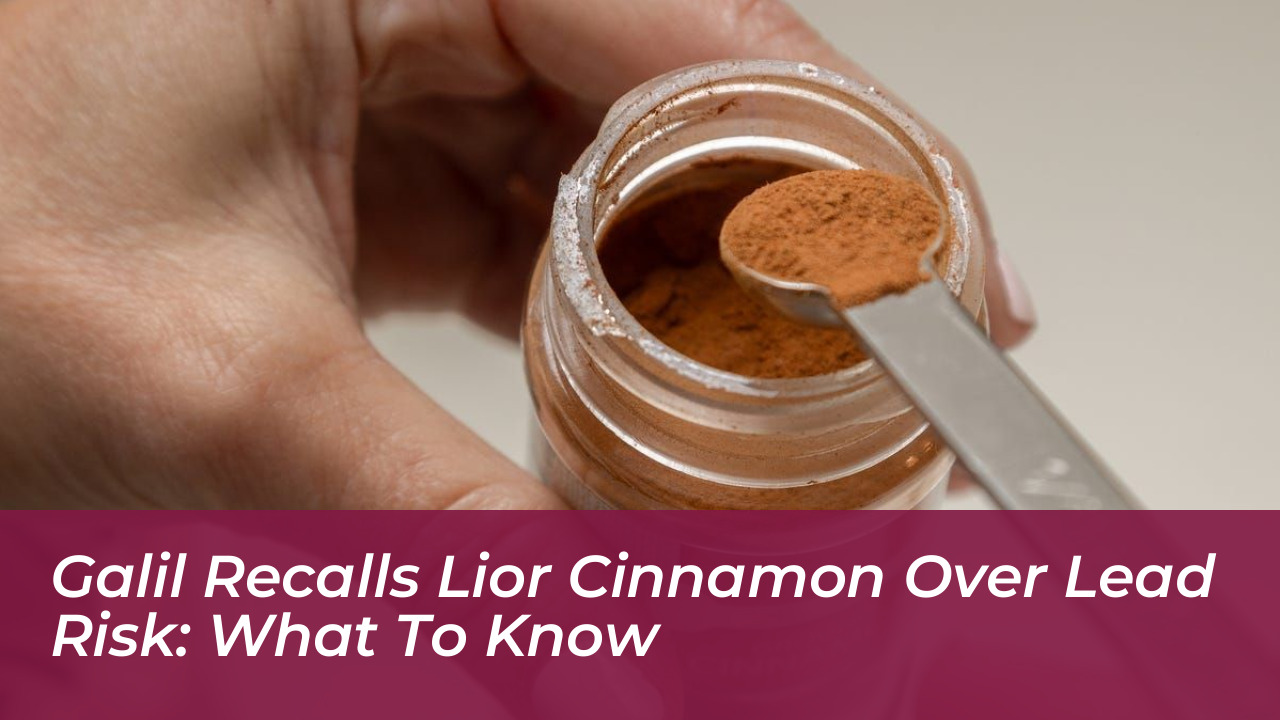
Galil Importing Corp issued a voluntary nationwide recall for its Lior Ground Cinnamon seasoning following the detection of elevated lead levels. The United States Food and Drug Administration published the official safety alert on September 24, 2026. State health inspectors discovered the contamination during routine surveillance.
- Overview of the Galil Importing Cinnamon Recall
- Discovery by State Health Inspectors
- Why Heavy Metal Contamination Persists in Spices
- Affected Product Details and Identification Codes
- Packaging Specifications
- Exact Identification Markers
- Geographic Distribution and Timeline
- Impacted States
- Timeline of Sale
- Health Risks Associated With Lead Exposure
- Impact on Children and Developing Nervous Systems
- Impact on Adult Health
- Steps for Consumers Who Bought the Recalled Cinnamon
- Actionable Safety Protocol
- Customer Support Contacts
- Corporate Response and Supply Chain Investigation
- Root Causes of Heavy Metal Contamination
- Preventative Measures and Testing Protocols
- Broader Regulatory Context on Spice Contamination
- Shifting Enforcement and Testing Standards
- Frequently Asked Questions
- What should I do if I already consumed the recalled cinnamon?
- Are other Lior products affected by this recall?
- Can I get a refund without a receipt?
- How does lead get into ground cinnamon?
Overview of the Galil Importing Cinnamon Recall
The Maryland Department of Health tested a retail sample and flagged hazardous concentrations of heavy metals inside the spice container. The company acted immediately to quarantine remaining inventories and notify federal regulators. Contaminated spices pose a significant health threat because consumers use them frequently in daily cooking and baking without heating them to temperatures that destroy chemical hazards.
Heavy metals like lead do not break down during food preparation. Instead, they concentrate inside spice mixtures and enter the human body directly upon consumption. Federal authorities advise all households to inspect their kitchen pantries immediately.
Discovery by State Health Inspectors
- The Maryland Department of Health tested a retail sample and flagged hazardous concentrations of heavy metals inside the spice container.
- The company acted immediately to quarantine remaining inventories and notify federal regulators.
- Contaminated spices pose a significant health threat because consumers use them frequently in daily cooking and baking without heating them to temperatures that destroy chemical hazards.
Why Heavy Metal Contamination Persists in Spices
- Heavy metals like lead do not break down during food preparation.
- Instead, they concentrate inside spice mixtures and enter the human body directly upon consumption.
- Federal authorities advise all households to inspect their kitchen pantries immediately.
Affected Product Details and Identification Codes
Consumers must examine their spice racks for specific packaging markers to determine if they possess the recalled seasoning. Galil Importing distributed the product under the Lior brand name.
The affected spice comes in transparent 90-gram plastic containers featuring bright red lids. Retailers typically stocked these packages in cases containing six individual units.
Packaging Specifications
Exact Identification Markers
| Product Detail | Identifier |
|---|---|
| Brand Name | Lior |
| Product Name | Ground Cinnamon Seasoning |
| Container Size | 90-gram transparent plastic jar with a red lid |
| UPC Barcode | 794711005484 |
| Lot Code | GAP11304 (printed on the side directly beneath the ingredient list) |
Geographic Distribution and Timeline
The distribution network for the recalled Lior Ground Cinnamon spans six distinct states. Galil Importing shipped the contaminated batches to supermarkets, neighborhood grocery outlets, specialty delis, and major retail stores across a multi-month window.
The distribution period began on November 18, 2025, and continued through September 7, 2026. Anyone who purchased Lior Ground Cinnamon within these six states during this ten-month span holds a potentially dangerous item.
Impacted States
- New York
- New Jersey
- Pennsylvania
- Texas
- Florida
- Illinois
Timeline of Sale
- The distribution period began on November 18, 2025, and continued through September 7, 2026.
- Anyone who purchased Lior Ground Cinnamon within these six states during this ten-month span holds a potentially dangerous item.
- Supply chain auditors are currently tracing the raw material imports to find the exact origin of the heavy metal contamination.
Health Risks Associated With Lead Exposure
Lead is a toxic heavy metal that accumulates in the body over time. Ingestion of lead-tainted food products presents severe medical dangers, particularly for vulnerable populations such as infants, toddlers, and pregnant individuals. Even trace amounts can disrupt normal biological functions.
Short-term exposure to low lead levels often produces zero noticeable symptoms. Individuals frequently remain entirely unaware that ingestion occurred, yet prolonged exposure over weeks or months triggers serious physiological damage.
Impact on Children and Developing Nervous Systems
- Young children absorb heavy metals at a much higher rate than adults.
- Their developing nervous systems are exceptionally sensitive to neurotoxins.
- Continuous lead absorption leads to permanent central nervous system damage.
- Pediatric victims often experience measurable drops in IQ, severe learning disabilities, behavioral problems, and delayed physical development.
Impact on Adult Health
- Adults consuming lead-contaminated spices face different chronic health complications.
- Long-term exposure increases the risk of hypertension, cardiovascular disease, kidney dysfunction, and reproductive system impairment.
- Healthcare providers recommend routine blood tests for anyone who consumed the recalled spice regularly.
Steps for Consumers Who Bought the Recalled Cinnamon
Anyone who discovers the matching lot code in their kitchen must take immediate action to protect their household. Safety guidelines outline clear steps for handling and disposing of the affected merchandise.
Galil Importing Corp maintains an active customer service line to answer consumer inquiries. Individuals can reach company representatives by calling 1-516-496-7400 between 9:00 a.m. and 5:00 p.m. Eastern Time, Monday through Friday.
Actionable Safety Protocol
- Stop using the product immediately. Do not add the cinnamon to recipes, coffee, or oatmeal.
- Check the side label for lot code GAP11304 under the ingredient text.
- Seal the container inside a plastic bag to prevent accidental spills or exposure.
- Return the package to the original place of purchase for a full refund, or discard it securely in household trash.
Customer Support Contacts
Galil Importing Corp maintains an active customer service line to answer consumer inquiries. Individuals can reach company representatives by calling 1-516-496-7400 between 9:00 a.m. and 5:00 p.m. Eastern Time, Monday through Friday.
Corporate Response and Supply Chain Investigation
Following notification from state health officials, Galil Importing launched a comprehensive internal review of its supply chain network. Ground cinnamon relies on complex global sourcing models where raw bark travels through multiple processing facilities before final packaging.
Heavy metal contamination typically occurs during harvesting when crops absorb lead from contaminated soil or industrial air pollution, or during drying processes utilizing machinery containing lead solder.
Root Causes of Heavy Metal Contamination
- Crops absorb lead from contaminated soil or industrial air pollution during harvesting.
- Processing machinery utilizing lead solder can contaminate spices during drying and grinding operations.
Preventative Measures and Testing Protocols
- The company reports that zero illnesses are linked to the product so far.
- Management implemented enhanced supplier verification protocols to prevent future incidents.
- New measures mandate independent laboratory testing for heavy metals on every incoming batch of raw spices before final blending and packaging.
Broader Regulatory Context on Spice Contamination
The Galil Importing recall highlights a persistent regulatory challenge facing the United States food supply. Federal health agencies face mounting pressure to tighten oversight of imported spices.
Unlike domestic agricultural products, the vast majority of specialty spices consumed in North America originate overseas. Regulatory bodies have increased random border sampling protocols.
Shifting Enforcement and Testing Standards
- Unlike domestic agricultural products, the vast majority of specialty spices consumed in North America originate overseas.
- Regulatory bodies have increased random border sampling protocols.
- Modern analytical techniques allow laboratories to detect parts-per-billion concentrations of heavy metals in complex organic matrices.
- Federal and state agencies uncover hidden adulterants with greater frequency.
- Industry analysts expect stricter compliance standards and mandatory heavy metal testing thresholds for spice importers in upcoming legislative cycles.
Frequently Asked Questions
What should I do if I already consumed the recalled cinnamon?
Do not panic, but stop consuming the product immediately. If you or your children feel unwell or exhibit symptoms of heavy metal toxicity, consult a primary care physician. Doctors can order a simple blood test to check for elevated lead levels.
Are other Lior products affected by this recall?
No. The current voluntary recall is strictly limited to Lior Ground Cinnamon packaged in 90-gram transparent plastic containers with the specific lot code GAP11304. Other spices sold under the Lior brand remain safe for consumption.
Can I get a refund without a receipt?
Most retail stores honor product recalls regardless of receipt status when items match active federal safety notices. Bring the container directly to the customer service desk at the store where you purchased it.
How does lead get into ground cinnamon?
Lead enters spices naturally through contaminated soil and water in growing regions, or accidentally during processing, grinding, and drying operations where older industrial equipment contains lead-based components.