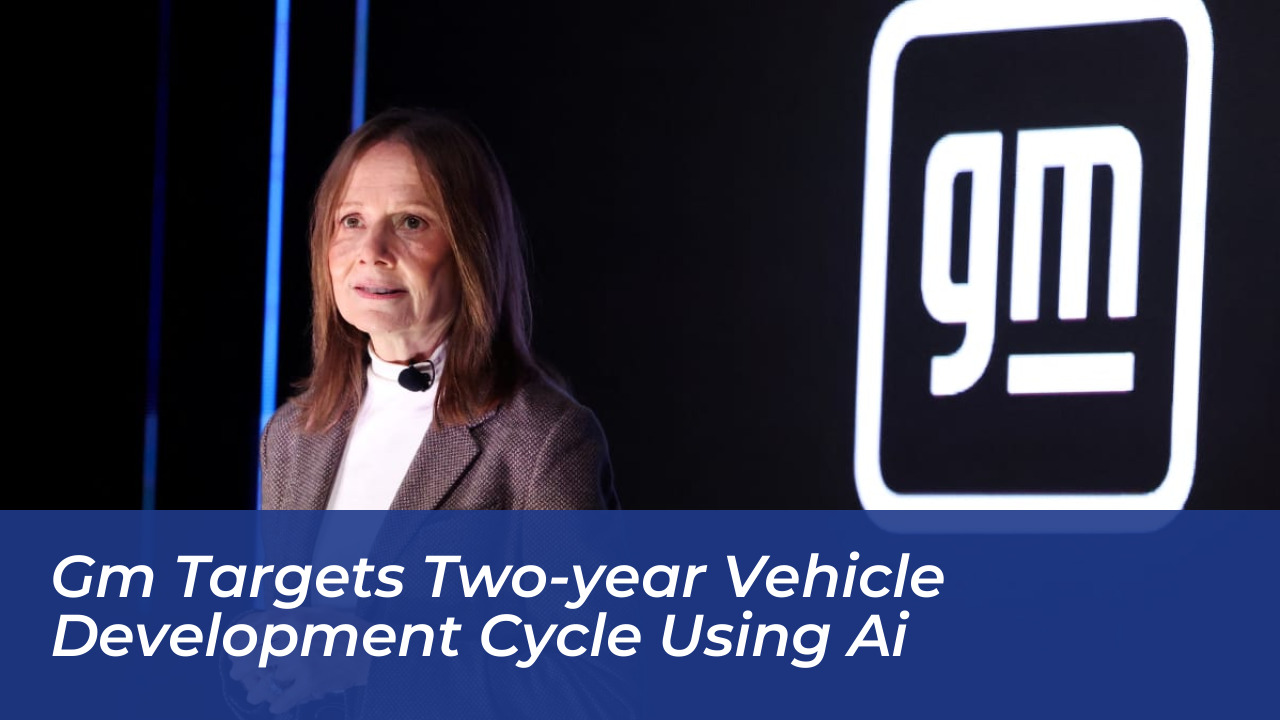

General Motors is targeting an ambitious two-year vehicle development cycle and expanding artificial intelligence across its entire vehicle lineup. The automaker is revamping its strategy to better compete with faster-moving Chinese manufacturers and significantly strengthen its software capabilities moving forward.
During the GM Forward technology event in New York on October 21, 2026, company leadership outlined comprehensive plans. These initiatives include AI-assisted engineering, next-generation electric vehicles, an advanced in-car digital assistant, and sophisticated highway driving technology that allows drivers to safely take their eyes off the road.
According to General Motors, the primary goal is to cut the traditional four-to-five-year development timeline in half. While the company has not yet specified an exact date for when it expects to achieve this accelerated target, reaching it would bring its product development pace much closer to that of its competitors abroad.
The Competitive Pressure From Chinese Automakers
Industry data underscores the urgency behind General Motors’ new timeline. Consulting firm AlixPartners estimates that Chinese manufacturers typically bring new vehicles to market twice as fast as legacy traditional automakers. , these foreign competitors achieve this pace with 40% to 50% less investment and maintain a permanent 30% cost advantage.
By integrating artificial intelligence deeply into the engineering and development phases, GM hopes to bridge this efficiency gap. AI-assisted tools are expected to streamline design phases, catch potential structural or software flaws earlier in the pipeline, and drastically reduce the manual labor hours traditionally required to bring a car from a drawing board to the showroom floor.
Key Technologies Highlighted at GM Forward
Beyond compressed development schedules, the technology event highlighted several consumer-facing and operational upgrades slated for upcoming vehicle lineups:
- AI-Assisted Engineering: Utilizing machine learning models to accelerate structural design, crash-test simulations, and software integration.
- Next-Generation EVs: Expanding the automaker’s electric vehicle portfolio with platforms optimized for faster production.
- Advanced Digital Assistants: Introducing smarter, context-aware in-car AI helpers to manage vehicle settings and navigation.
- Eyes-Off Highway Driving: Upgrading autonomous driving capabilities to allow drivers greater freedom on designated highways.
As the automotive industry continues its rapid digital transformation, General Motors’ success in halving its production timeline will serve as a crucial test for legacy automakers trying to outpace agile global competition.