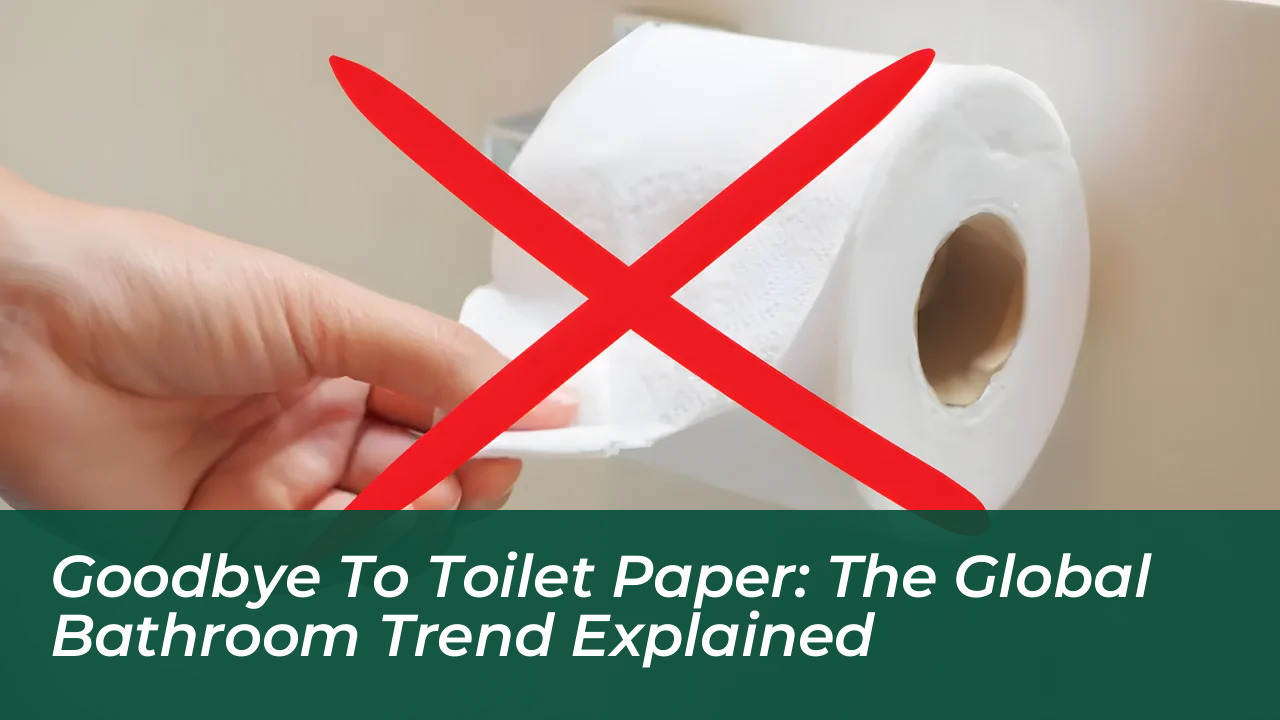

For more than a century, the humble roll of toilet paper has maintained an unchallenged grip on bathrooms across the globe. However, a quiet revolution is underway. Driven by advancements in home technology, shifting hygiene standards, and a growing focus on environmental sustainability, smart toilets and washlets are rapidly transforming how millions of people approach daily personal care.
Pioneered in Japan decades ago-where manufacturers like Toto introduced the modern washlet in 1980 and achieved over 80% household adoption by 2021-water-based cleaning systems have steadily spread across Asia, Europe, and increasingly into the Americas. What was once viewed as a luxury exclusive to upscale hotels or international travel is now emerging as a standard feature in modern residential architecture and home renovations.
How Smart Toilets and Washlets Work
Unlike traditional ceramic toilets paired with paper rolls, smart toilets integrate bidet functions directly into a single, high-tech unit. Alternatively, homeowners can install bidet seats or non-electric attachments onto existing plumbing fixtures without undertaking costly bathroom remodels.
These devices utilize precise mechanical and electronic features designed to optimize comfort and cleanliness:
- Adjustable Water Streams: Users can customize water temperature, pressure, and direction for targeted personal cleaning.
- Warm-Air Drying: Integrated blowers eliminate the need for drying paper completely.
- Heated Seats: Built-in warming elements provide immediate comfort during colder months.
- Automatic Sensors: Motion-activated lids open, close, and flush hands-free to reduce surface contamination.
- Self-Cleaning Nozzles: Automated antibacterial rinses maintain high sanitary standards between uses.
The Hygiene and Health Advantages of Water Over Paper
Medical professionals and dermatologists have long noted that rubbing dry paper against sensitive skin can cause irritation, micro-abrasions, and chronic discomfort-particularly for individuals dealing with hemorrhoids, anal fissures, or post-surgical recovery.
Water-based cleaning flushes waste away gently and completely without abrasive friction. , hands-free operation significantly reduces the transfer of bacteria during illness outbreaks, offering a concrete public health benefit in shared household environments.
Environmental Impact and Financial Realities
The global reliance on toilet paper carries a staggering ecological cost. According to data from the Natural Resources Defense Council, approximately 27,000 trees are cut down every single day to meet worldwide paper demand. Manufacturing each roll also requires intensive bleaching processes using chlorine-based chemicals that release toxic byproducts into waterways.
While alternative paper products like bamboo tissue have gained popularity, life cycle assessments published in journals such as Cleaner Environmental Systems reveal that manufacturing emissions depend heavily on regional power grids and industrial energy sources. By contrast, water-based systems bypass the continuous production chain of paper altogether.
Although full smart toilets represent a significant financial investment, basic non-electric bidet attachments can be purchased for $30 to $50 and installed in under an hour. Over time, households achieve noticeable financial savings by drastically reducing continuous purchases of paper rolls.
As architectural trends continue to prioritize efficiency, sustainability, and smart-home integration, the transition away from toilet paper marks a fundamental shift in domestic habits-proving that water is fast becoming the global standard for modern bathroom hygiene.