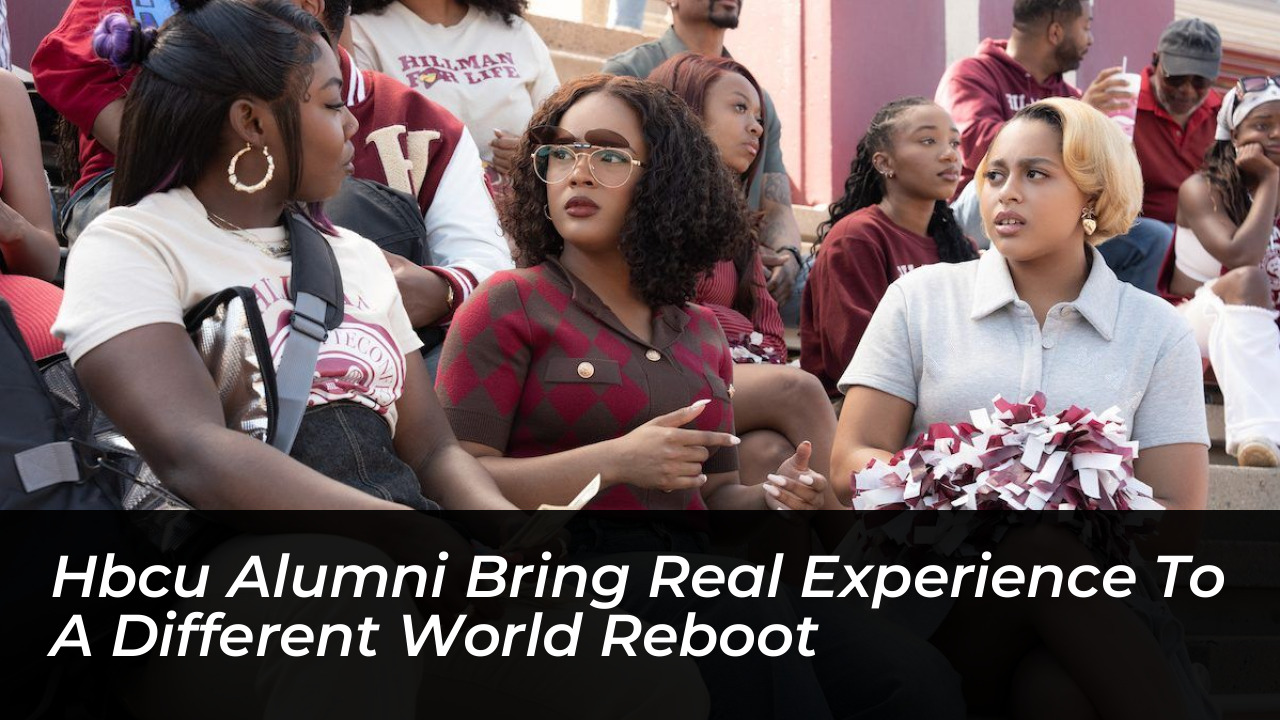
When Netflix premiered its 10-episode sequel series to A Different World on September 24, 2026, the streaming platform delivered more than a standard television revival. The production returns viewers to the iconic fictional campus of Hillman College, but this iteration relies heavily on authentic lived experiences. Instead of depending entirely on external writers rooms or generalized casting calls, the series integrates actors, creators, and alumni who walked real historically Black college and university campuses. This strategic casting decision transforms the fictional narrative into an extension of actual Black collegiate culture, setting a new benchmark for educational representation on screen.
- The Return to Hillman College
- The Blueprint of Authenticity Behind the Camera
- Morehouse College and the Atlanta University Center Footprint
- Howard University Representation on Screen and Legacy
- North Carolina A&T State University and the Theater Pipeline
- Bridging Two Eras: The Original Cast Meets the New Generation
- The Socioeconomic Impact of Authentic HBCU Media Portrayals
- Conclusion: Setting a New Standard for Television Revivals
The Return to Hillman College
Filmed extensively across the Atlanta University Center, the production utilizes the historic grounds of Morehouse College, Spelman College, and Clark Atlanta University. This choice maintains a tangible connection to contemporary campus life. By placing actual HBCU graduates in front of and behind the camera, the creative team establishes a standard of representation that bridges the gap between the ground-breaking 1987 original series and today’s digital generation of students.
Television productions centered on academic institutions often struggle to capture the granular details of campus subcultures. The new Netflix sequel evades this pitfall by embedding graduates directly into the core ensemble and creative leadership. The goal is to present a vibrant, multifaceted view of Black academia that respects institutional history while speaking directly to modern student realities.
The Blueprint of Authenticity Behind the Camera
Executive producer Debbie Allen, a 1972 Howard University graduate, anchors this institutional memory. Allen famously elevated the original series during its golden era, shaping how generations viewed Black academic excellence. Her presence behind the scenes guarantees that the thematic weight of Hillman College remains intact for legacy fans.
However, the real-time authenticity of the 2026 series stems from recent alumni who translate modern campus dynamics into actionable script elements and physical performances. These actors did not have to study what it feels like to navigate homecoming politics, administrative hurdles, or Yard culture. They lived through them just months or years prior to stepping onto the Netflix set.
The writers room incorporates recent graduates who understand the nuances of contemporary student activism, digital communication, and shifting social dynamics. This collaboration prevents the scripts from relying on dated tropes, ensuring that every storyline resonates with today’s student body.
Morehouse College and the Atlanta University Center Footprint
Morehouse College graduate Dasan Frazier, class of 2022, serves as a primary bridge between real-world Atlanta University Center culture and the fictional halls of Hillman. Frazier portrays Xavier, a dynamic student who acts as the university’s resident livestreamer. This character creation directly mirrors contemporary student habits, acknowledging how digital media and live streaming dominate modern campus communication.
During filming on the Morehouse campus, Frazier transitioned from actor to cultural consultant. He guided fellow cast members through the physical layout of the campus and introduced them to traditional practices, including fraternity strolls and campus step teams. These unscripted moments allowed the broader cast to absorb the electric energy unique to Atlanta’s consortium of Black institutions.
Frazier utilized social media advocacy, specifically targeted TikTok campaigns, to draw the attention of showrunner Felicia Pride. His journey proves that proactive grassroots engagement can land an emerging actor a premier television role when casting directors value genuine cultural alignment.
Howard University Representation on Screen and Legacy
The institutional pipeline from Howard University to the Hillman set remains robust in the reboot. Karen Malina White, a proud member of Howard’s Class of 1986, reprises her fan-favorite television role as Charmaine Brown, providing a direct narrative link across the decades. White’s extensive television portfolio brings seasoned professionalism to the ensemble.
Joining the veteran ranks is Kennedi Reece, a Howard University alumna from the Class of 2026 who secured her major television role during her senior undergraduate year. Reece portrays Hazel, a wide-eyed freshman navigating the culture shock of transitioning from a predominantly white background into a vibrant, unapologetically Black academic environment.
Reece actively translated her own undergraduate hurdles for the production team, ensuring that storylines involving royal courts, student politics, and social comparison among Gen Z accurately reflect modern campus realities. Her performance captures the exact mixture of excitement and anxiety defining the modern freshman experience.
North Carolina A&T State University and the Theater Pipeline
Representation within the cast extends beyond the Atlanta consortium and Washington, D.C., reaching into North Carolina. Joshua Suiter, a graduate of North Carolina A&T State University’s esteemed Bachelor of Fine Arts program in theater, joins the ensemble as Andre, a standout campus quarterback. North Carolina A&T stands out as one of the few historically Black universities offering a dedicated Bachelor of Fine Arts in theater, providing rigorous technical training that prepares performers for high-profile sets.
Suiter previously gained industry exposure in high-profile streaming productions. On the Hillman set, Suiter channels the thunderous energy of Aggie athletics, drawing on memories of the university’s legendary football culture and Celebration Bowl victories. His theatrical background allows him to handle complex emotional beats and athletic sequences with equal precision.
His interactions with original series cast members provided invaluable mentorship. This direct guidance validated the rigorous theatrical foundation he built in Greensboro, helping him transition smoothly into a demanding television environment.
Bridging Two Eras: The Original Cast Meets the New Generation
A critical element of the 2026 reboot is the seamless integration of original series favorites alongside fresh faces. Maleah Joi Moon leads the series as Deborah Wayne, the youngest daughter of original characters Dwayne Wayne and Whitley Gilbert. Kadeem Hardison and Jasmine Guy reprise their legendary roles, anchoring the emotional core of the narrative.
The returning ensemble features a robust roster of television royalty, creating a comforting sense of continuity for longtime viewers:
- Kadeem Hardison as Dwayne Wayne
- Jasmine Guy as Whitley Gilbert
- Darryl M. Bell as Ron Johnson
- Cree Summer as Winifred Freddie Brooks
- Dawnn Lewis as Jaleesa Vinson-Taylor
- Karen Malina White as Charmaine Brown
When younger cast members interacted with these television veterans on set, the mentorship went beyond acting tips. The original cast offered validation, reassuring the new generation that the cultural magic of Hillman remains alive and well in their hands.

The Socioeconomic Impact of Authentic HBCU Media Portrayals
The original run of the show is historically credited with triggering massive application spikes at historically Black colleges and universities across the nation during the late 1980s and early 1990s. The 2026 sequel arrives at a critical juncture when educational access, funding equity, and the systemic value of minority-serving institutions face external policy pressures and cultural debates.
By centering narratives on real graduates who understand the rigors, social structures, and community support systems of Black colleges, the series acts as a cultural counterweight. It highlights institutional advantages without relying on Hollywood tropes, showcasing the rich intellectual life thriving within these campuses.
, the show brings attention to the systemic funding realities of fine arts programs at minority-serving institutions. By casting alumni from specialized theater and arts programs, the production emphasizes the professional viability of creative careers cultivated within historically Black colleges.
Conclusion: Setting a New Standard for Television Revivals
The success of the Hillman College revival proves that lived experience supersedes external writing rooms when telling culturally specific stories. By anchoring the production in the actual perspectives of recent graduates and seasoned alumni, the series achieves an unmatched level of authenticity.
The lasting cultural imprint of this 2026 revival will likely influence how future television creators approach institutional settings. When networks prioritize authentic casting and genuine behind-the-scenes representation, the resulting art honors its history while inspiring the next generation of scholars and artists.