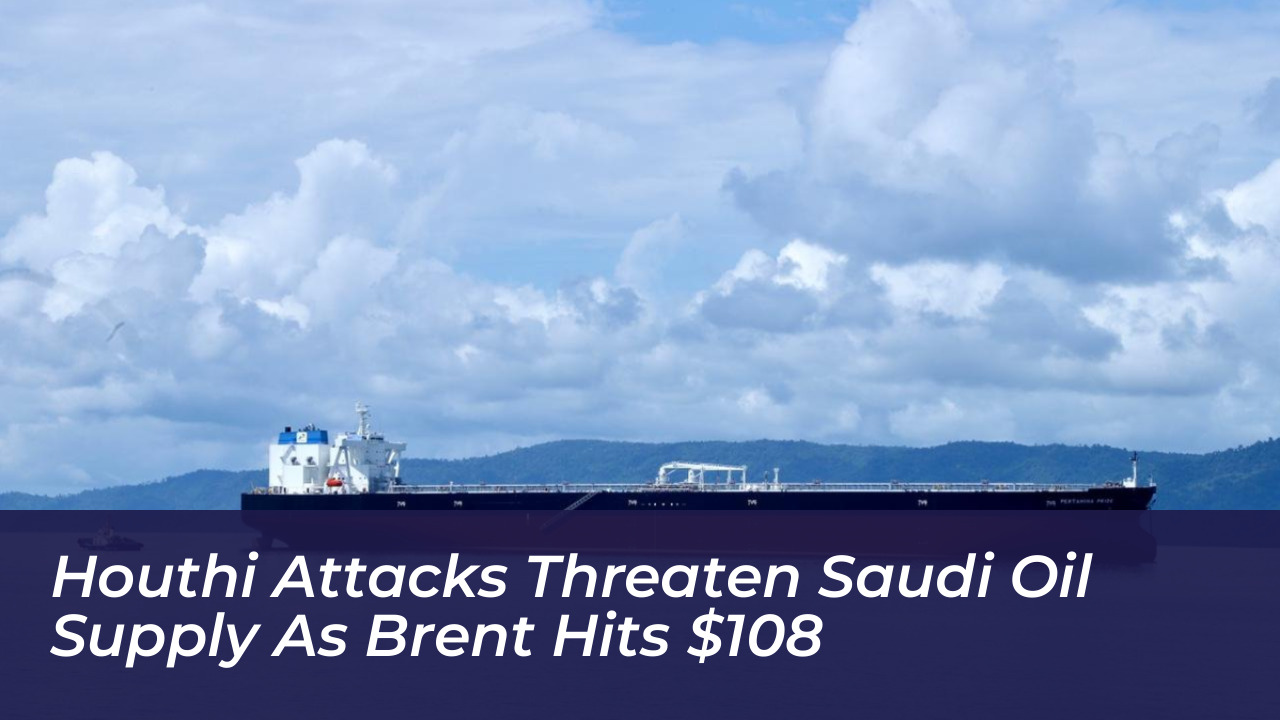

Rising security threats to Saudi Arabia’s oil infrastructure and persistent attacks on energy shipping across the Middle East are intensifying concerns over global fuel supplies. On October 20, 2026, Brent crude reached $108 per barrel, while Asian liquefied natural gas prices climbed above $30 per million British thermal units. Shipping risks and Europe’s worsening winter outlook tightened international energy markets further.
According to market reports, Yemen’s Iran-aligned Houthi forces have expanded their military operations beyond standard infrastructure targets to hit critical facilities. These include the Shaybah oilfield and an Aramco site in Yanbu. These aggressive developments have dramatically raised the risk that Saudi Arabia could be forced to suspend portions of its oil production. Additional attacks targeted Riyadh’s King Khalid International Airport and Abha airport, leaving dozens of casualties and exacerbating regional instability.
Infrastructure Disruptions and Regional Chokepoints
The strategic targeting of energy assets has neutralized vital export routes, including Saudi Arabia’s East-West crude pipeline. This pipeline normally allows the Kingdom to bypass Persian Gulf transit lanes. With the pipeline temporarily shut down, Saudi export stockpiles face rapid exhaustion. Meanwhile, Houthi control over strategic positions near the Bab al-Mandab strait and ongoing tensions in the Strait of Hormuz have created a severe dual-chokepoint crisis for global oil logistics.
Market analysts note that the loss of alternative shipping routes and compromised throughput have removed the global oil market’s primary buffer against supply shocks. Shiptracker Kpler reported that at least 18 vessels faced attacks over a two-week period. This keeps a massive geopolitical risk premium firmly intact across commodity exchanges.
Macroeconomic Impact and Central Bank Responses
The spike in crude prices past the $100 threshold is triggering broader macroeconomic shockwaves. Import-dependent economies face widening trade deficits and escalating inflationary pressures. In the United States, energy-driven inflation has impacted bond markets and forced the Federal Reserve to evaluate its monetary policy trajectory carefully. Persistent high energy costs threaten corporate margins across energy-intensive sectors, including aviation, chemicals, and global logistics, while keeping borrowing costs elevated worldwide.
Natural Gas and International Inventory Pressures
The ongoing threat to energy shipments has increased immense pressure on global natural gas markets. The Asian LNG benchmark JKM rose to its highest level since December 2022. Concurrently, European gas prices climbed as inventory growth stalled and storage levels remained below 75% of total capacity across the European Union. Industry leaders, including Vitol CEO Russell Hardy, have warned that Western nations possess minimal inventory buffers left to draw down. This leaves international energy systems exceptionally vulnerable to any further supply interruptions.